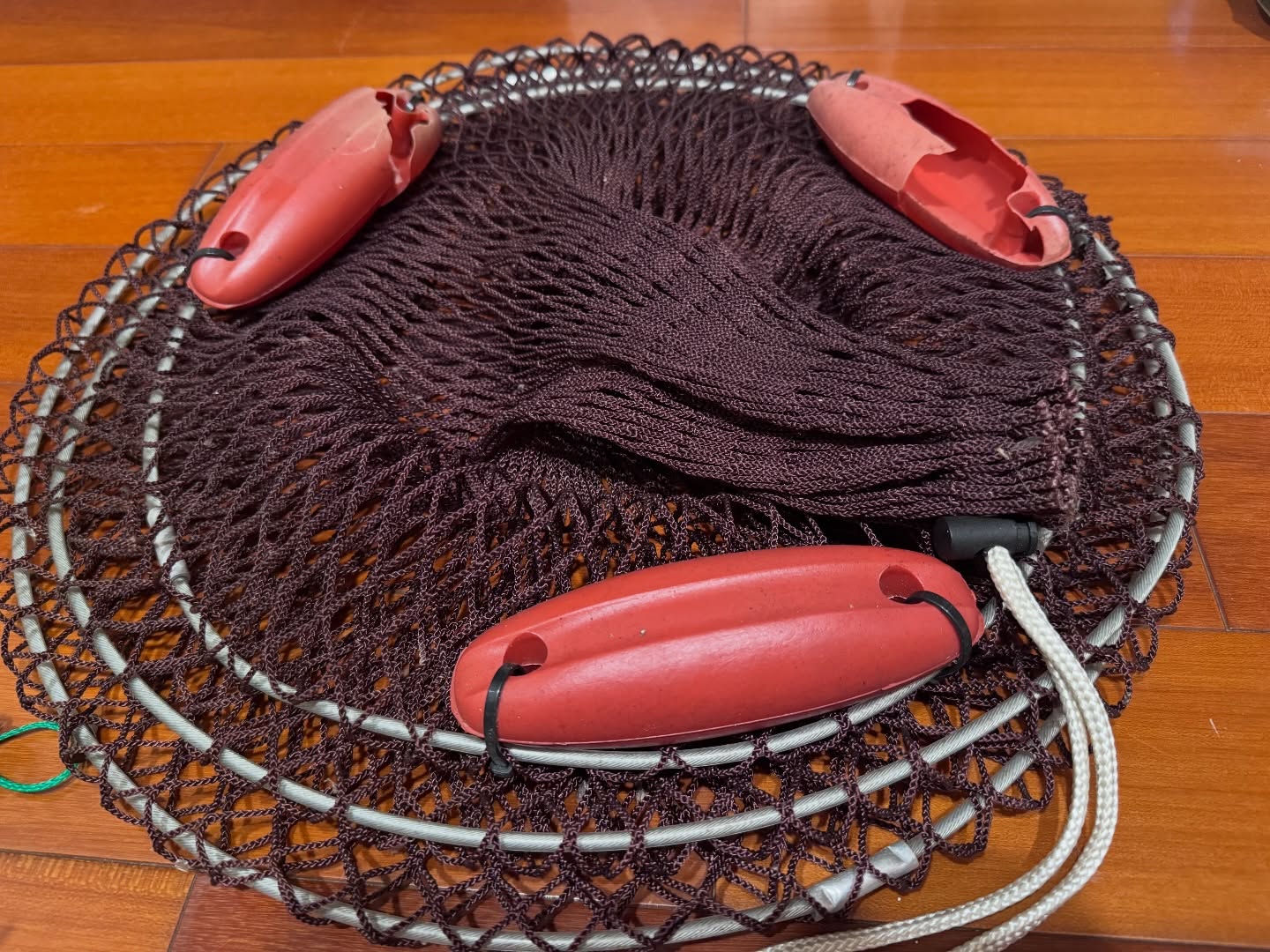
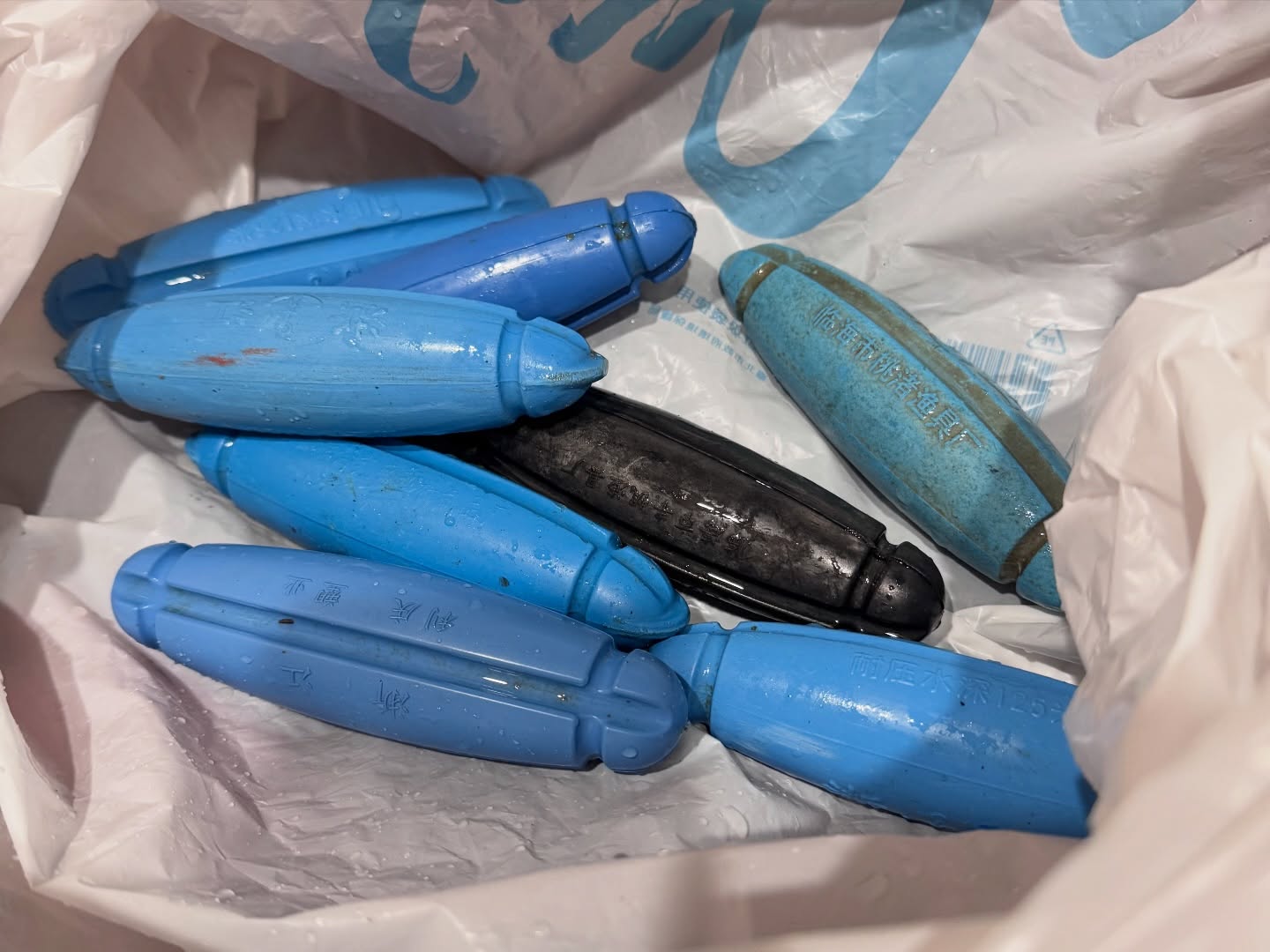
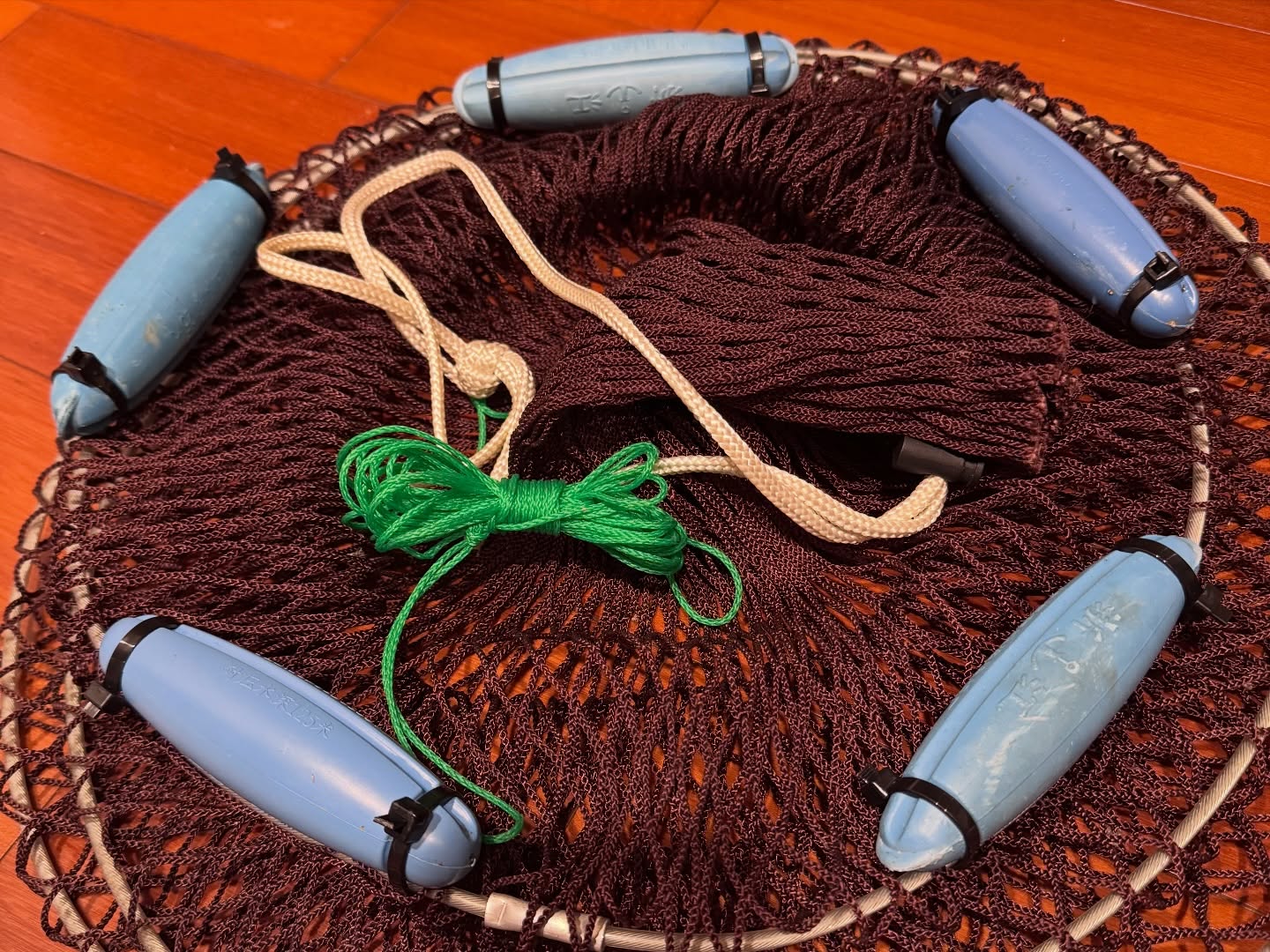
Five blue floats seated on the rim, drawstring threaded back through — the live-fish net was usable again. Total cost: one walk on a winter beach. The tip came from 阿貴師: the largest float supplier in Taiwan isn’t a tackle shop, it’s the tide line after the northeast monsoon.
How the floats died
Brand-new net, never touched saltwater, left on the balcony to deal with later. Later didn’t come. The sun did. By the time I picked it up the float balls had gone brittle and cracked — UV failure before the mesh ever saw the sea. People consistently underestimate what sun does to tackle sitting on balconies and in car boots. More gear dies that way than on any rock or fish.
No local stock, online dimensions untrustworthy
Finding replacements locally was a dead end — nobody stocks loose floats in small quantities. Online options existed, but shipping cost more than the parts themselves, and I couldn’t verify dimensions. A float a few millimetres off won’t seat on the rim, and you only find that out after the package arrives.
The tide line as parts bin
阿貴師’s advice sounds like a joke until you think it through. Through the colder months, the northeast monsoon pushes marine debris steadily onto beaches along the north coast, the northeast corner, and the west-facing shoreline — floats of every size drifting across the strait, stacking up at the tide line. Free, sorted by the ocean, and pre-tested. Every piece has already survived real UV exposure and impact against rock and concrete. You couldn’t engineer a more honest durability trial.
Worth picking up even when you don’t need anything
The floats I lost failed under sun. The ones I picked up were the ones the sun and sea had already tried to destroy and couldn’t. Marine debris washing ashore is a genuine problem — it’s plastic that doesn’t belong in the water. Pulling a few pieces back into service doesn’t solve that, but it’s better than leaving them to grind into microplastic in the sand.
Now when I’m on a winter beach I check the tide line regardless of whether I need parts. You start reading the sand like bottom structure — where the current piles things up, where the heavy stuff catches. Floats and baitfish run the same logic in the end: they go where the water puts them.