
Timing in a Tourist Zone
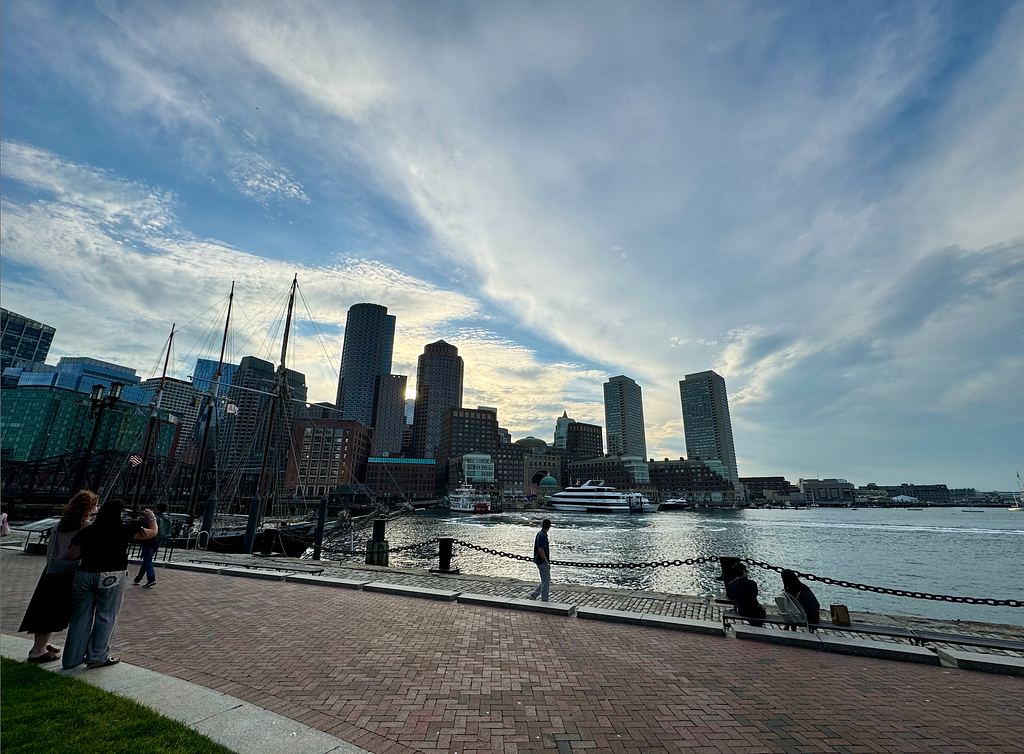
Pier 4 is tourist Boston — restaurants, late bars, easy transit, a wide waterfront walk packed by midday. The Boston Tea Party Museum is a five-minute walk. Step anywhere in this city and you’re standing on a page from a history textbook.
That also means foot traffic directly behind your casting arc from mid-morning until midnight. Watch your backcast like it matters, because it does. Every catch report I found before the trip was shot at night, and I couldn’t work out why until I got there. Think fishing the riverside promenade at Tamsui Old Street — same density, same problem. Here, the crucial timing isn’t just the tide; it’s fishing when the crowd is gone.
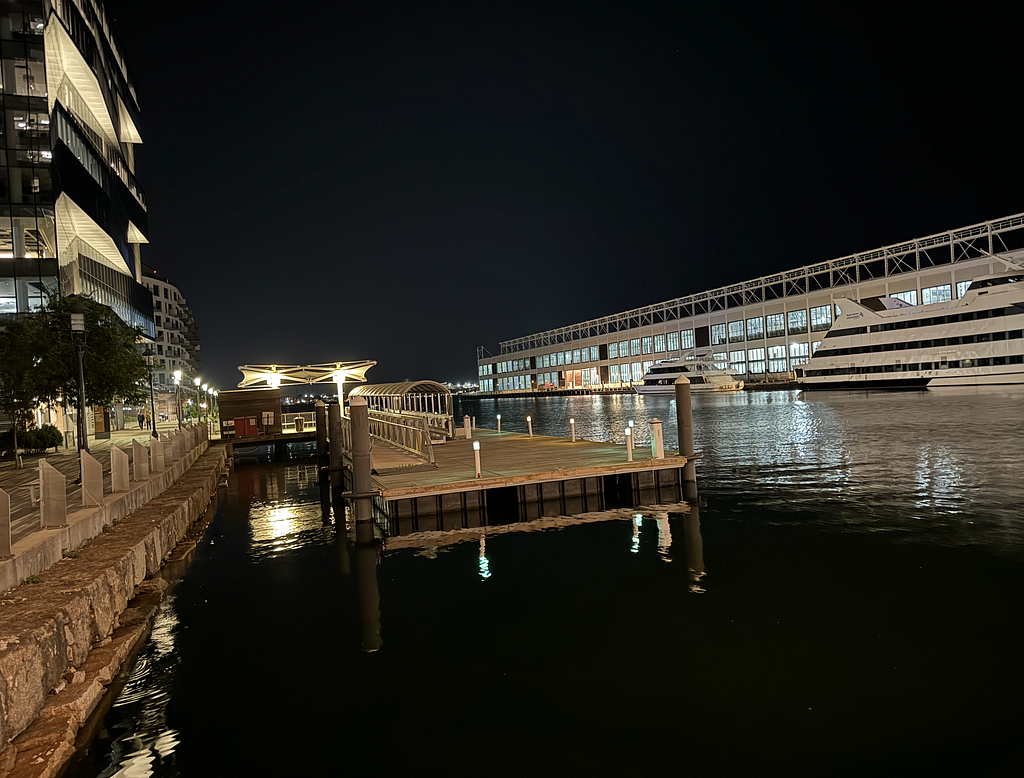
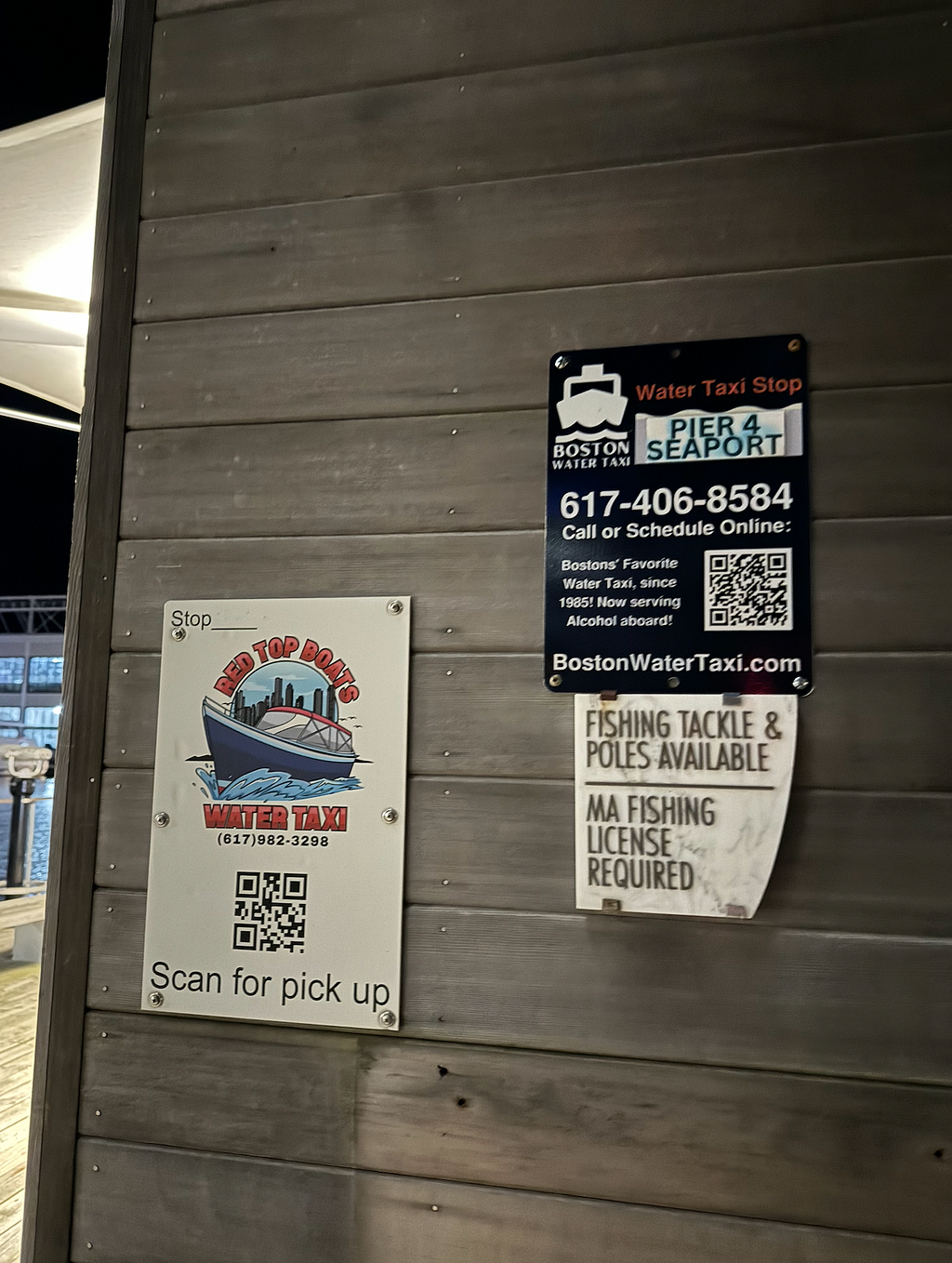
Water-Taxi Pontoon: The Only Workable Position
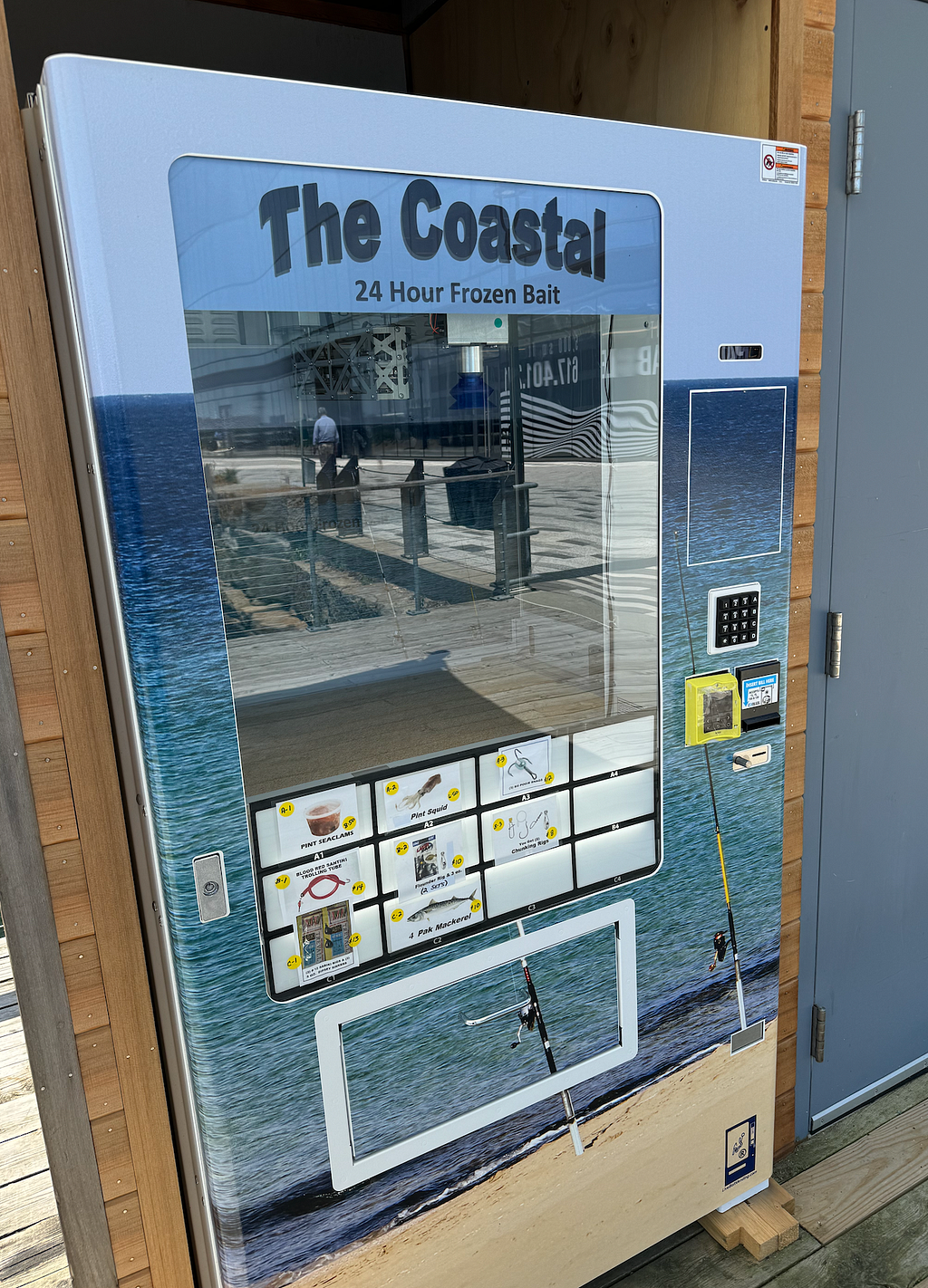
One exception in the whole stretch: the water-taxi floating dock, set away from the main walk. Location here. Outside service hours it’s nearly empty, and it sits closer to the water surface than the elevated walkway — a meaningful edge when you’re working lures and want a clean presentation angle. There’s a public fish-cleaning table on the pontoon and a vending machine stocked with tackle and bait. Safety and convenience combined: nothing else in the Pier 4 area comes close.
The Depth Break Runs Right Under the Dock
Chart shows 8 to 9 meters through this section. Tracking the seawall at roughly the distance the pontoon sits off the bank — which is to say, directly under the floating dock — a continuous depth break runs the full length. If fish are in the area, that ledge is where the probability sits. No point casting into open water; work the structure.
One morning a companion went down alone and watched three striped bass move through the pilings at the front face of the dock. Same read every time: depth transition plus gaps between obstructions.
Fort Point Channel: The Bend Where It Meets Bass River
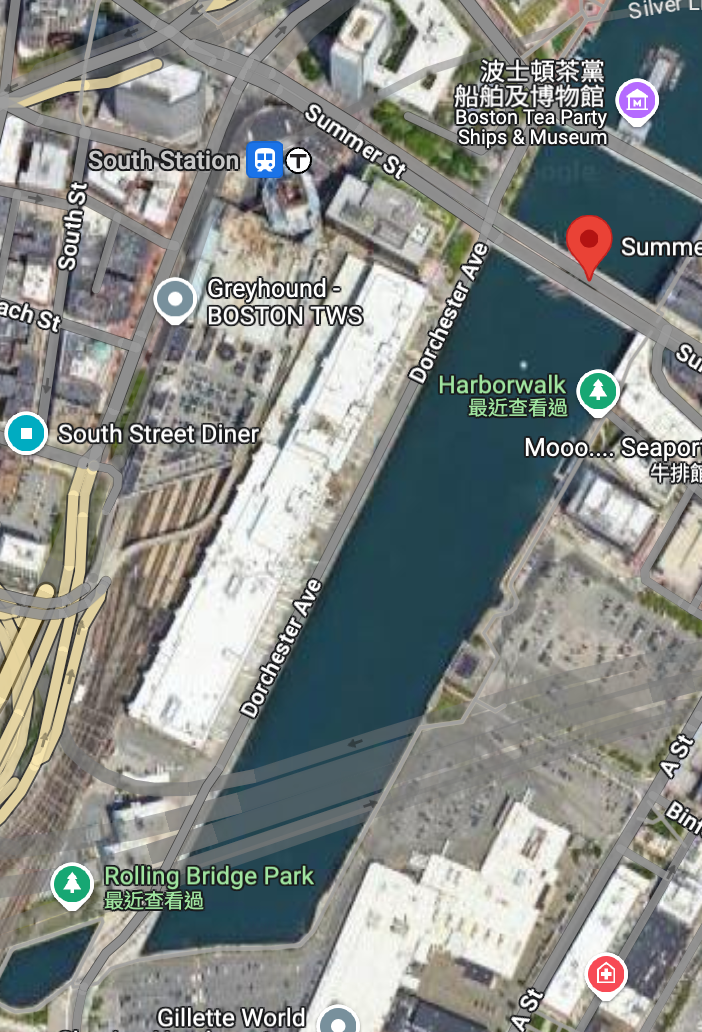
The Tea Party Museum sits on Fort Point Channel, a few minutes from Pier 4. Most hookup reports cluster around the dock area on the west side of the channel mouth.
Follow it upstream and the channel bends to meet Bass River, with a wide bridge sitting right at the junction. That geometry shifts current speed, concentrates bait, and gives fish somewhere to hold. Depth runs 2 to 6 meters — most of it inside five — but a local told me the stretch from there out to Summer Street Bridge is worth working topwater for striped bass.
Two Marks Worth Returning For
The water-taxi pontoon over the Pier 4 ledge. The Fort Point Channel mouth into the Bass River bend. Both come down to the same principle: depth transitions and structure, not open water. In a place this crowded, reading the people matters as much as reading the tide.