Late May, in New York for work. The hotel sat on the south edge of Central Park — five minutes’ walk from the ponds. The moment I booked it, the side mission was already forming. Largemouth in the heart of Manhattan. I wanted to know what that felt like.
In Taiwan, largemouth bass sit in a strange spot: familiar but guarded. Outside a handful of managed waters, the wild spots stay off the record, traded inside small circles. Casting for one in the middle of a city is hard to even picture. So before the meetings started, I built a quiet plan around a morning session.
Picking the water
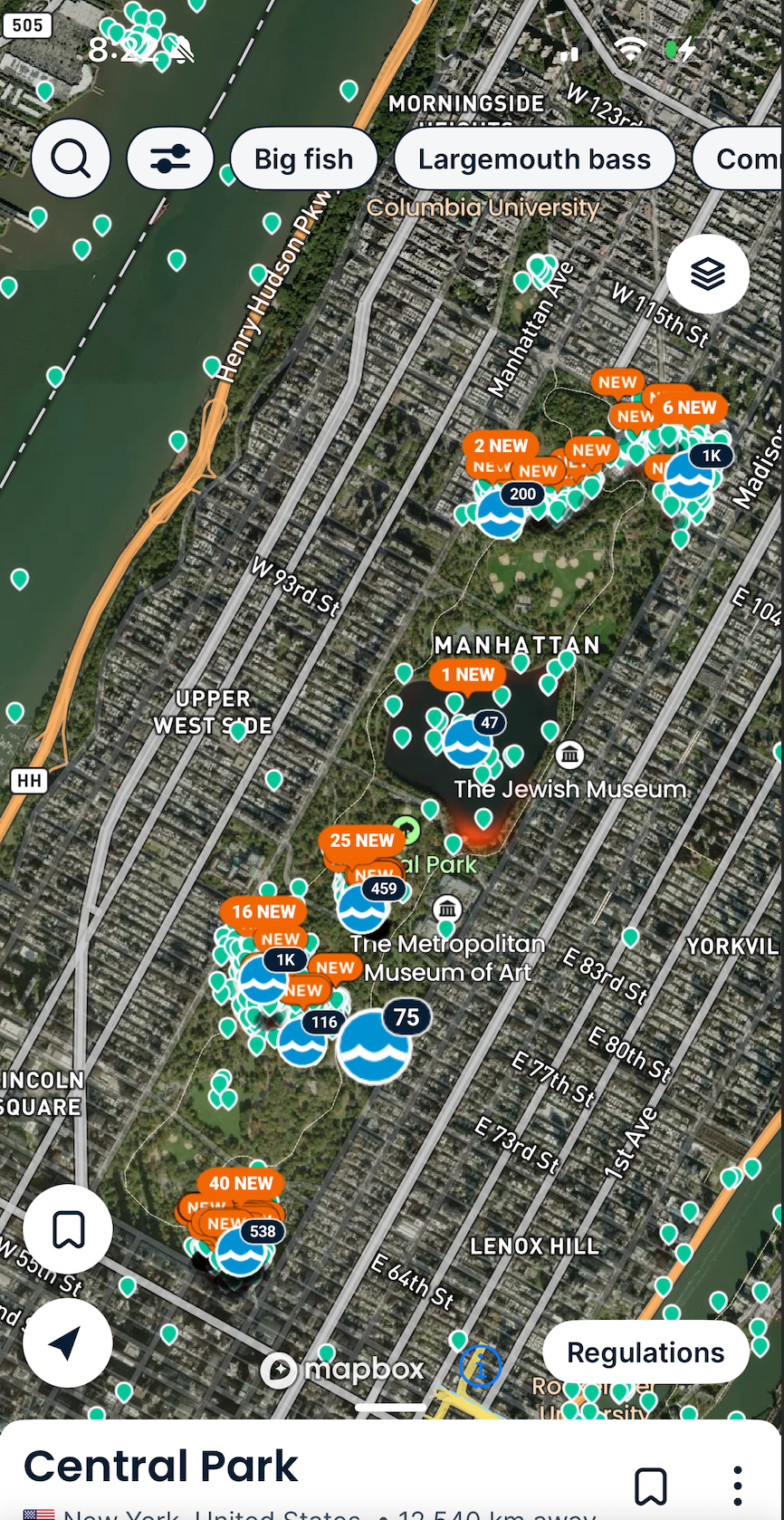
The night before, my colleague and I went through Central Park’s waters on Fishbrain — species reports, bite density, rig notes. The pins clustered around a few spots:
- The Lake: mid-park, west side. Not the biggest water, but complex structure and depth changes. The densest pin cluster on Fishbrain, with steady largemouth and catfish reports.
- Harlem Meer: the northern pond, heavy weed beds. Reputation for size, suited to tight shoreline work.
- Conservatory Water: a small ornamental pool, mostly model boats. No reports worth chasing — ruled out.
- The Pond: the far southeast corner. Small and low-profile, but the largemouth reports held steady. Trees on three sides, shaded stretches of path, and the shadow line under Gapstow Bridge — textbook structure.
We nearly went for the southwest corner of The Lake, with its old jetty and shade trees, a classic everyone defaults to. But the day’s schedule and the walking distance pushed us toward The Pond instead — that quiet sheet of water tucked against Fifth Avenue and Gapstow Bridge.
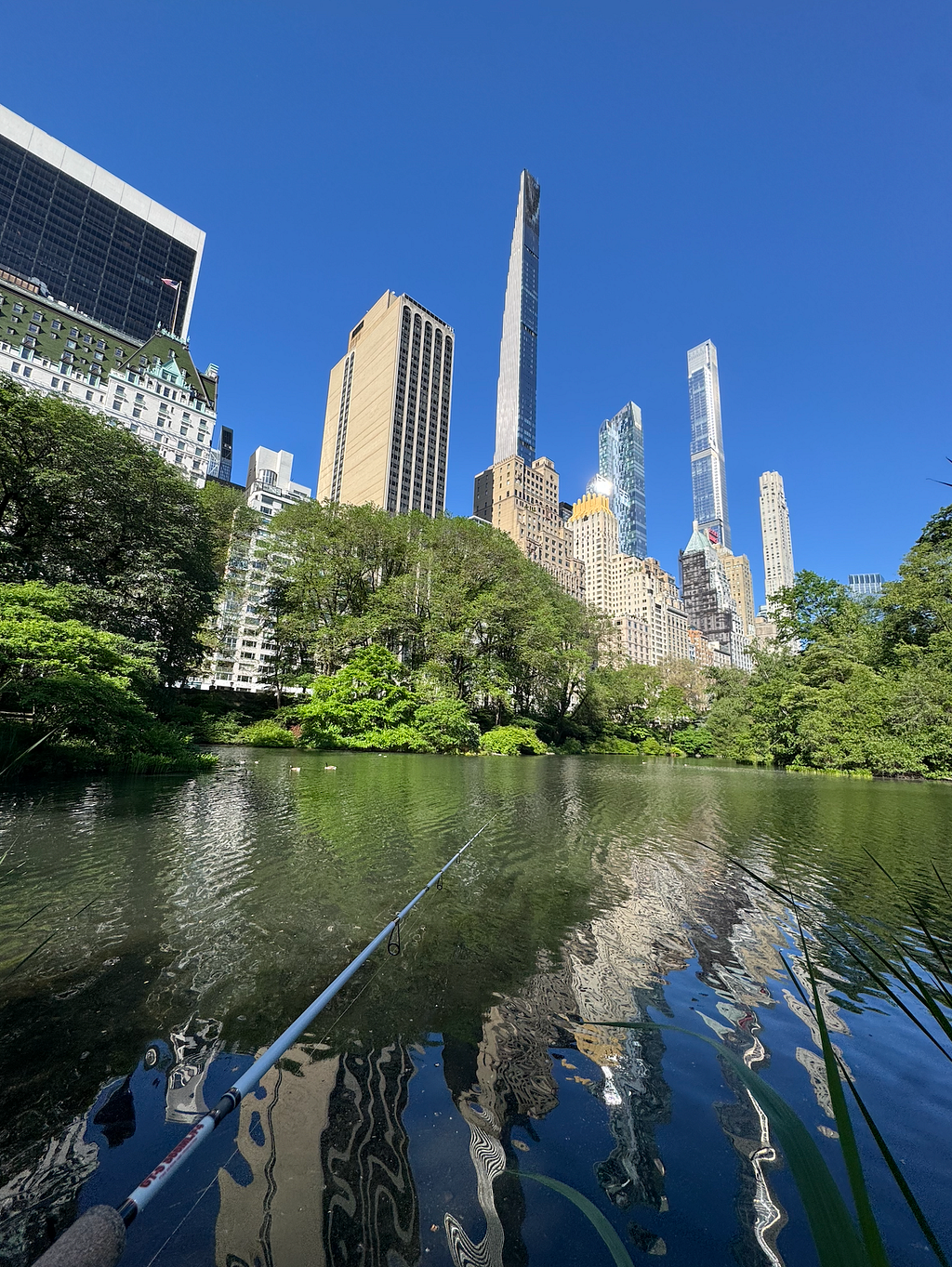
On the map it looks small, nothing like the Jacqueline Kennedy Onassis Reservoir to the north. But surface area was never the deciding factor. When we got there the water sat flat and still, a few ducks working the edges, fish flickering along the weed line. A genuine pocket of breathing room in the city.
The rules — fishing Central Park legally
This is regulated water, and the rules matter:
- Valid license required. Non-residents buy a one-day fishing license — $10, online through NYS DEC.
- Catch and release, park-wide. Every fish goes straight back. No keeping, no eating. The whole park is conservation water.
- No live bait, certain hooks restricted. Live bait — bloodworms, minnows, loaches — is banned to keep invasives and fish disease out. Barbless hooks are strongly encouraged, and on these waters they’ve become basic etiquette. Crush your barbs.
- Rig limits. New York’s freshwater regulations cap each line at two baited hooks or two artificial lures. Trebles aren’t explicitly banned, but pinch them flat in the park.
Fussy on paper, but this is exactly what keeps a green, fishable pocket alive in the busiest city on earth.
Before sunrise
We met in the lobby at 5:30. The sky still hadn’t fully lifted — the city quiet, half-awake. A few cabs sliding past, the odd jogger flickering under the streetlights. Damp air, the smell of early-summer leaves.
We walked in with our gear. The towers gave way to tree shadow until it was just wind and footsteps. Dew on the grass catching the first light, thin mist drifting through the paths and shrubs. When we reached the water it still lay in grey-blue half-light, the old bridge across it, tree shadows inked into the surface, a waterbird cutting the calm into rings. Easy to forget you’re standing in Manhattan — less finding a spot in the city than stumbling into a gap the clock had forgotten.
The setup
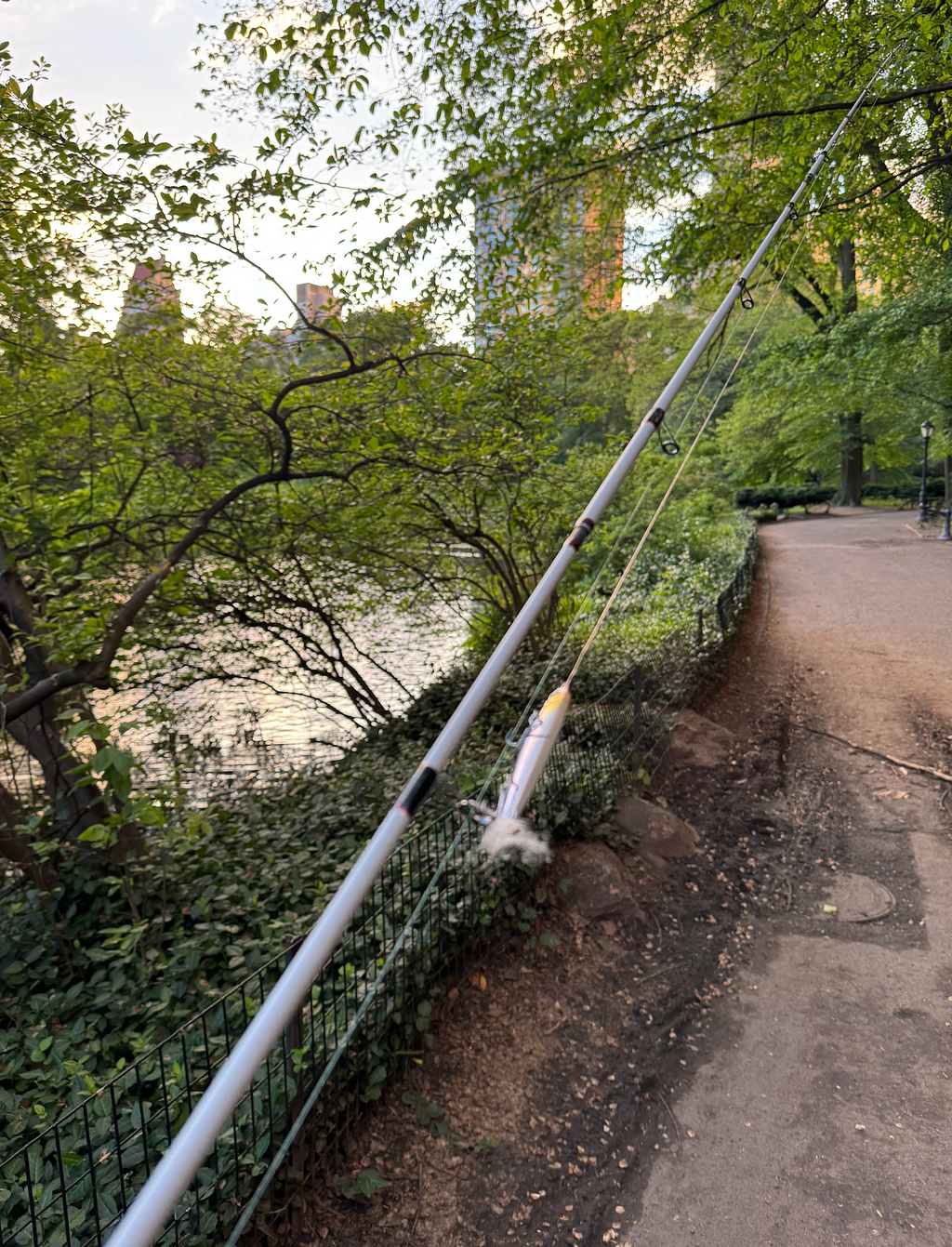
I fished a PTAD GT-S series S66ML travel rod — flexible action, packs down small, still holds enough load to throw. Paired with a C3000 reel, 0.8 PE main line, 2.5 fluorocarbon leader.
A notch heavier than I’d normally run on water this size. But this was unfamiliar ground — I’d rather carry the margin than regret going too light the moment a fish actually commits.
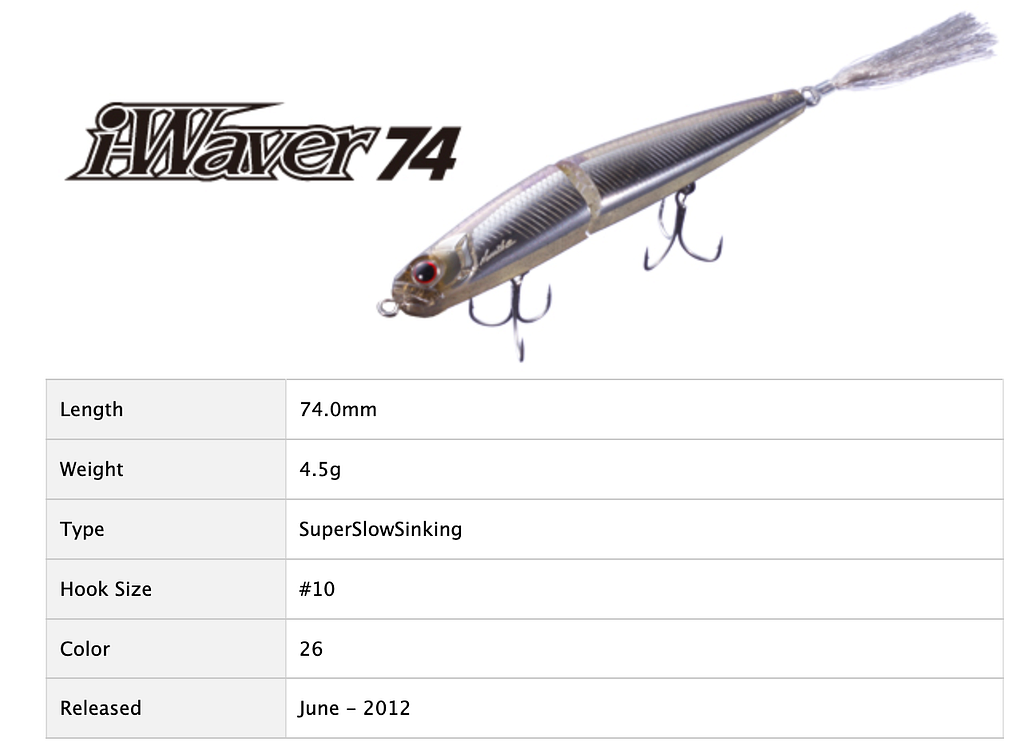
For the lure, a bass classic: the i-Waver 74 SSS. A slender, extremely slow-sinking hard bait, very high realism, sitting slightly on its side as it drifts. It moves like a wounded baitfish that’s lost the plot — and that something’s wrong signal usually does more damage to a nervy morning bass than any lively, energetic swim. A Japanese veteran handed me this one years back at a lake session, and it’s been a trusted box member ever since.
I eased the rod tip back and laid out the first cast. The lure cut through the morning mist and settled on the grey-blue glass, throwing a few rings — the first quiet stroke written on the city’s water.
Hesitant taps, then the lake opens up
After six we worked our way around — weed beds, shallow flats, the bridge shadow, probing each one for a fish. The cold had the whole lake still half-asleep. Mostly hesitant little taps, fleeting probes, nothing you could read a pattern from.
We changed tack and pulled back from open water to the shoreline weed edge. Right after that switch I hooked a small bass, maybe 15cm. It threw the hook on the retrieve, but it lifted us anyway — proof this wasn’t pure waiting.
Not long after, my colleague landed the day’s first bass. Small, but on the bank for real — pushing our confidence in this city lake one step further.
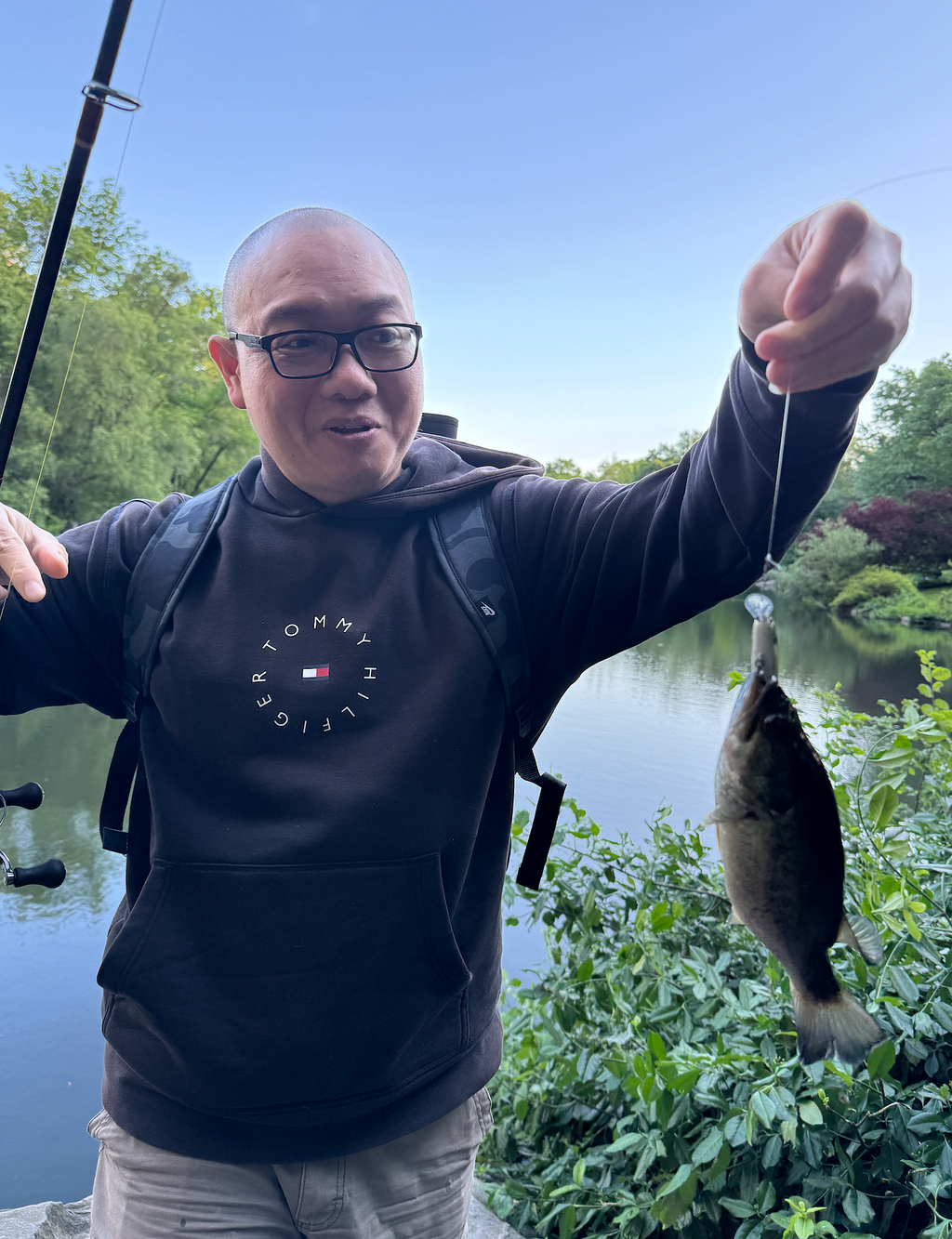
Then, along another mat of floating weed, my rod tip loaded up with a clear, solid sinking pull. Before I’d even set into the retrieve a bass broke the surface, shaking its head in the air. Around 30cm — not big, but a good fish for this water. My first largemouth out of New York.
These all came before the sun climbed. Not frequent, but the activity and the size told you what this pond could hold.
Sun up, bites stacking
The real turn came after 7:30. Sunlight on the water, the shoreline warming, and the bites started stacking up — no longer occasional probes but a hit every few casts. The fish were smaller now, mostly 15–20cm, plenty of them but without the weight of that earlier one.
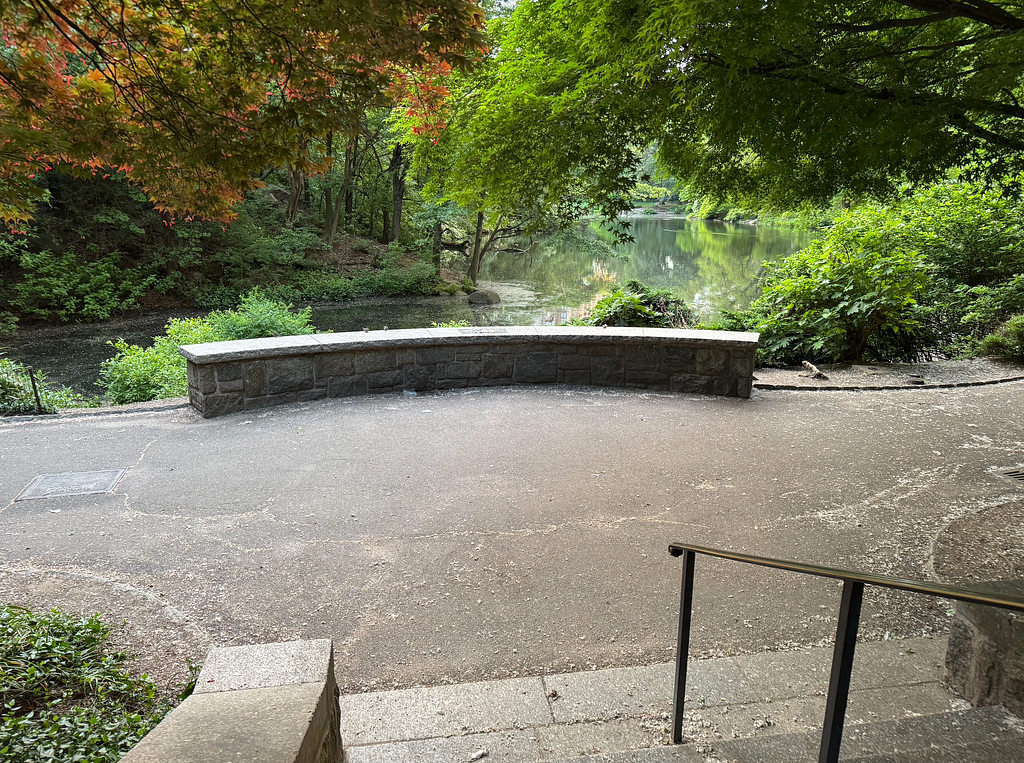
My colleague pushed out to the very end of the shoreline path — a quiet corner with banks on three sides, only one angle open to cast. He threw into the deep shaded water against the bank and started landing fish on almost every cast, like he’d found a covered channel of live water. I came up beside him and we worked it shoulder to shoulder, trading fish under the still tree shadow. Small fish, but constant signals, tight rhythm — the whole lake finally loosened up and woke out of the mist.
The last stretch
As the sun climbed and it warmed, the activity beneath the surface kept rising. Bites came in waves, too steady to drift off. By the end the two of us had landed thirty to forty bass between us — mostly the 15–20cm class, but every kick of the rod tip and every fish fighting on the line made the morning real.
Along the way we crossed paths with a properly New York angler — leather shoes, dress trousers, striped shirt and vest, working a lure rod through thick brush, quietly hunting fish. He looked like a city parable made flesh: not walking out into nature, but keeping one small uncompromising patch of habitat right in the heart of the city.
By 8:30 we packed up and headed back. At the southeast exit a street cart pulled us in — a hot sub and an iced tea, the kind of New York scene we’d only ever seen in films, signing off the session for real.
This water has its own rhythm: the first two hours take patience. Wait for the lake to warm, wait for the fish to commit. But when it opens, it opens properly — bites coming faster than you can move. Next time I come, my first cast goes straight to that three-sided corner under the trees.
Notes — fishing Central Park
- Bass behavior: most active 6–8am as the sun comes up; holds to weed and shadow.
- Gear: travel light, approach quiet, lean on slow-sinking soft and hard baits.
- Rules: valid license required (non-residents can buy a one-day online), no live bait, catch and release park-wide.