After getting worked over by a monster on the Coney Island jetty at first light, I held the spot another two hours. The sun climbed, the joggers and tourists filled the beach, and the bite went dead. Time to move. The next mark on my list was Pat Auletta Steeplechase Pier.
Where and when
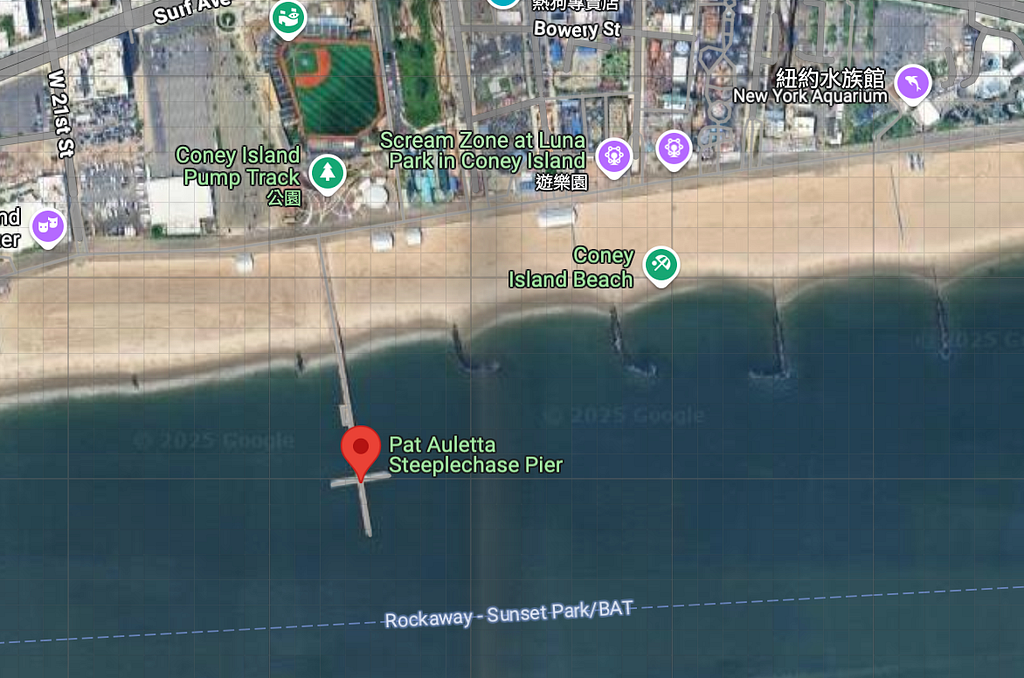
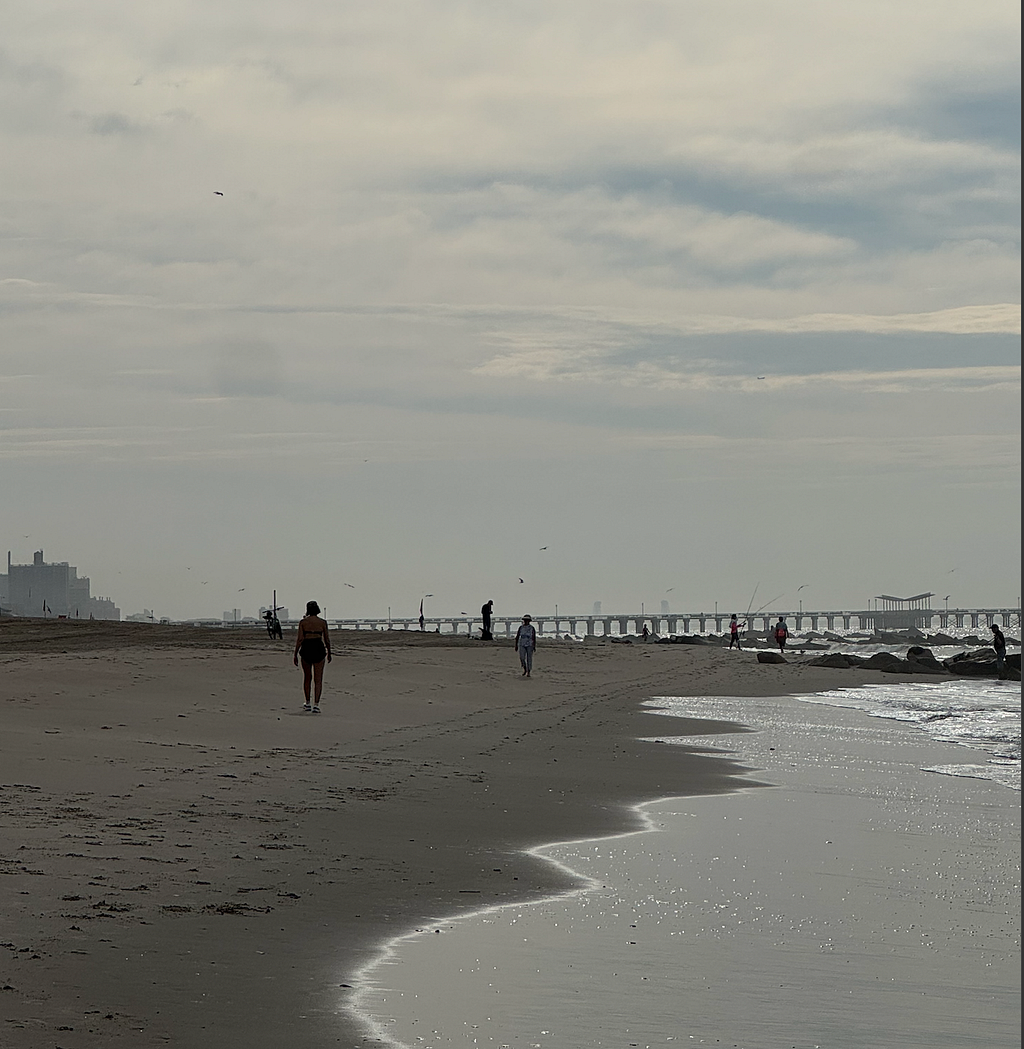
The pier faces the busiest stretch of Coney Island, a landmark that runs more than a hundred metres off the shoreline — it pulls in anglers and crowds in equal measure. To walk there from the jetty you cross over a kilometre of sand, broken every 200 metres or so by a short stone groin, almost certainly built to hold the sand in place. I’d seen on YouTube that stripers show up around those groins sometimes, though usually on the small side. The real target on this beach is fluke.
This was the right week for it. New York runs two flatfish: summer flounder, active spring through summer, and winter flounder for the colder months. I’d arrived smack in the middle of the summer fluke season, and that was a big reason this stop made the list.
The rig
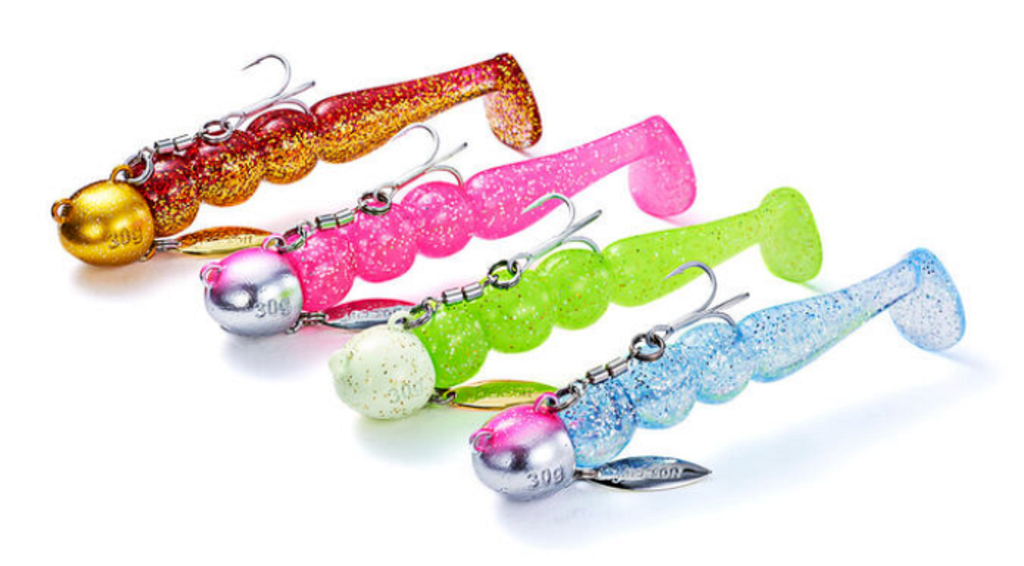
Around nine I left the jetty, switched to a sea bass rod, and tied on a JACKSON Sunadango — a soft plastic built specifically for fish that hold on sand. The hook rides on top to cut down on snagging, with an attachment ring underneath for adding flash. Fluke were one of the design targets from the start.
This was my first attempt at fluke from shore. Every flatfish I’d caught before came off a boat, and shore and boat are two different games entirely. Landing one from the bank meant more to me precisely because in Taiwan the chance barely exists — timing, location, and hookup rate are all stacked against you. In Japan, surf fishing for flatfish is a whole scene, and as a Taiwanese angler I watch that with envy and itchy hands.
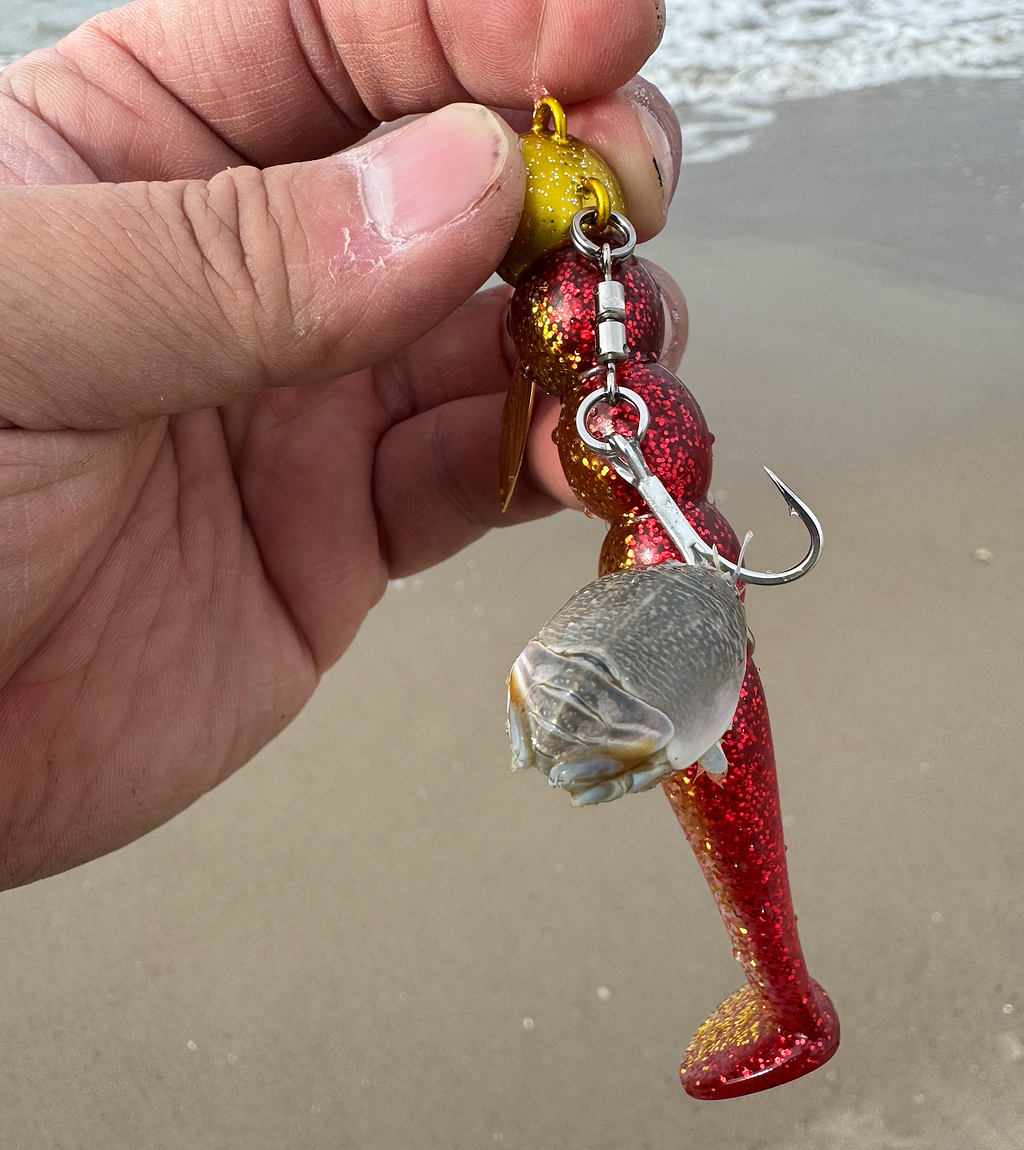
I worked the Sunadango with short hops and a flat drag, tapping bottom over and over. No clean bites, but a strange thing kept happening: a slow drag through the wash hooked a sand crab about seven casts out of ten. That density caught me off guard. We have sand crabs in Taiwan too, but I’ve never seen them stick to a lure like that — a sign of how much richer the biomass on this beach is.
I passed two or three local anglers along the way, all of them clearly rigged for fluke, all of them empty-handed. My setup ran a little different from theirs, which earned me a few curious questions.
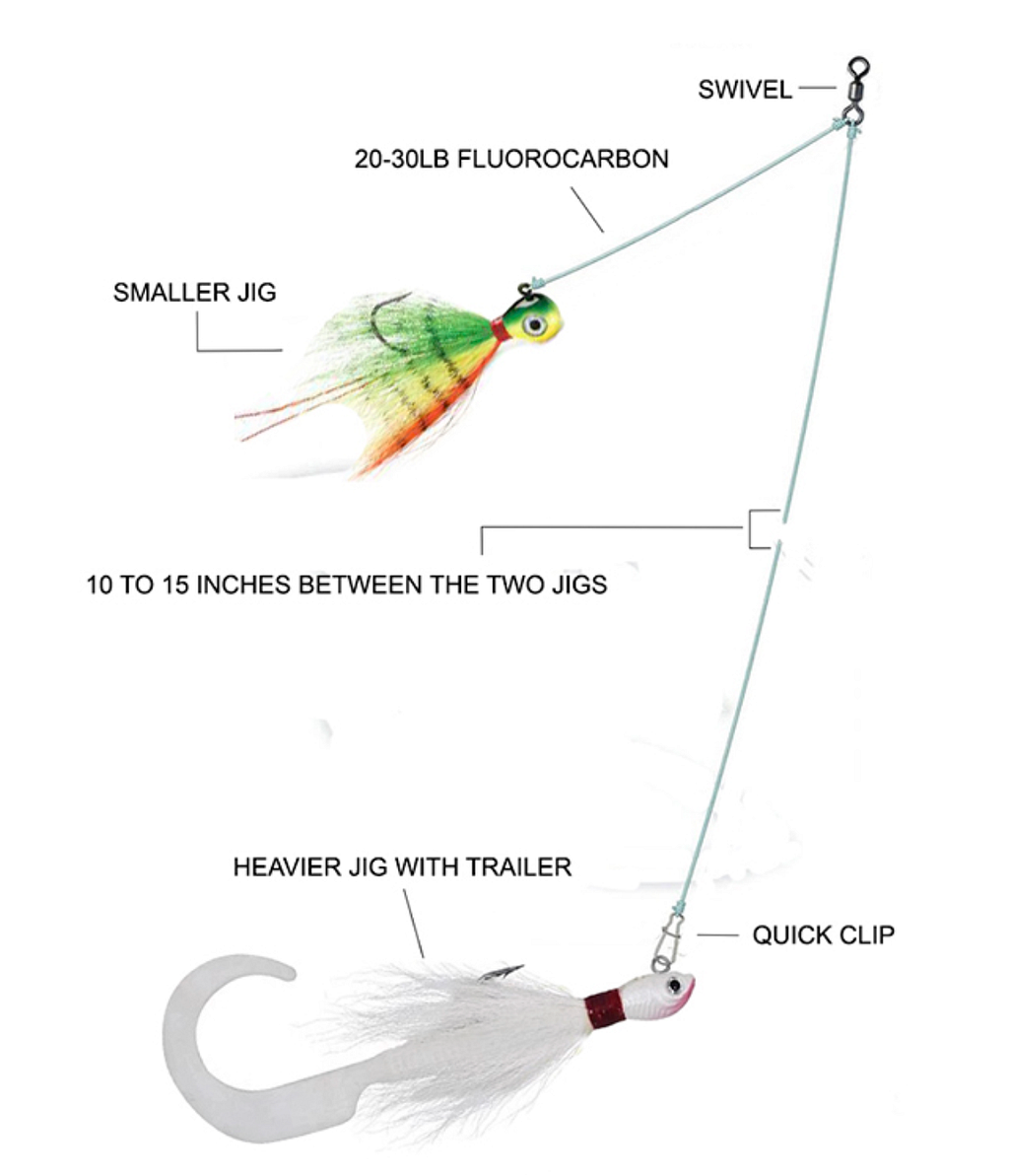
Truth is, I’m a complete beginner at fluke from shore — I cobbled my approach together from Japanese YouTube channels and scraps of my own experience. The common local rig is a high-low: a roughly one-ounce jig head on the bottom (usually a bucktail or soft plastic), with a smaller fly or soft plastic, maybe five grams, riding above it — a deliberate size contrast. The logic, as I understand it, is that the big bait below draws the eye, but a fluke instinctively prefers to attack the smaller, weaker-looking bait above. You fish it by tapping bottom and dragging flat, keeping the rig pinned to the sand.
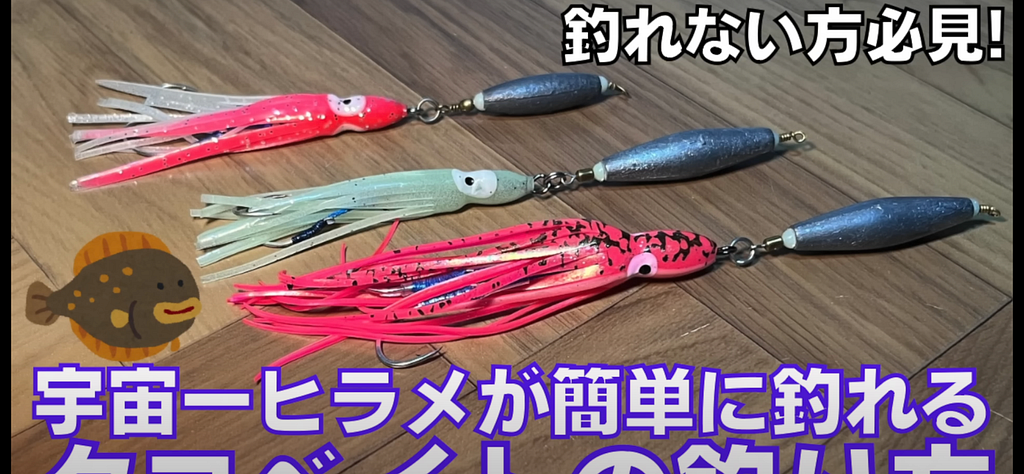
Another method uses a 20–30g metal jig with a single hook on the tail and a scented GULP soft bait, worked tap-bottom, short-hop, pause. The jig’s edge is casting distance and weight control. Every region tweaks the fluke approach. I’d also pulled a simple tie from a Japanese clip: a swivel sinker plus a fake squid, clean and efficient. I make my own swivel-sinker micro jigs anyway, so I dug four sets out of the drawer before the trip.
Out on the pier
I patrolled and cast my way down, still nothing by the time I reached the pier, so I climbed up. It’s cross-shaped, not a single line. By ten the deck had a fair number of tourists but wasn’t packed yet. The anglers clustered at the cross junction and further out front.
The very tip held six or seven locals who clearly knew each other — no conversation, but a faint sense of being closed off. I settled in loosely near the junction. Before long one of the men out front took a fluke around 30cm on shrimp. Not my fish, but seeing the target finally show up warmed the confidence back up a little.
I switched to the swivel sinker and fake squid, short hops and flat drag along the bottom. No commitment, but the odd suspicious bump. That’s when I remembered a friend swearing by GULP, and I happened to have a pack of the sea-worm shape. I clipped one onto the short hook.
They call it the stink bug for good reason — it’s a fake bait soaked in a heavy amino-acid juice, and once you’ve rigged it your whole hand reeks. I propped the rod on the railing and dug out wet wipes to clean up. By the time I picked the rod back up, the other end of the line was loaded with something that didn’t feel right.
I tested it. A clear living feedback came back, slack then tight — dead weight when it stopped, alive when it moved. Then a flat brown shape surfaced and I knew: the target, for real.
The pier deck sits about a storey above the water. To avoid breaking off, I held the fish at the surface first and shot a record photo on my phone — this was my first shore-caught fluke, it deserved care. Then I used the lift I rely on at Keelung’s white lighthouse and Badouzi: drop the rod, shorten up to the right length, and bring the fish up in one motion. Flat but not heavy, it came over cleanly.
About twenty minutes later I landed a second, slightly smaller fluke. The detail worth noting: as I lifted it, a bluefish actually chased it right up to the edge. I unhooked fast and threw the lure straight back to tempt the bluefish, but it vanished like a ghost.
The long flat afternoon
Near noon the bite went cold again. By half past one every angler on the pier had reeled in fishless, and my stomach started complaining. I packed up and headed for the shops behind, only to find the afternoon crowd had fully arrived. The pier entrance had become a Latin American street market — music blasting, people dancing to the beat, vendors selling Central and South American trinkets. Less a fishing spot than a carnival where the city’s edge meets a foreign current.
I ate a hot dog, drank something, used the restroom, and came back. Looking around, the anglers had turned over — not many had stuck it out from dawn like me. I chatted with a newcomer running both bottom bait and a big soft plastic. Before long his bottom rod jumped. He hauled in two horseshoe crabs locked together — I caught the moment on my phone, the two of them flipping in the air, shells flashing a metallic sheen, with Coney Island’s parachute tower and beach behind. Strange and magical at once, an off-colour card pulled by accident from the city deck.
By nearly five the whole water surface stayed dead. I’d started planning dinner, quietly deciding to cast a few more and call it on this near-silent session.
The last cast
Then, on one of those casts, with the lure nearly back at my feet, the whole rod ripped down hard — hard enough that I couldn’t react in time, the spool screaming line out. I lifted the tip, locked both hands on the grip, leaned back, heart climbing. What was this?
After a few rounds of tug-of-war, a silver-blue shape broke the surface: a bluefish pushing 50cm. Its arrival put a satisfying full stop on a day of waiting and trying, and dropped one more precious species stamp into the collection before I called it.