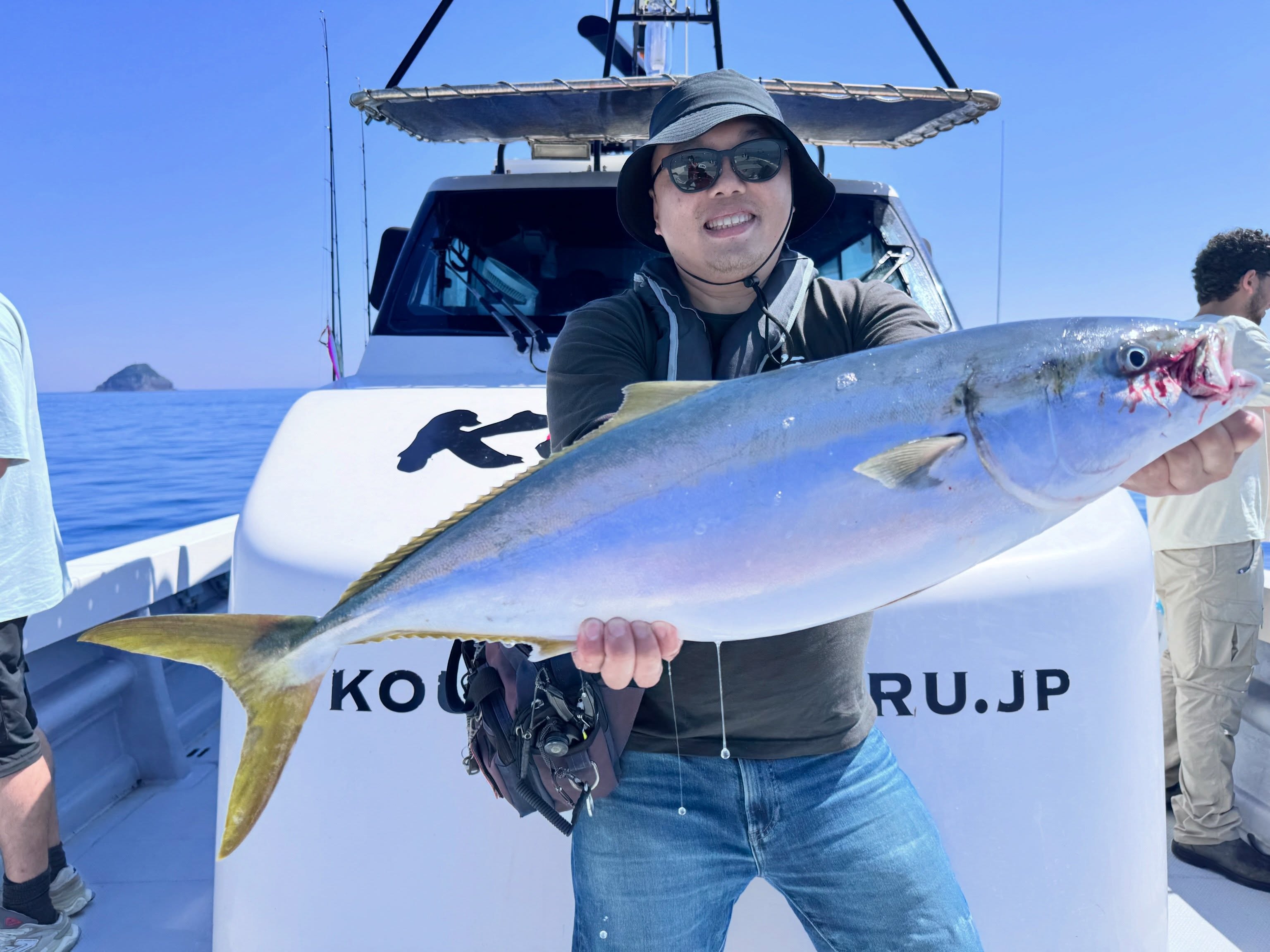
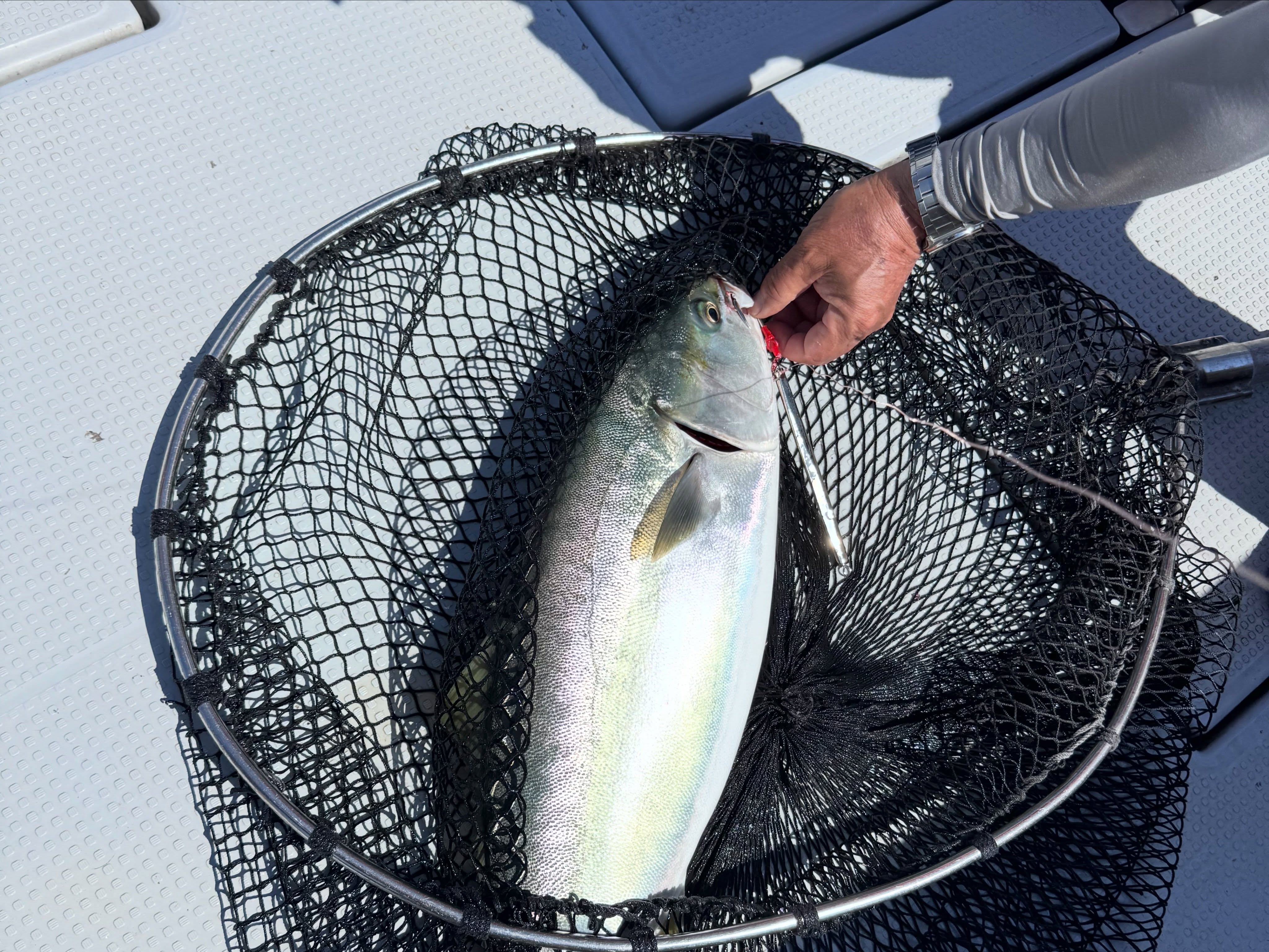
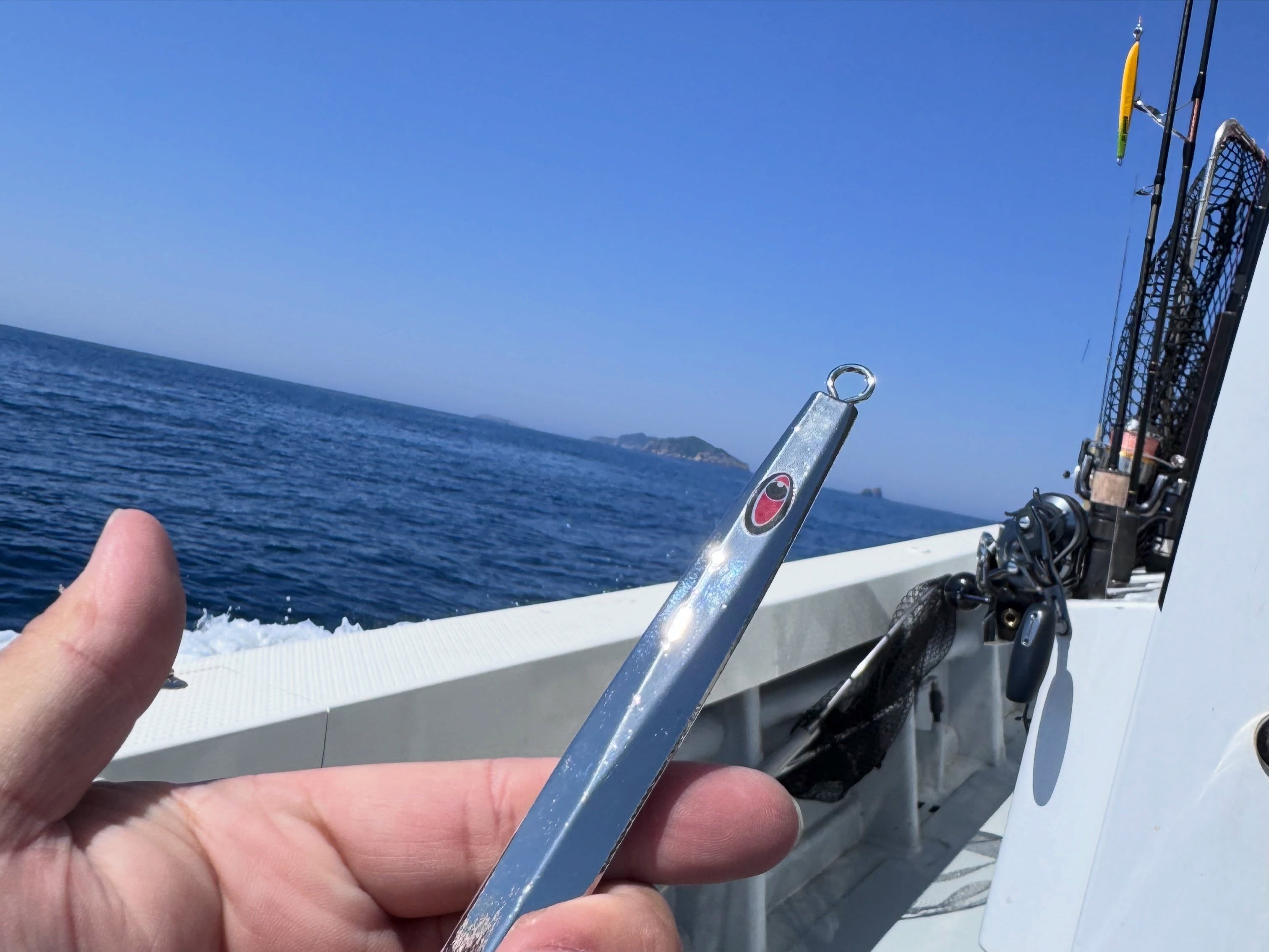
All the way to Nagasaki, and the fish still came on the rabbit jig.
Conditions off Goto
The water off the Goto Islands was as flat as it gets — clear blue sky, bright midday light, a single rocky islet on the horizon. Flat calm offshore cuts both ways: comfortable boat work, clean casting, but high sun and glassy water usually mean the bite tightens and the fish drop deeper. This is amberjack country. The Goto chain is one of Japan’s premier grounds for buri and hiramasa, and the offshore jigging culture here is mature and competitive.
Working the Column
In these conditions the cadence is one-pitch — one rod sweep, one reel turn, working the jig up from the bottom to find where the fish are holding. On a flat, bright day they tend to sit deep, so the answer is usually on the drop near the bottom. The reaction strike comes on the flutter, when the jig rolls sideways and a trailing fish can’t resist.
The Jig You Know Cold
On a foreign boat in unfamiliar water, the temptation is to keep asking what’s working, keep swapping until you find the magic colour. But a jig you know cold beats a jig you’re second-guessing every time. I know this one’s fall rate, its action on a one-pitch sweep, how it flashes on the drop. Commit to it and fish it with conviction — and in jigging, conviction is half the game.
A Goto amberjack is a good fish anywhere. Same jig, same rhythm, dialled to the right depth. That’s the whole story, and it’s enough.