Two bass, one trip
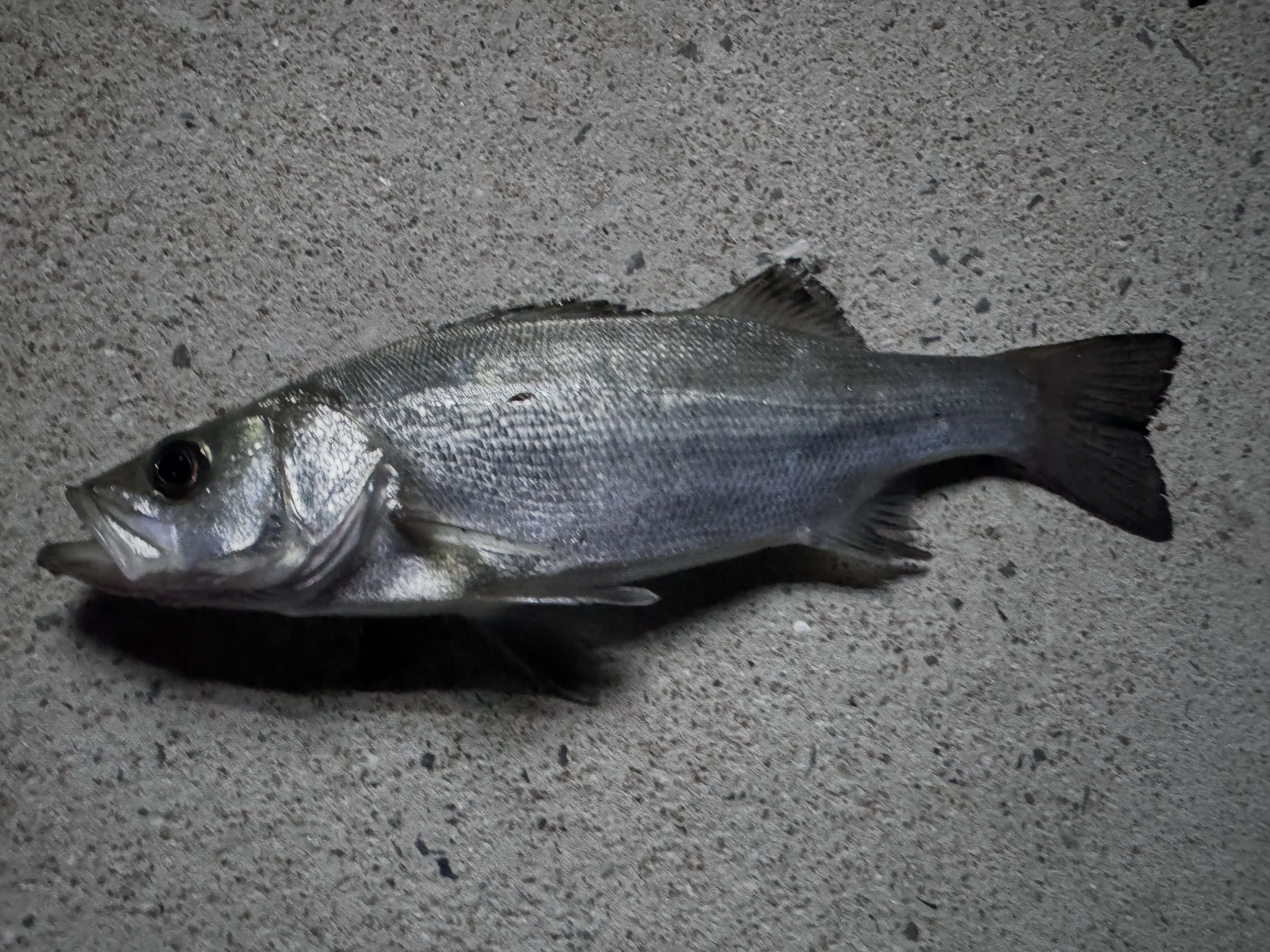
One trip to Kyushu, two species of sea bass. ヒラスズキ and マルスズキ. Neither was big, but catching both in one trip is the kind of result that makes an outing feel complete.
マルスズキ at first light
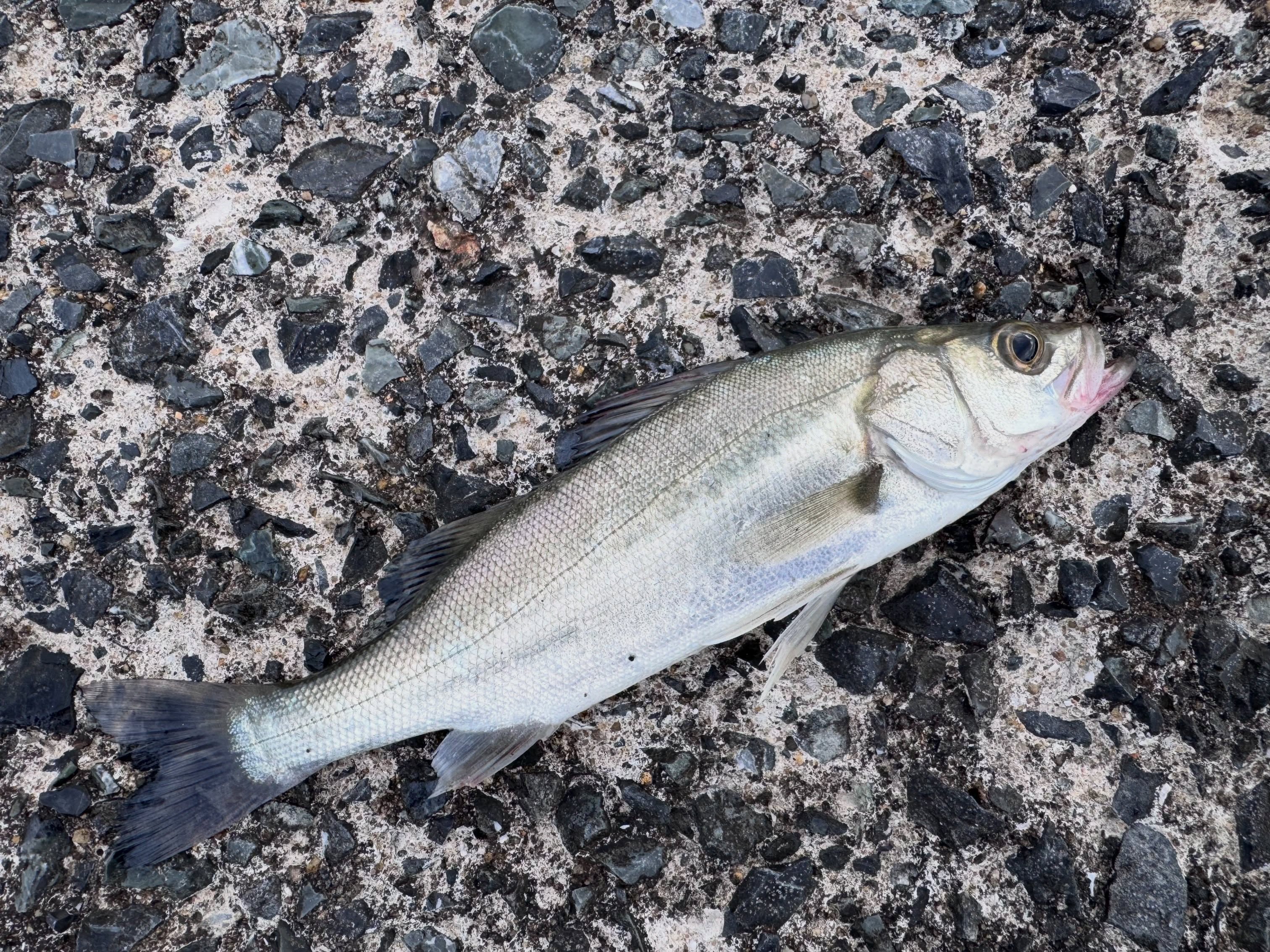
The マルスズキ came at first light. Estuary bank, the sky just starting to go pale, the fish still on feed.
The channel that reads like a river — ヒラスズキ at night
The spot that produced the ヒラスズキ at night is the one I keep thinking about. To the eye it looks like a river — a narrow waterway cutting between banks. But it’s pure saltwater, the way Keelung’s Bachimen channel runs full marine despite looking inland.
What makes it work is the tide. As the water swings from flood to ebb, the current reverses, and the fast-water seam shifts from one side of the channel to the other. The hard flow you want to fish isn’t fixed — it migrates across the channel with the tide stage. Read the wrong side at the wrong time and you’re casting into dead water.
That’s the whole game in a spot like this. The fish sit where the current does the work for them, holding in the slack just off the fast seam and picking off whatever the flow pushes through. When the tide turns, they relocate, and you have to relocate with them. Get the timing and the side right, and the bite is there.
ヒラスズキ vs. マルスズキ
The two are easy to confuse if you don’t handle them often. ヒラスズキ runs deeper-bodied and heavier-shouldered, a fish built for the turbulent foam zones of rough reef — the サラシ. マルスズキ is the slimmer, more familiar estuary and harbour bass. To pull both in one trip, from water this different in character, is the part that satisfied me most.
Neither was a trophy. But size wasn’t the point here. The point was reading a channel where the current rewrites itself twice a day, and being on the right side of it when it mattered.
A spot like that doesn’t give you the same shot twice in a session. The window opens, you fish it hard, then the tide moves the table and you start reading again.