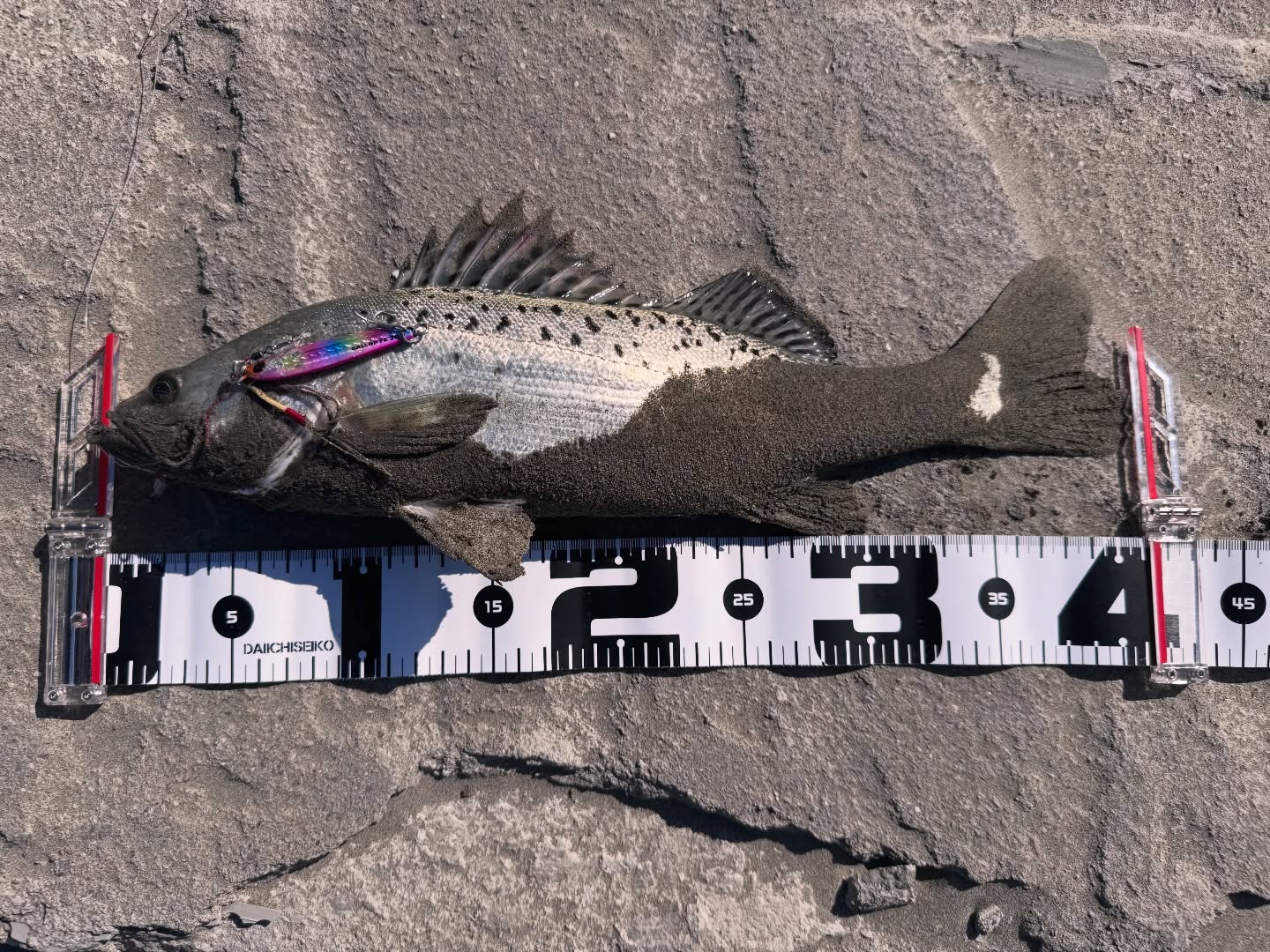
A 40 cm spotted sea bass (七星鱸), pink-purple metal jig still in the corner of its mouth — north breakwater of Taichung Port, hard noon sun, winter. The fish came up coated in sand from nose to tail. Self-seasoned. The timing couldn’t be better with Lunar New Year a week out.
Why a metal jig in February
February on the Taiwan coast is not the easy season. Water temperature drops, baitfish thin out, and fish hold deeper with shorter feeding windows. A metal jig earns its keep here: it sinks fast, cuts through the persistent winter crosswind, and delivers a tight, compact wobble on a steady retrieve that covers ground efficiently when fish aren’t willing to chase.
The hookset that matters
The lure caught the jaw, not the flank — and with spotted sea bass, that’s the difference between landing and losing. The moment they feel the hook they launch into a violent head-shake at the surface, throwing spray in every direction. A body-hooked fish on the flat face of a breakwater, with nowhere to work the angle, comes off more often than not. Corner of the mouth: it stays buttoned.
Cold water technique: hop, don’t rip
When the water is cold, a light hop does more searching than a flashy, aggressive retrieve. Fish aren’t chasing — they want something that flutters naturally and catches the light on the drop. Read the surf line, find the trough or the current seam. The strike, when it finally comes, is a solid thump, not a sharp tap.
One fish, clean hook-up, walked home for the salt-and-pepper pan. That’s as good a way as any to head into the new year.