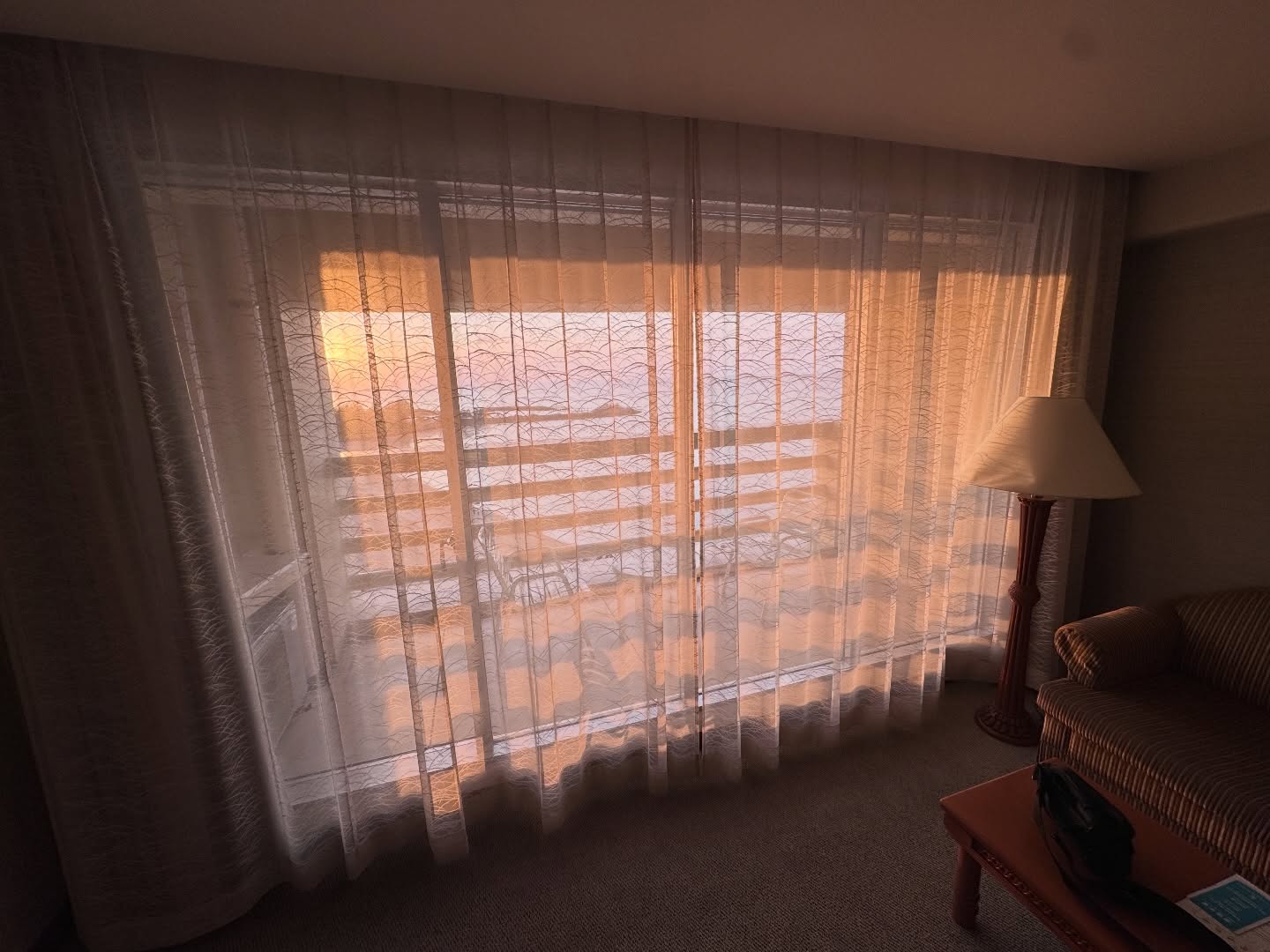
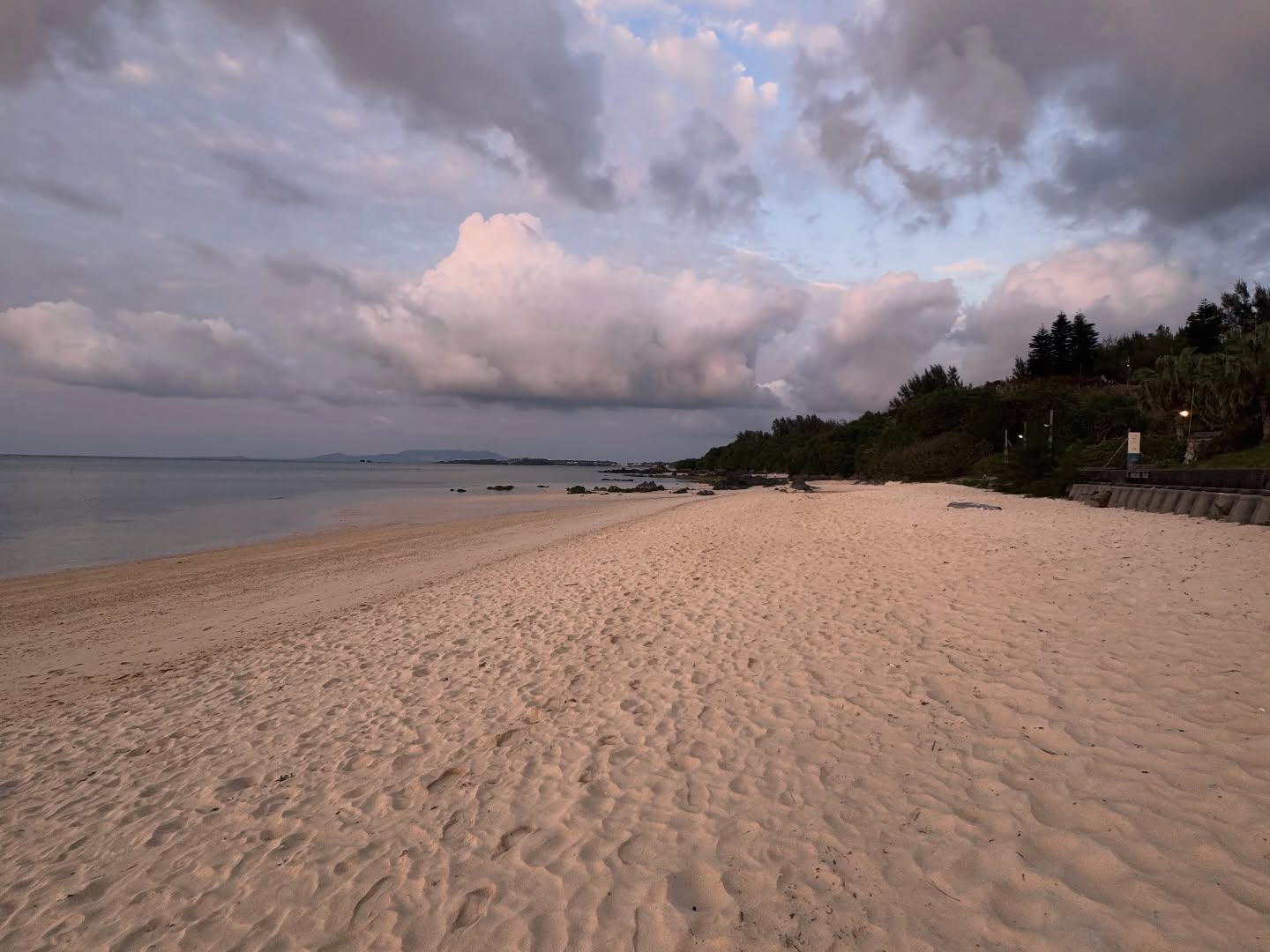
Third time in Okinawa. Days belonged to the family, nights belonged to me. Base camp split between Onna’s Tanicha and Naha’s Asahibashi, so the fishing locked onto those two zones.
Onna shallow reef
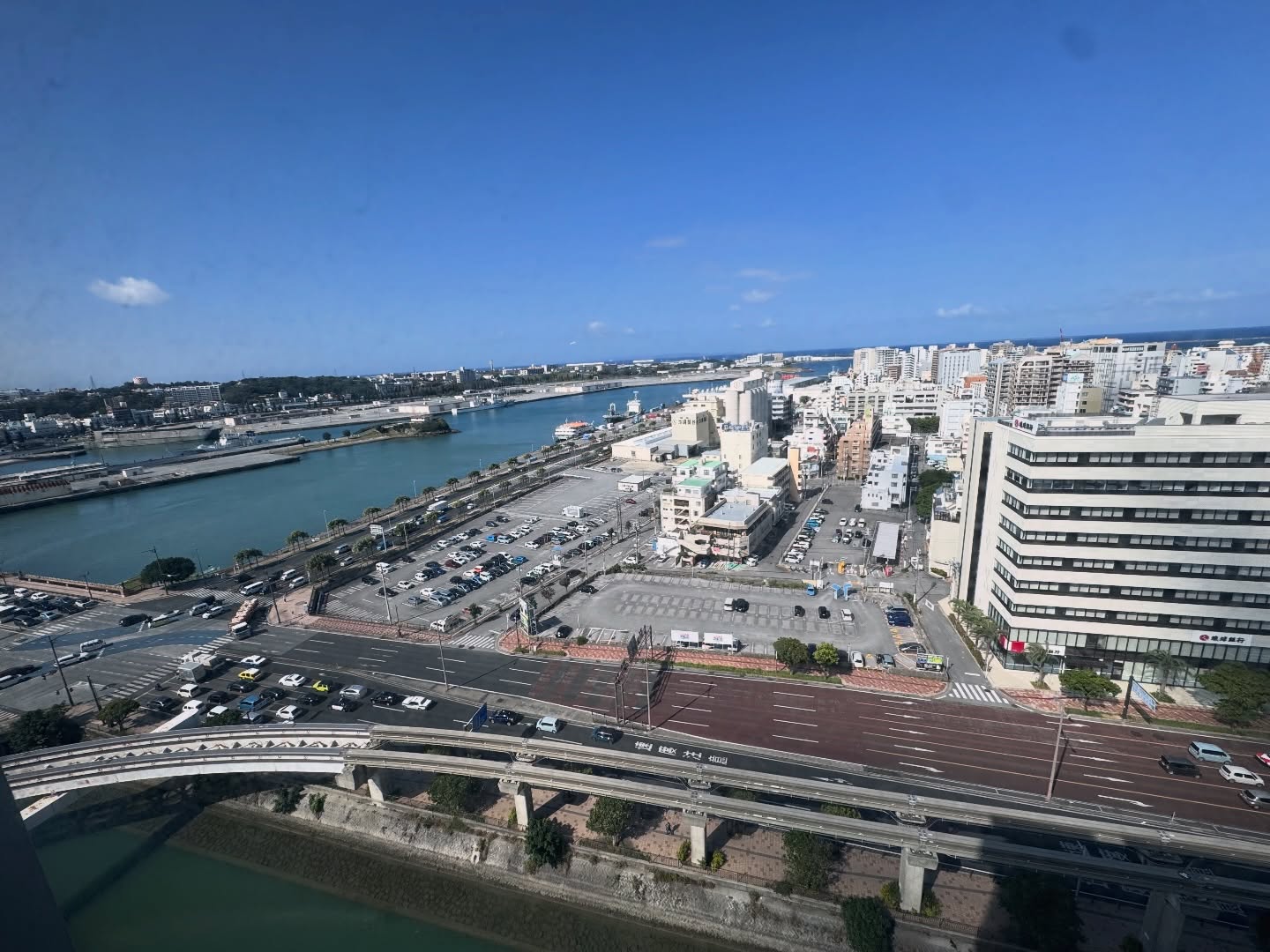
One look at the satellite view tells you the whole story — the reef table is the spot. Drop tide, wade in knee to mid-thigh deep, and you’re fishing 1–2 metres of water most of the time. The bottom is carpeted in weed, so you don’t tap bottom. You skate the lure 30–40 cm above it and let it work the clean water above the grass.
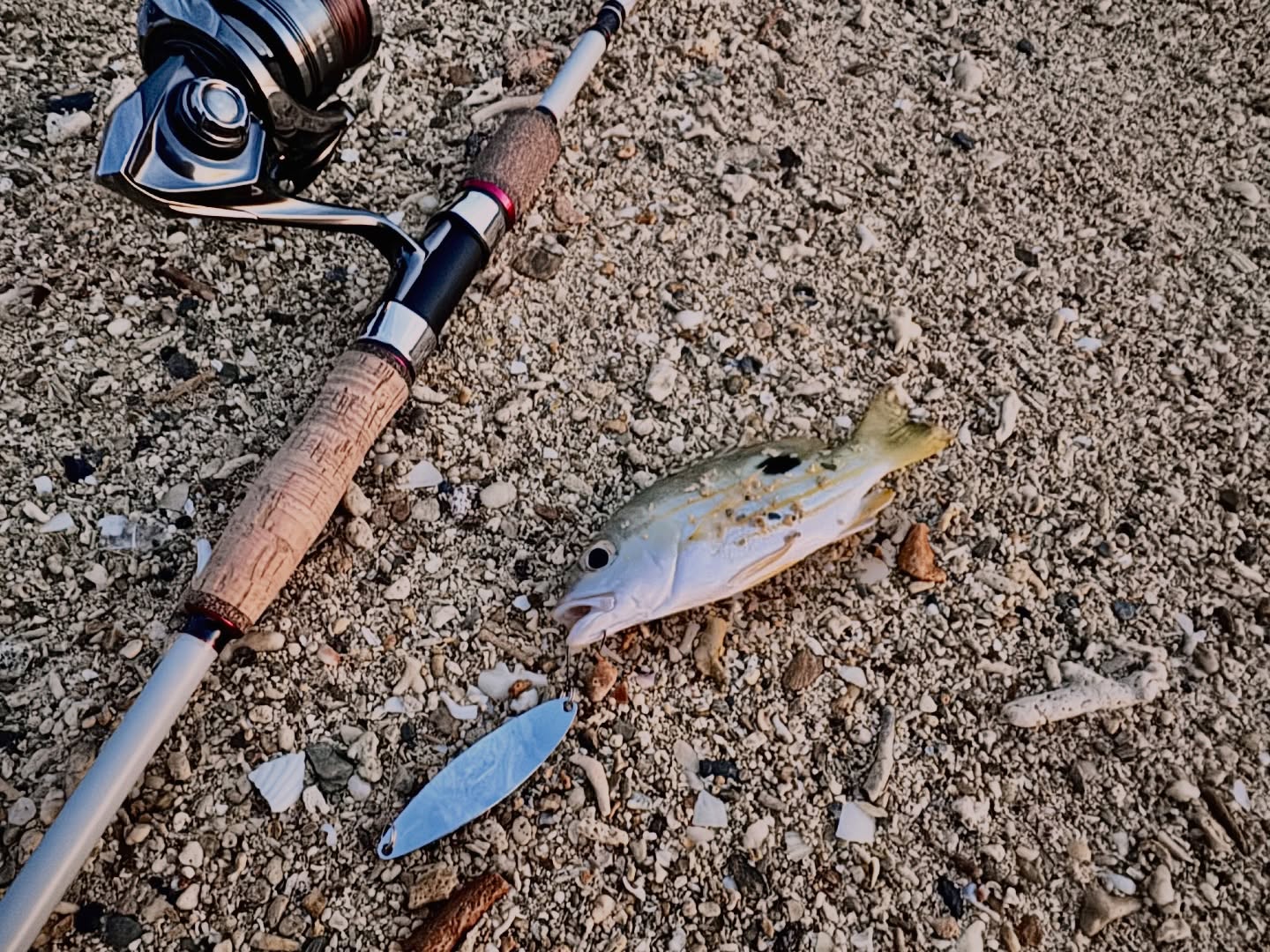
The setup was light: a 9-foot eging or light seabass rod, a 3000-size spinning reel, #1–1.5 PE to a #3.5–6 fluorocarbon leader. Clear 3–4 inch soft plastics, a 10g spoon, an aggressive crank — any of them earns a look. The target was Taman, the long-nosed emperor.
I saw one cruise the flat, close in, plainly there. It just wouldn’t commit. That’s Okinawa a lot of the time — it gives you the picture, not always the fish. Plenty of small bottom dwellers though, and snapper showed up steady. The shallows are genuinely fun.
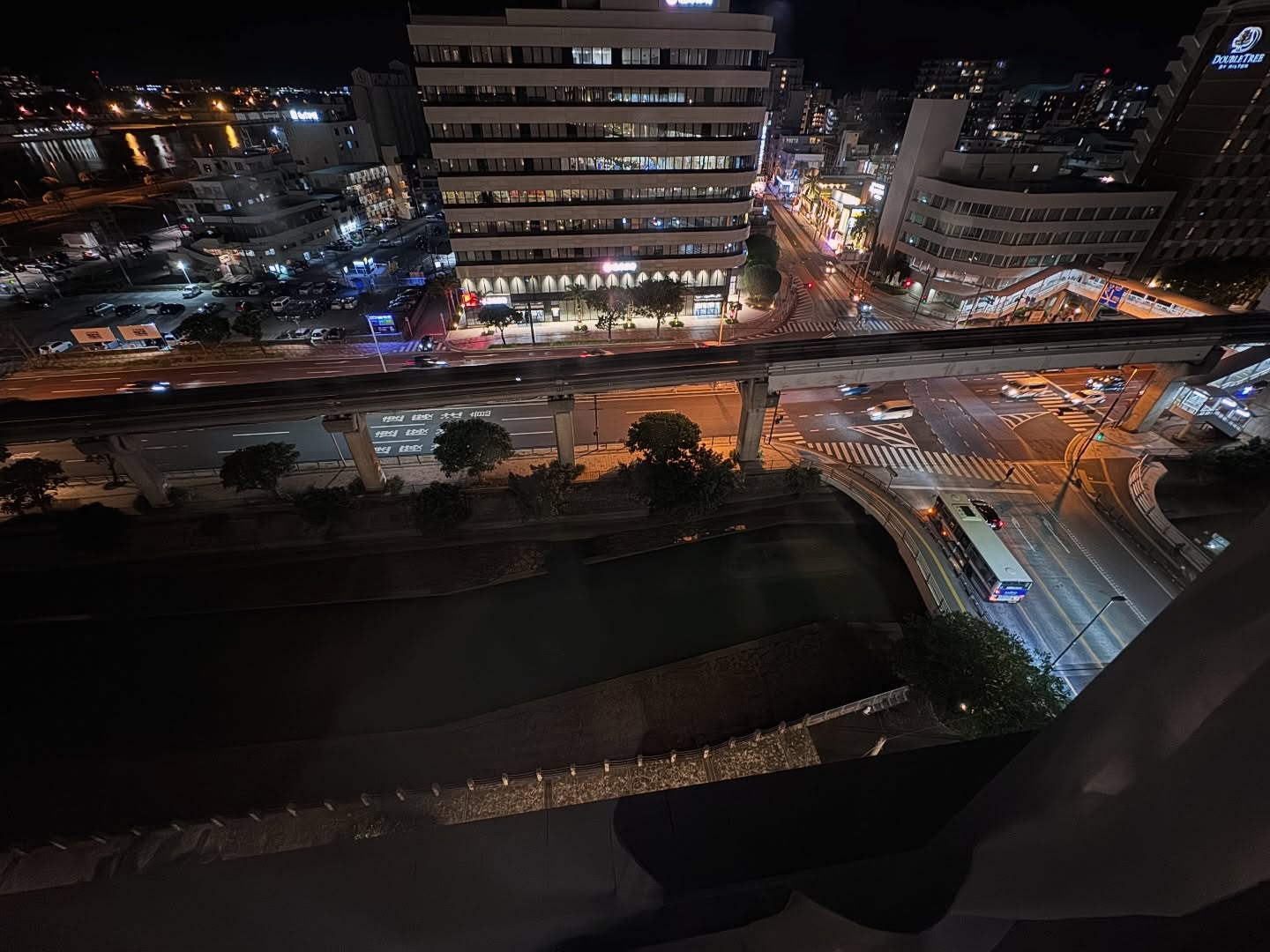
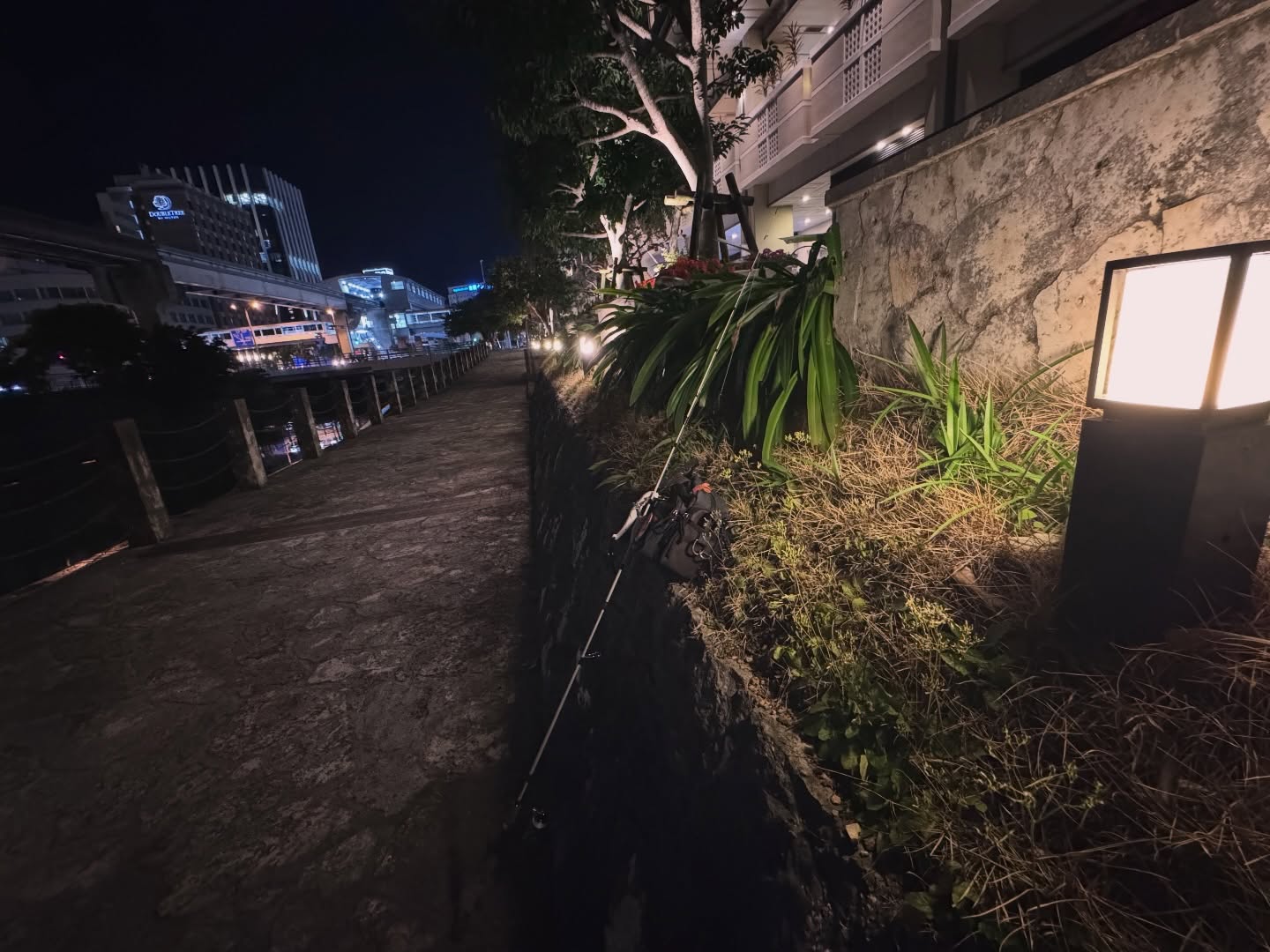
The Naha canal — a black seabream proving ground
Everyone talks about canal GT here. They exist, but that’s not the norm. The realistic cards are black seabream, grouper, and mangrove jack.
This canal lives and dies on tide. Seven-tenths flood through three-tenths ebb is showtime. The water has to climb 20–30 cm over the shallow shelves on either side before the fish get serious about feeding.
And the size spread is wild. There are everyday 20-something-centimetre seabream, and there are beasts whose head alone is three-and-a-half fingers wide — same canal, same time. At night, standing on the edge where the streetlight fades into dark, watching seabream lift out of the deep channel and over the shelf — that sight is addictive. It’s also hard. The instant they bite, the first move is the same: bolt back to the deep channel and grind along the wall.
Gear: a 6-something-foot rod handles the canal better, PE 0.8–1.2, #4–6 leader, jig heads under 3g for the quietest possible entry. This is not a place for loose, easy tackle.
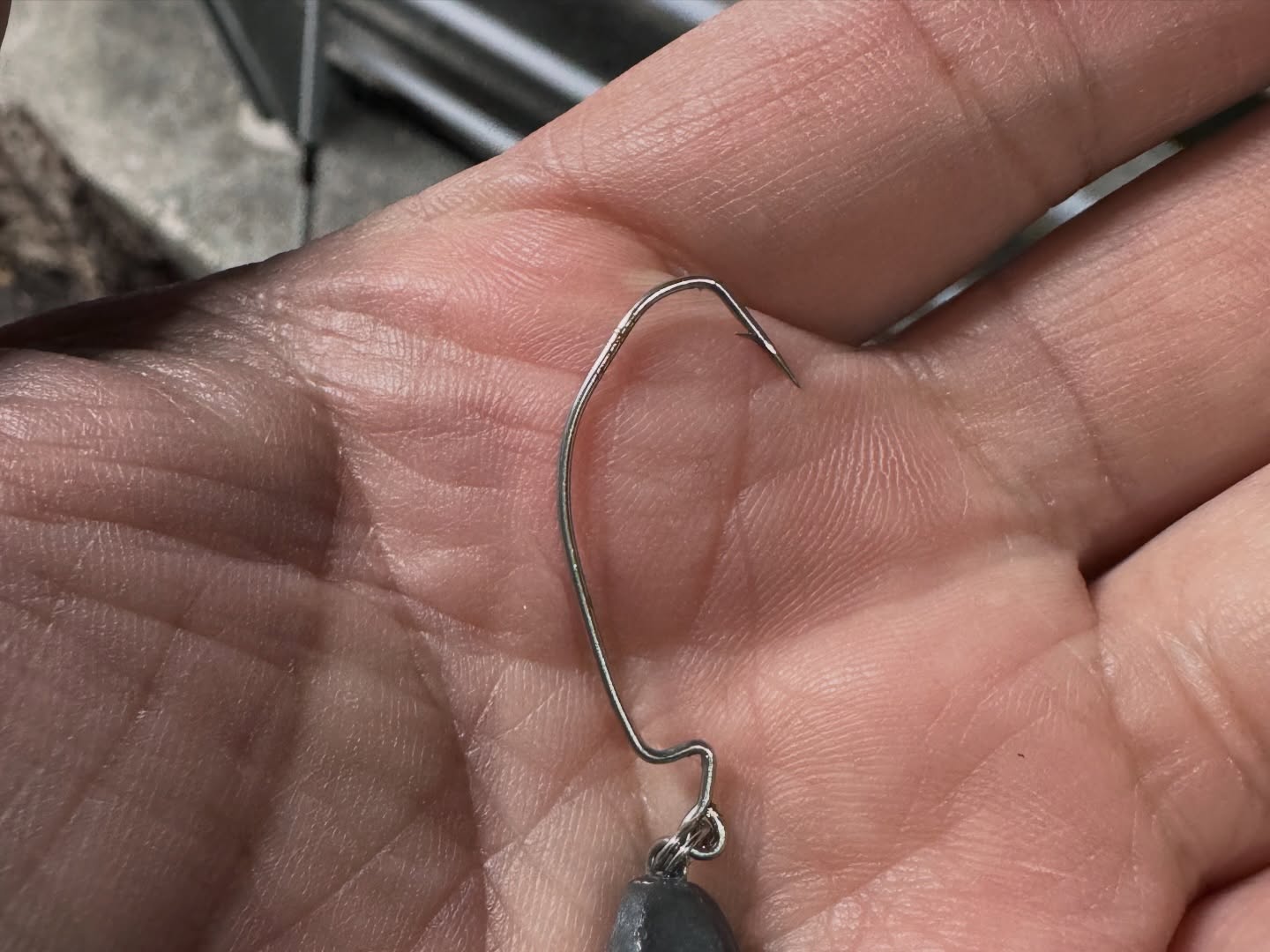
Two nights, schooled repeatedly. The closest call was a fish around 30-plus, already laid flat on the shelf and ready to land. No net with me — I tried to muscle it out, the hook had already been bent open by the fight, and it threw the hook.
Okinawa 1, me 0.
Okinawa isn’t a non-stop bite. It’s a layered place. You read the tide, read the light, watch fish climb walls. You know the big one is right there. It just isn’t necessarily yours.