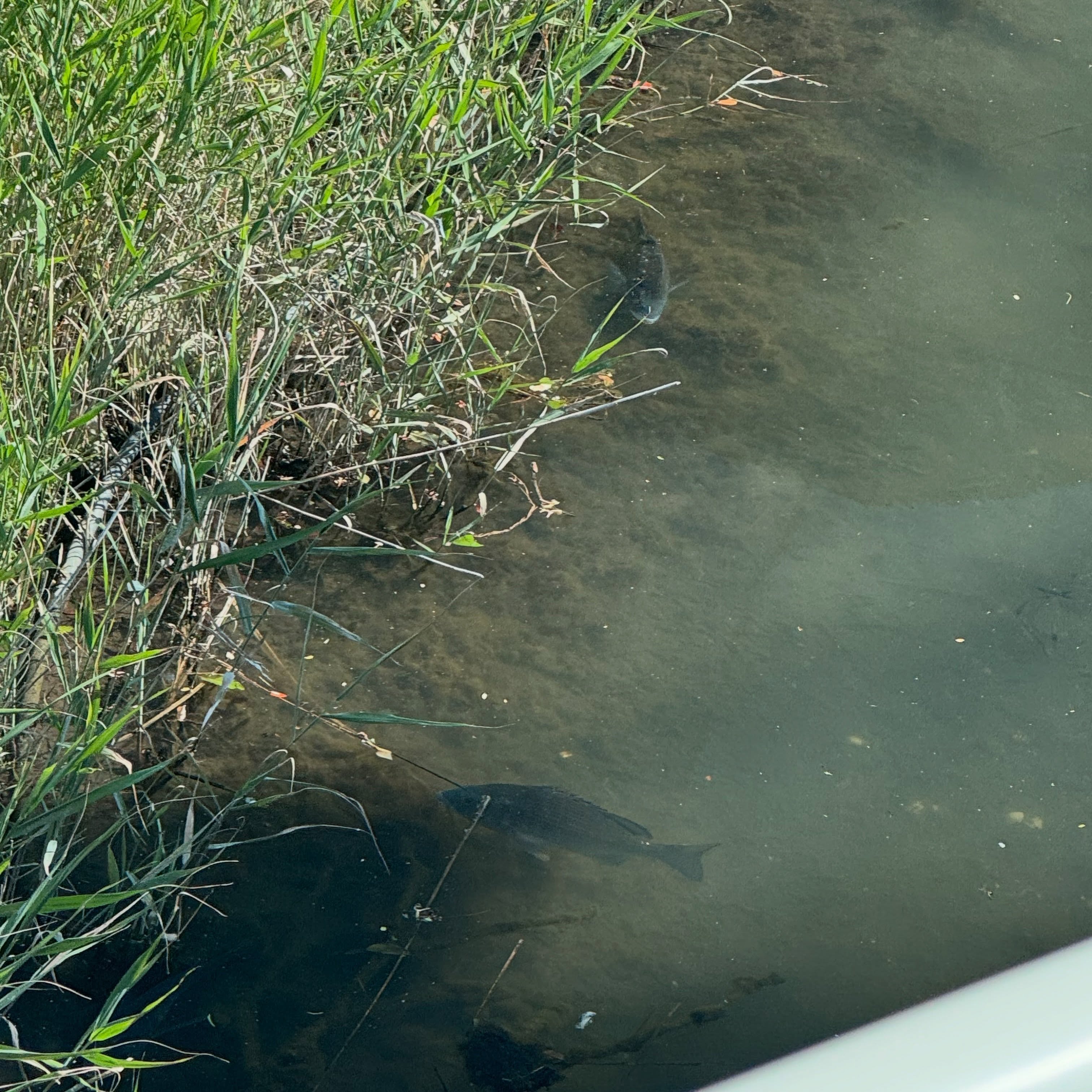
Those two dark shapes in the canal weren’t tilapia — they were kurodai, black seabream. A shallow, greenish-brown tidal channel running through a Sasebo residential block, the kind of place you’d pass a hundred times without slowing down. The flood tide pushes salt water in, and the chinu follow it deep into the back-channels of the harbour town. One fish holding high, one sitting lower. The water colour and the current said everything the map didn’t.
How Black Seabream Actually Work
They’re opportunists. Estuaries, harbour walls, oyster racks, drainage outfalls — anywhere structure meets moving water and food collects, they’ll be there. A canal cutting through a residential block is no different from a breakwater to a chinu: current, cover, and a steady supply of crabs and shellfish washing through. Taiwanese anglers call the same species 烏格 in the south, 黑格 in the north. Different name, same fish, same behaviour.
Reading the Tide
Fishing these channels is a patience game driven entirely by the tide. Brackish canal seabream see pressure and go wary the moment the water clears. A rising flood pushing fresh salt and bait up the channel switches them on; hit slack or the ebb and they sulk and ignore you. Light presentations are the answer — small soft plastics or crab imitations worked slow along the bottom. These aren’t reaction-strike fish in this environment; they inspect before they commit.
The read matters as much as the rig. Finding a vantage point to look down into shallow water — a wall, a platform, any height — is how you spot chinu instead of guessing. They’re spooky in the shallows, and sight-fishing beats blind casting. The ability to tell a dark-backed seabream from a tilapia in murky water is exactly the kind of local knowledge that turns a throwaway canal into a real target.
The best fishing intel usually comes from refusing to accept what a place looks like at first glance. A ditch full of what seems like tilapia, actually packed with seabream, is a straightforward reminder: fish go where the conditions take them, not where you expect them to be. Next time through Sasebo, that canal isn’t scenery — it’s a spot worth a few casts on the right tide.