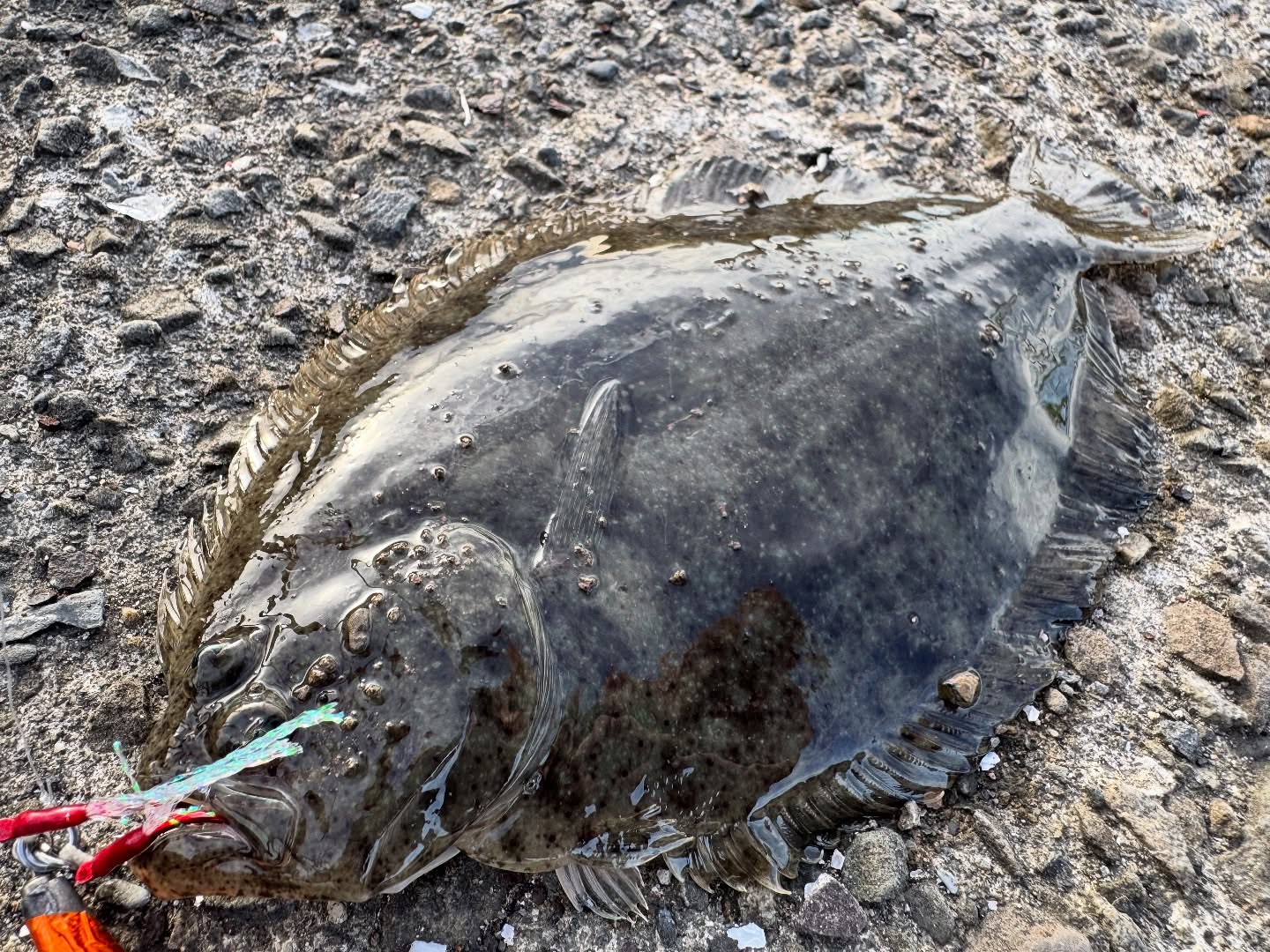
The flatfish hit on the drop — gravel shore, daytime, flat overcast sky. The micro jig was still buried in the corner of its mouth when I pulled it up: a clean committed take, not a foul hook. Most anglers in Taiwan only ever meet flounder on a boat, drifting soft plastics across an offshore sand flat. Getting one from shore on a micro jig is a different proposition entirely.
Reading the Bottom: Location Does More Work Than the Lure
Flatfish don’t hold on foam-washed reef — that’s where you’d be working for grouper or seabream. They sit on sand, gravel, soft bottom, harbour edges, and river-mouth flats. The actual work is finding a stretch of shore with the right substrate, within casting range, where you can get a jig down to the bottom without snagging out. Landing one is confirmation that the read was right.
The Bite Comes on the Fall
The retrieve is straightforward: lift, let the jig sink to the bottom, pause, lift again. Flatfish are ambush feeders — they lie half-buried in the sand, eyes facing up, waiting for something to flutter down within range. A micro jig worked along the bottom is exactly the silhouette they’re built to attack. The strike almost always comes on the fall: as the jig sinks back after a lift, you feel a tick, or sometimes just weight where there was none a moment before. Set the rod immediately. Slack-line bites on the drop are easy to miss, which is half the reason a shore flatfish is harder to come by than the species’ reputation suggests.
The flat overcast light was part of what made it work. Soft diffuse light keeps bottom feeders active through the middle of the day — no hard glare pushing fish into cover, no sudden brightness to spook them off the bottom.
Built to Disappear
Those two eyes on the same side of the skull aren’t a defect. The fish hatches symmetrical, swimming upright like any other fry. As it develops, one eye migrates across the skull until both sit on the upward-facing side. The body flattens, the underside goes pale, the top takes on dark mottled camouflage — every part of the design optimised for lying flat on the bottom and vanishing, watching upward for prey to pass overhead.
Next Time
When a stretch of bottom produces one flatfish, it’s worth slowing down and covering the same water again carefully. They don’t move far, and where one is sitting on the sand there are usually others nearby. The lift-and-fall stays the same; what changes is patience on the pause. Give the jig time to reach the bottom before the next lift, and let the strike come to you. Some fish only eat when you stop rushing them.