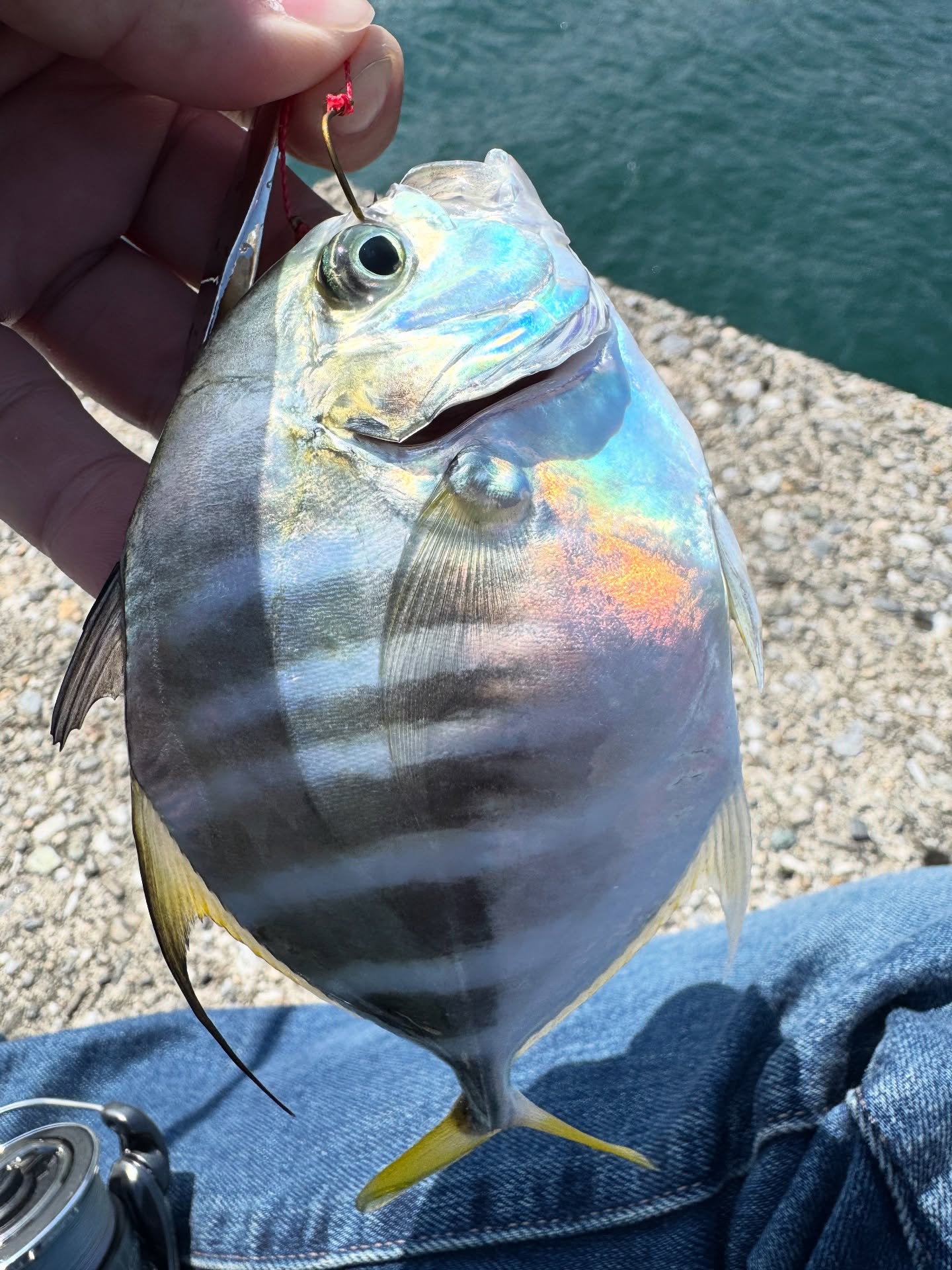
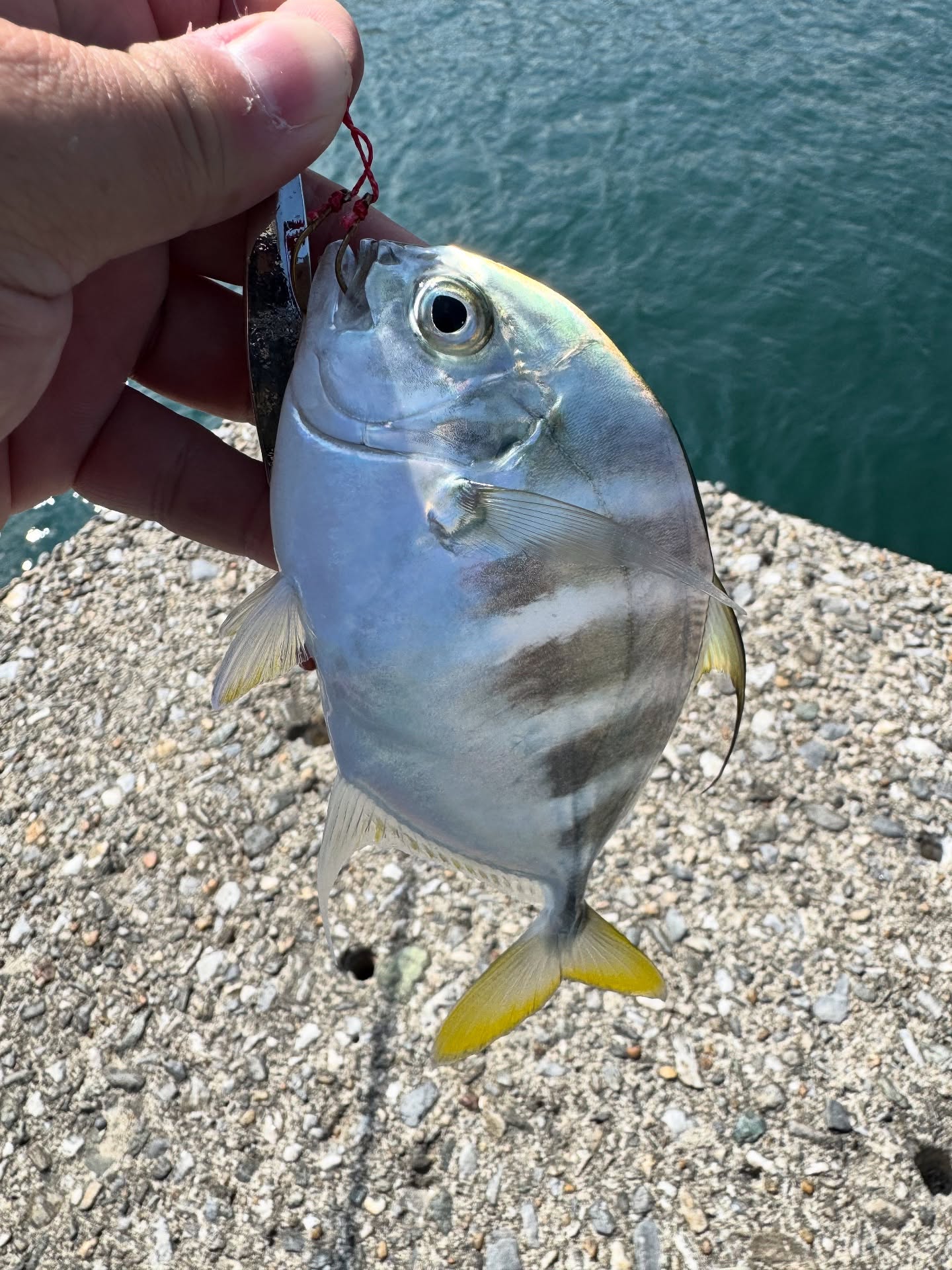
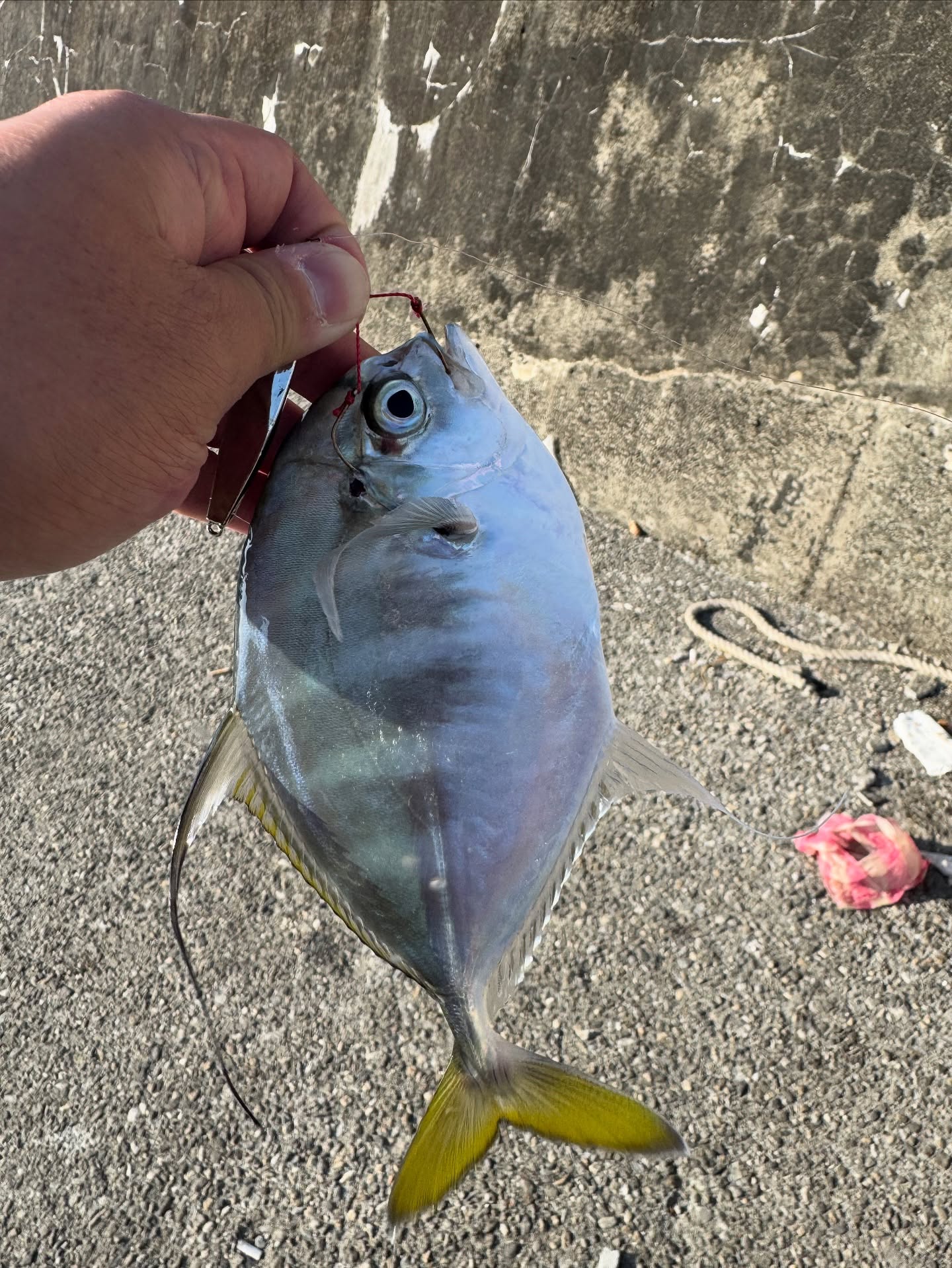
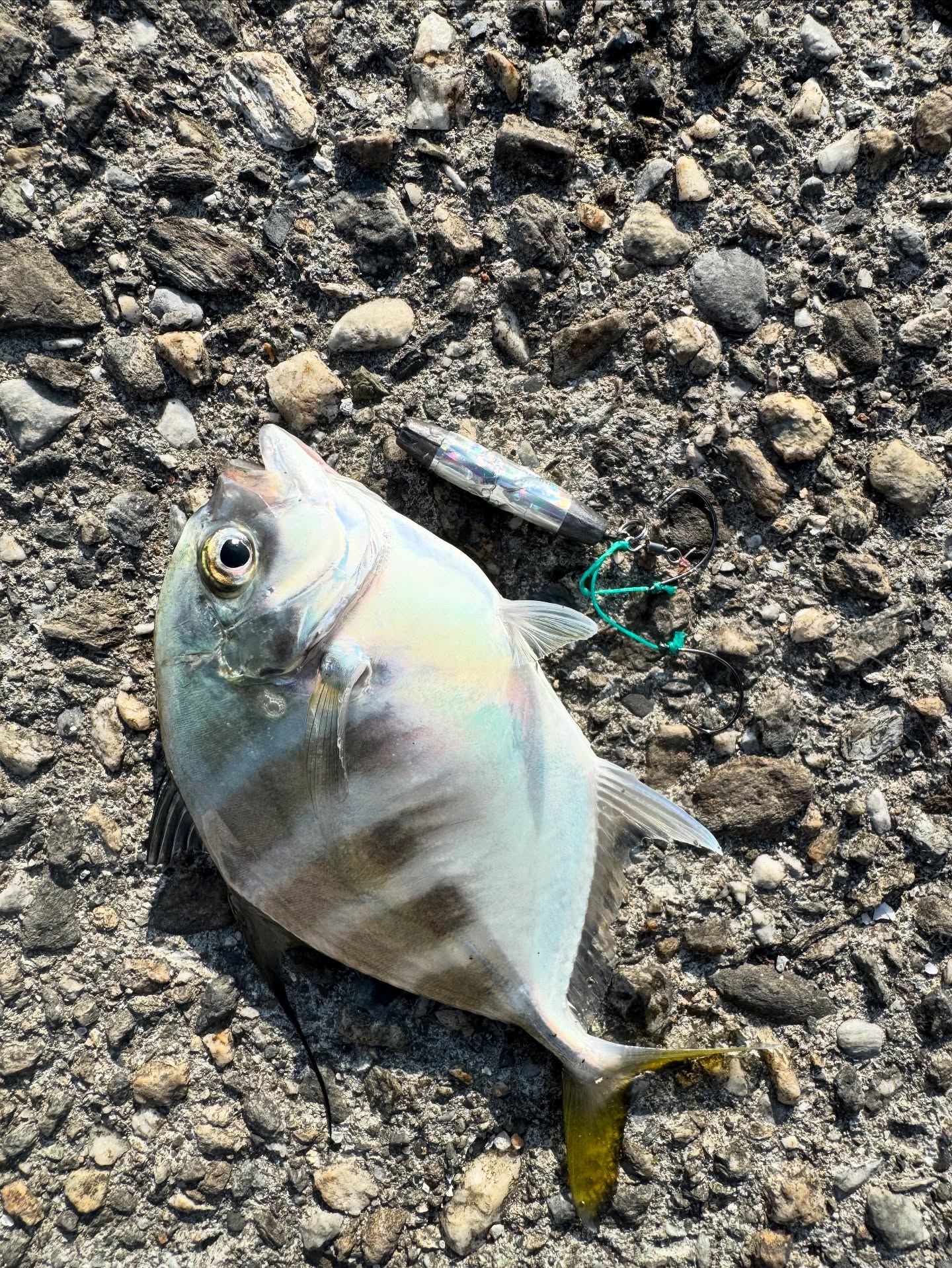
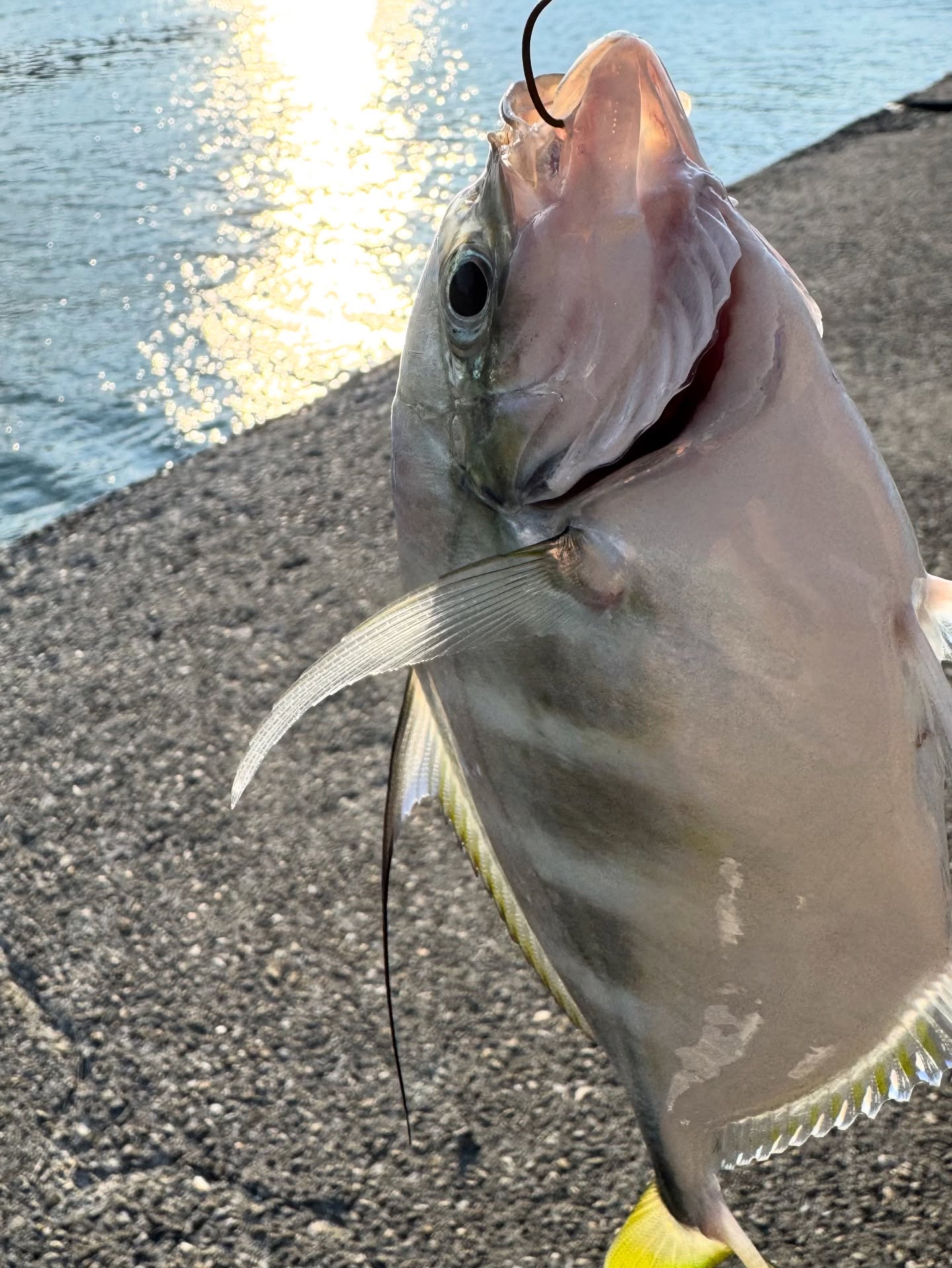
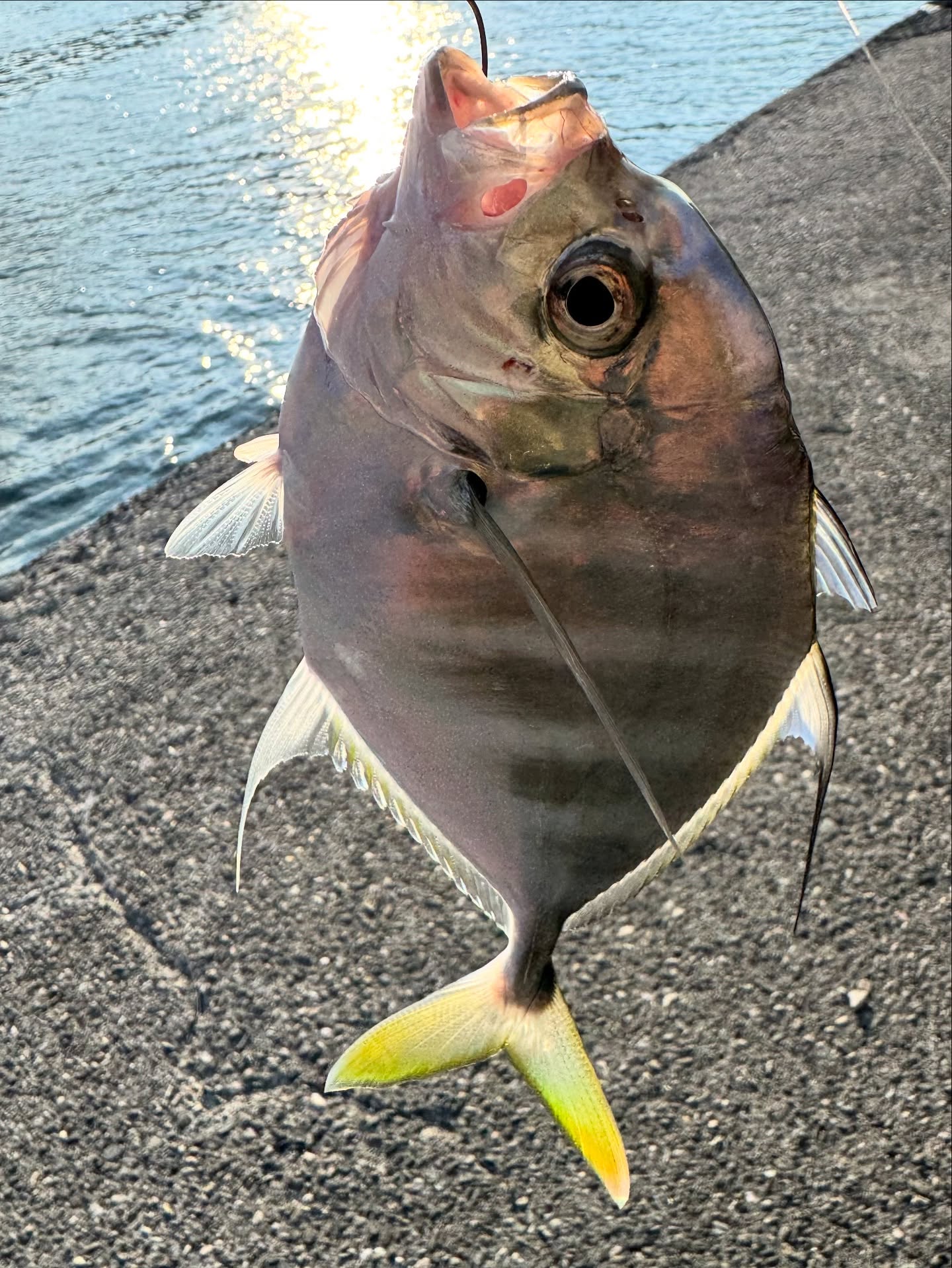
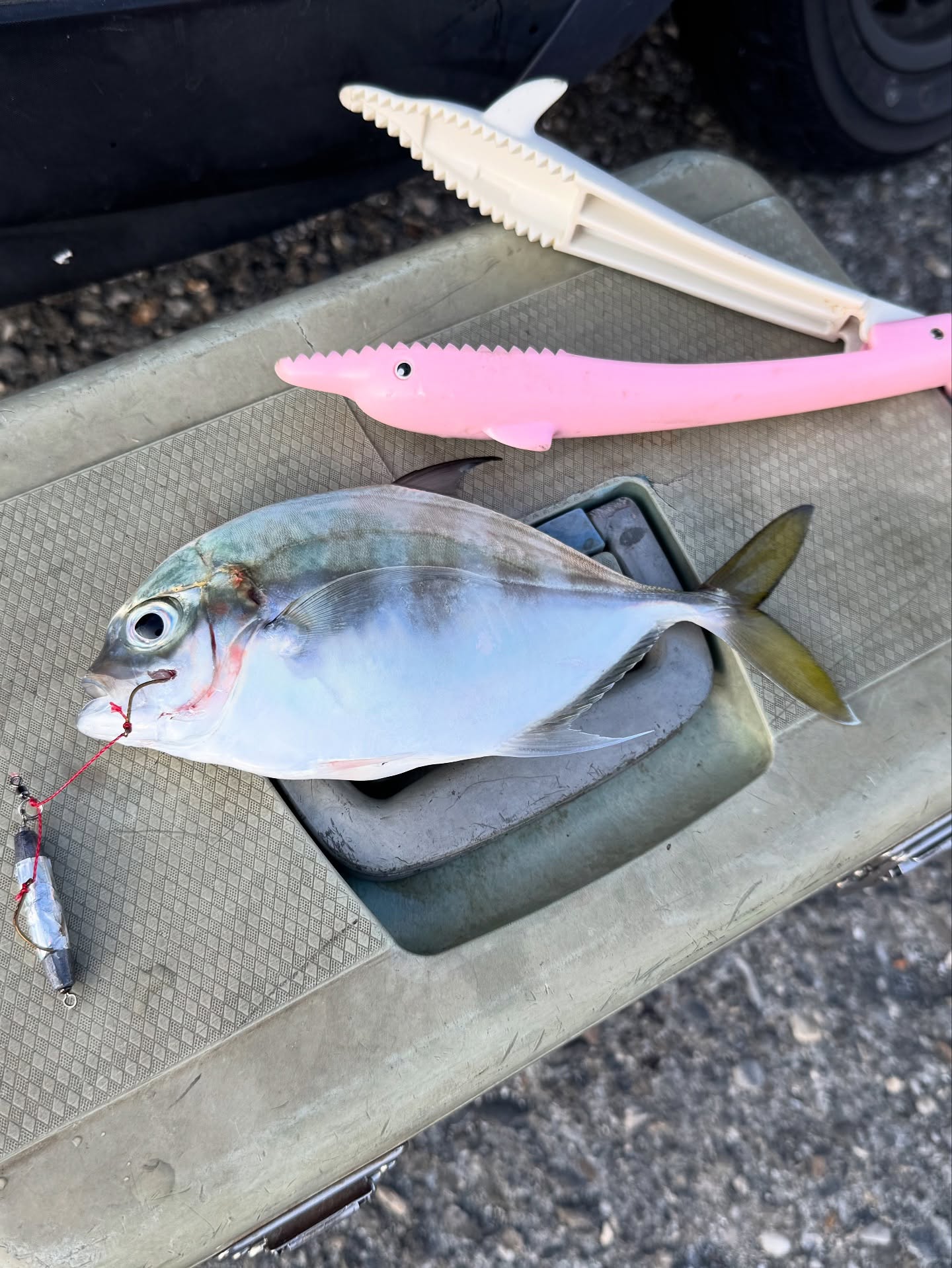
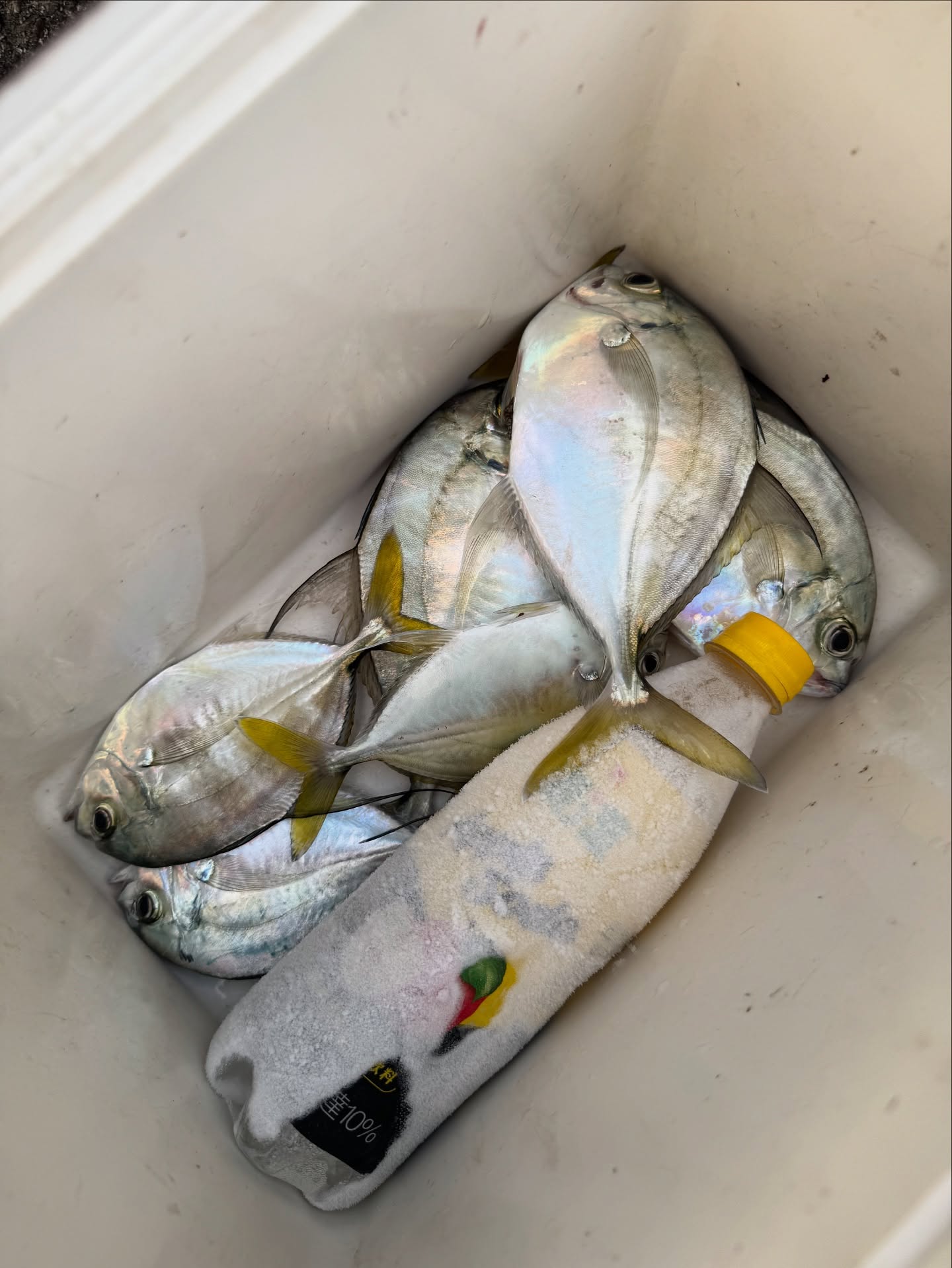
Clear sky, flat surface, clean water — a 銅鏡 (Hedland trevally, Carangoides hedlandensis) hit on those exact conditions. Concrete breakwater, micro jig, short rod sweeps to lift off the bottom, then let it flutter back down. The bite came on the fall.
The Micro Jig Game: Reading the Drop
With micro jigging the whole action is in the descent. You lift the jig off the bottom with short sweeps, then let it flutter and flash back down on a controlled line — most bites come on that drop, when the jig mimics a panicked baitfish losing altitude. Thin gold hook, red-tied line, everything light. That’s the micro jig setup.
The 銅鏡 is a textbook micro jig target: aggressive, schooling, willing to chase a small flashing jig worked with quick lift-and-fall. Breakwater fish stay tight to the wall, so there’s no need to cast far — the productive zone is usually the first few metres down the face of the structure, right where current pushes bait into the corner.
Reading Fish Against Structure
Nothing about this was a trophy session, and it wasn’t meant to be. Micro jigging is what keeps the hands sharp between bigger trips — reading how fish hold against structure, dialling in the fall rate, learning which jig colour matches the local bait. The trevally on the line is just proof you got it right.
When the weather’s clean and the water’s clear, the micro jig earns its keep on small, willing fish. When it turns, you sort photos. Next clear window, same wall, same jig — the fish will be back against the structure, and so will I.