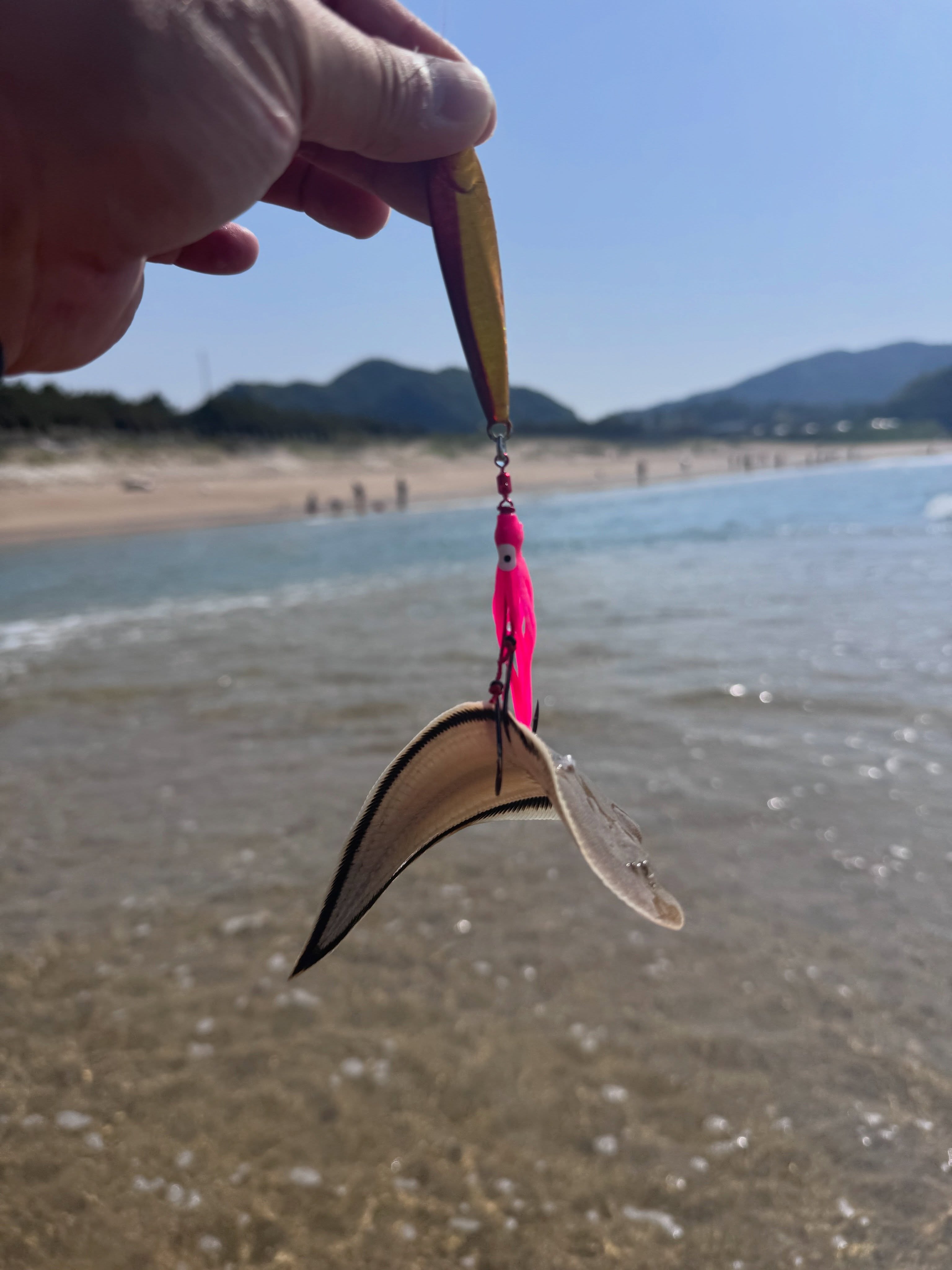
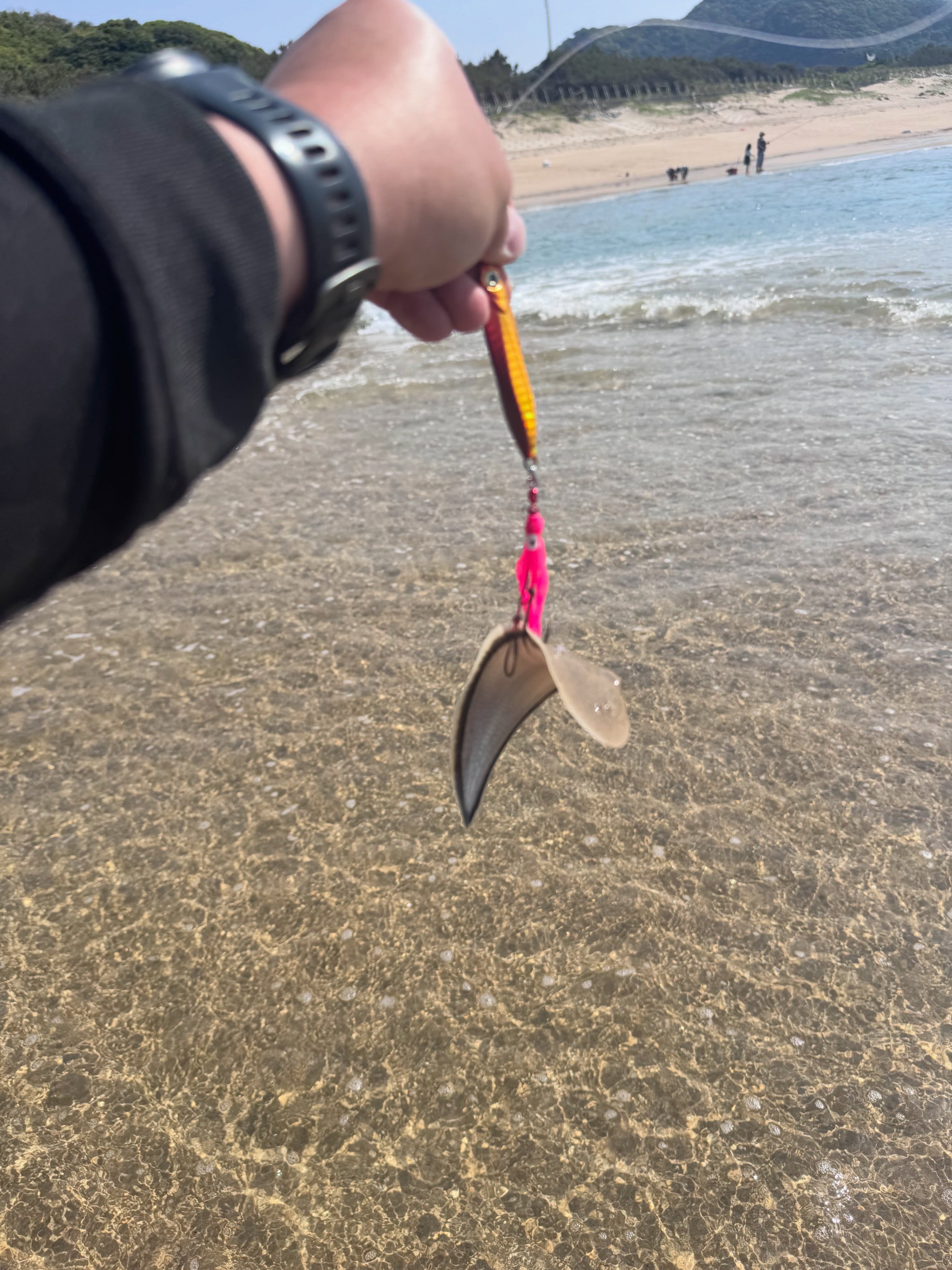
A tongue sole hit on the drop — midday, open sand beach, a gold jig with a hot pink skirt working lift-and-fall along the bottom. I came looking for a zabuton flounder and landed a cracker instead.
The rig: built for the sand
Gold metal jig to swivel, hot pink octopus skirt trailing assist hooks. That pairing is made for dragging and bottom-hopping on sand — the jig carries the weight and flash to reach the bottom, the skirt flutters slower right where a buried flatfish is watching. Lift-and-fall, tap the bottom, and the bite almost always comes on the descent. The setup was right for slow water over soft sand.
Wrong flatfish, but still a flatfish
I was after a proper wide flounder — the kind the Japanese call zabuton (座布団), a body broad enough to sit on. What came up was a tongue sole, slim and tapered exactly as its name suggests. Same order, completely different family. Tongue soles (Cynoglossidae) are the ribbon-shaped cousins: they lie flat on sand and mud, eyes migrated to one side during development like every flatfish, but they never reach anything you’d confuse with a cushion. A fish is a fish — the rig was right, the retrieve was working the correct depth, and the sand gave back exactly the kind of fish it holds. The size gap is a punchline, not a failure.
Next session: let the tide decide
The sand was clearly holding fish — the rig was in the strike zone and the bite came. What I don’t know yet is whether the real flounder are somewhere in the same stretch and just didn’t commit, or whether this is a sole-and-small-stuff bottom and the zabuton-class fish are sitting somewhere with more current. On sand like this, tide is everything. A session timed to the late drop or early flood will tell you more than any flat midday window — and that’s the one question worth chasing next time out.