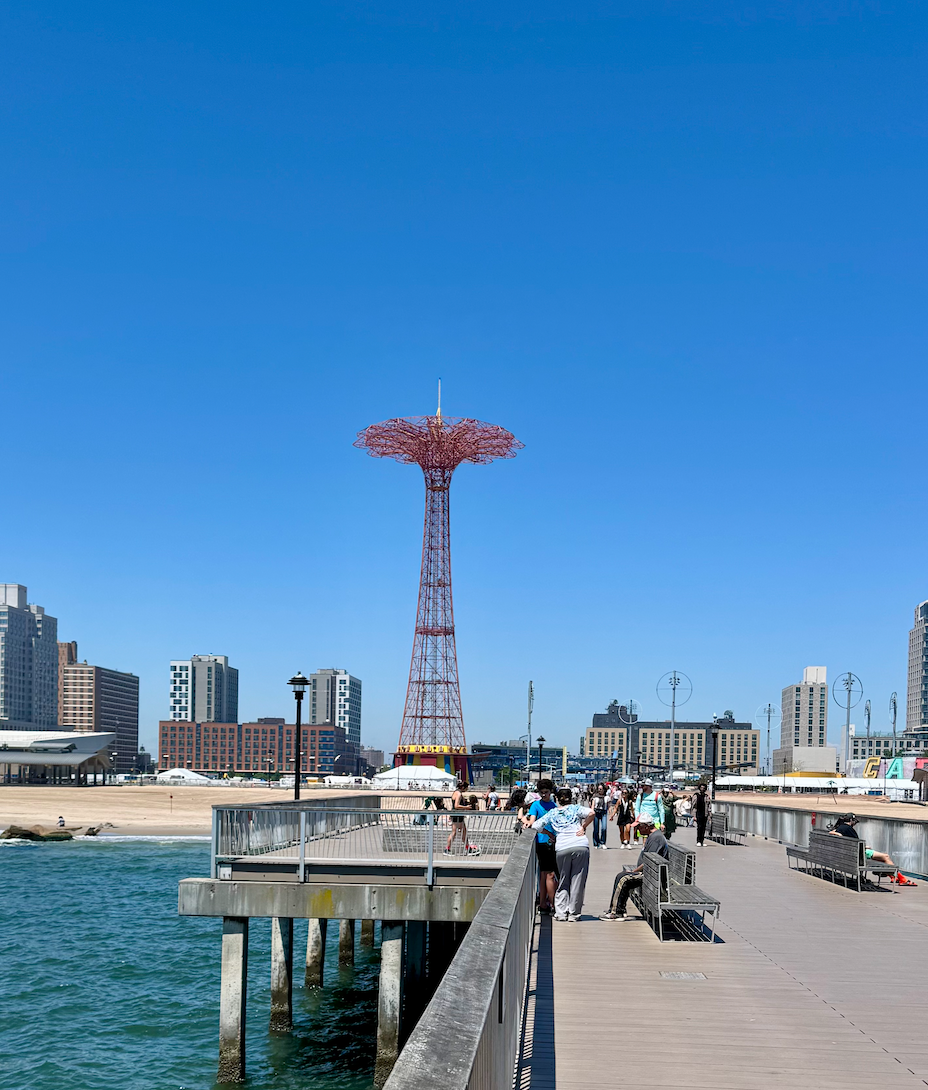
The fish took, ran straight for the navigation buoy, and ground my PE off on the anchor chain. Nothing landed. That’s the whole story of Coney Island — but it’s worth telling how I got there and what it cost me.
Why this spot
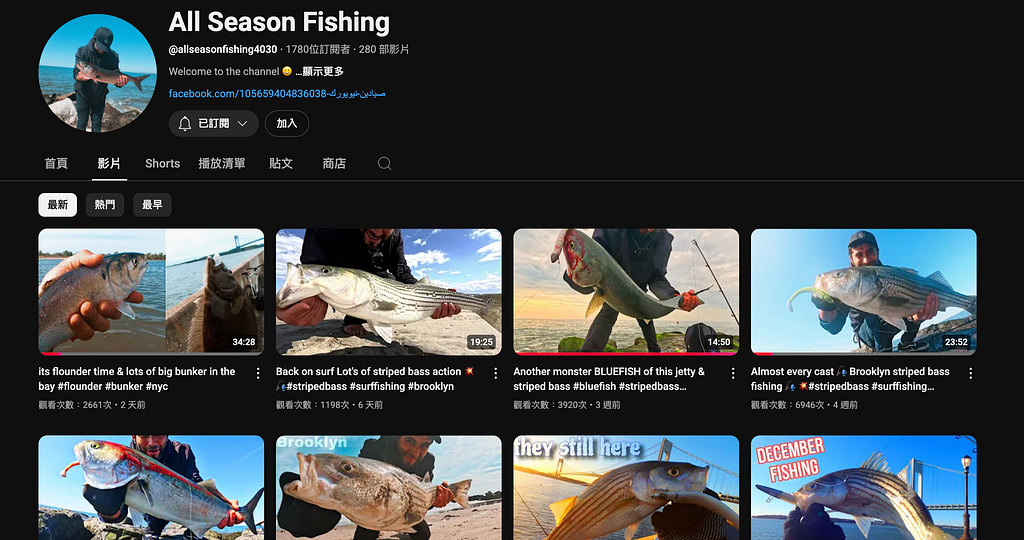
The lead came from YouTube scouting. I’d found an angler who’s worked the Brooklyn shoreline for years — All Season Fishing — and one of his regular spots is a rock jetty right off Coney Island. His targets: bluefish and striped bass, with real size showing up lately. I had no bluefish to my name, and his footage was enough to put this jetty on the itinerary.
We traded messages before I flew. He was generous — prime bluefish window is right at dawn, throw 4–5 inch soft plastics or spoons over 10cm. They hit hard and pull hard, so 30–40 lb main line minimum, 50–60 lb better if you’re expecting a big one. And the teeth: bluefish are line-cutters, so a heavy leader or wire is the safe call.
Getting there
I flew EVA direct into New York, on the ground around 10pm. Customs, bags, ride to the hotel — settled by about 1am. The twelve-hour time difference this season actually worked in my favour; my body clock wasn’t completely wrecked. I forced three hours of sleep and set the alarm for 4:45am.
At first light I called a Lyft, about USD 70 straight to Coney Island. The subway runs 24 hours and would’ve cost three bucks, but unfamiliar ground, pre-dawn dark, and a head full of New York subway horror stories — the car was the easy call.
On the jetty
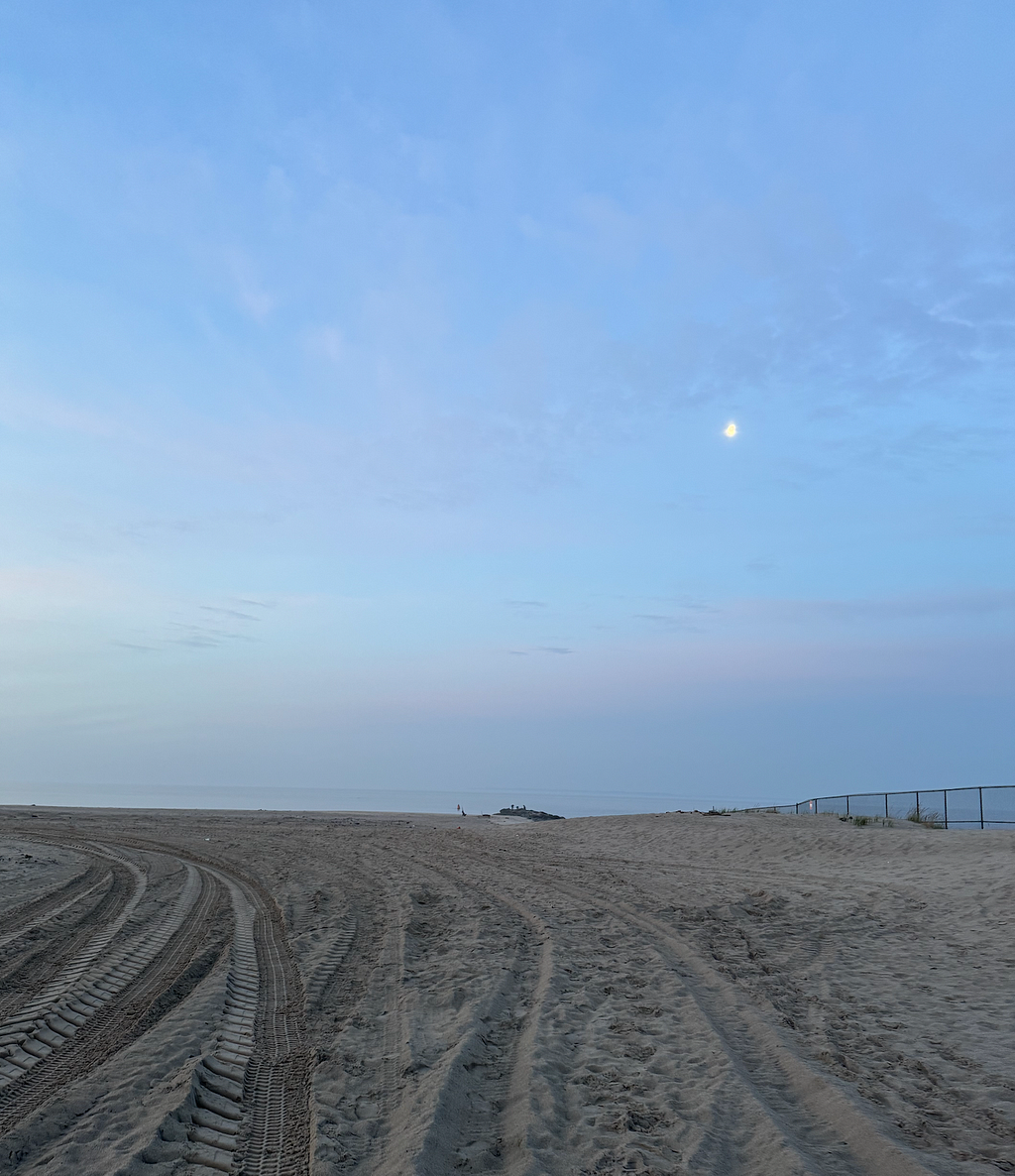
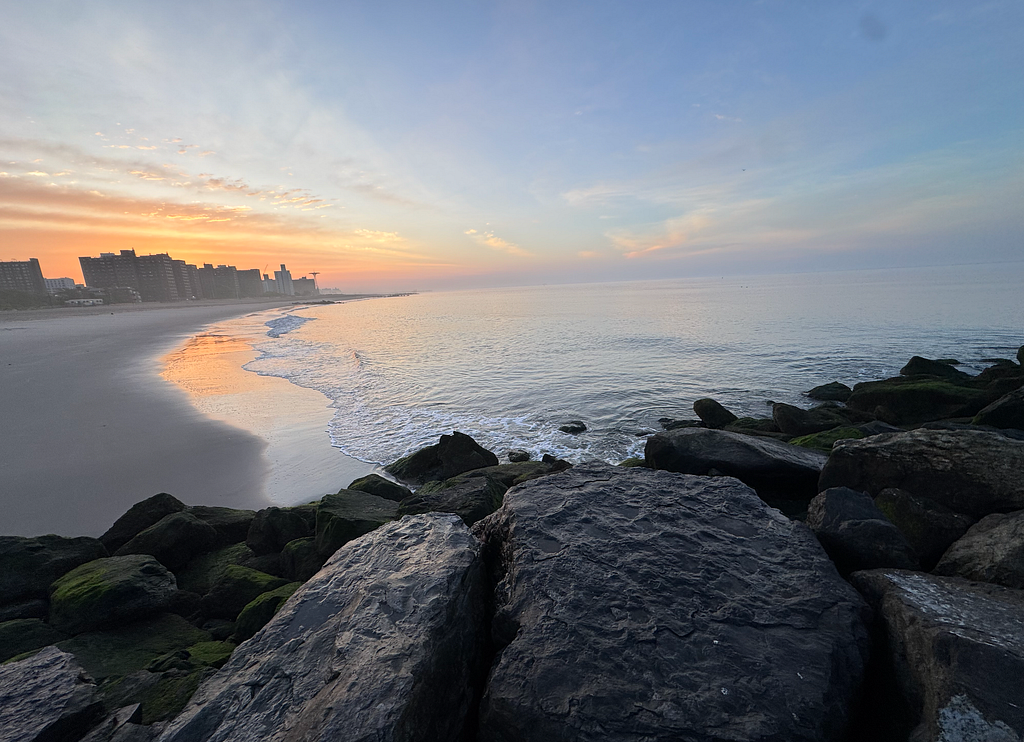
Over the dune, there it was — the jetty from the videos. Two anglers already on it: one packing up to leave, one set up at the tip with four bottom rods fanned out. The prime position was taken. But I’d seen fish come off the sides in those videos too, so I started working the flanks.
The rocks were slick, so I’d brought studded non-slip shoes. Tackle was travel-rod minimal — this was a work trip with fishing stolen around the edges, everything packed into a regular suitcase. I ran a Coltsniper XR MB S100MH-5 — a rod that handles a 90cm mahi off offshore reefs without complaint — paired with a C5000 reel, PE #2 and a #10 carbon leader.
I opened with a 30g jig head and a 4-inch soft plastic: flat-swim through every layer, then bottom-tap, hop, mid-water speed changes — the whole sequence. Nothing. A local angler showed up running a wire rig and a 13cm silver spoon on a straight retrieve, clearly here for bluefish too.
The tip opens up
Around 6:30am the angler at the tip started packing down. I moved up and took the head of the jetty. Two currents converge here — you can read the conflict off the surface chop. About 50 metres out sits a navigation buoy, and under a buoy there’s usually chain or anchoring structure. In my experience, those spots are exactly where baitfish stack and predators set up — the food chain switches on there.
The departing angler stopped to talk. They’d fished through the night: he’d landed a big eel, his friend had pulled a 40-inch striped bass around 4am. This tip clearly earns its reputation.
With only a jig-oriented travel rod, I hadn’t packed a large spoon — the casting distance wouldn’t be there. When the soft plastic produced nothing I switched to a 35g metal jig — the one Taiwanese anglers call the legendary “Spanish mackerel board” — rigged with a hot-pink #9 assist hook. Big hook, small bait, a compromise, but with limited gear on the road you work with what you have.
I ran it fast-rip on top, speed-changed mid-column, then dropped to a slow bottom hop. The tide turned and the current strengthened noticeably — cast left and the line always swung right on the retrieve. Rather than grind away for bluefish, I switched targets to flatfish: one of the key fish for this trip, one I’d only ever caught from a boat, never from shore.
Fish on
I changed the work: tap bottom, hold a few seconds, two or three small hops, hold again — tap-pause-hop, repeat. Then something took it. Not a savage smash, but clear weight. No immediate run, so I set firm and clean and called to the angler next to me — “Fish on!”
The hook felt solid. Then the head shaking started — this was no small fish. Next second the spool was screaming, reel singing non-stop. Drag locked near nine and it still wasn’t enough — line just peeled, the fish driving past the left side of the buoy and out to open water.
I tried to turn it. It read the current, cut right, bolted again. Then — slack. The PE had ground off on the structure under the buoy. The angler beside me gave me one look, that helpless expression. I just stood there, frozen, for a full minute.
What it cost me
Heart still pounding, nothing in hand. That weight, those head shakes, the way it ran — I’d put money on a big striped bass. PE #2 with a #10 leader over hard structure was never going to win that fight. Against a fish that runs straight for buoy chain, leader weight and abrasion resistance aren’t a detail — they’re the whole game. The travel kit that’s easy to pack is exactly the kit that loses fish here.
You don’t always get to choose your gear to match the spot. Sometimes the spot chooses what you lose.