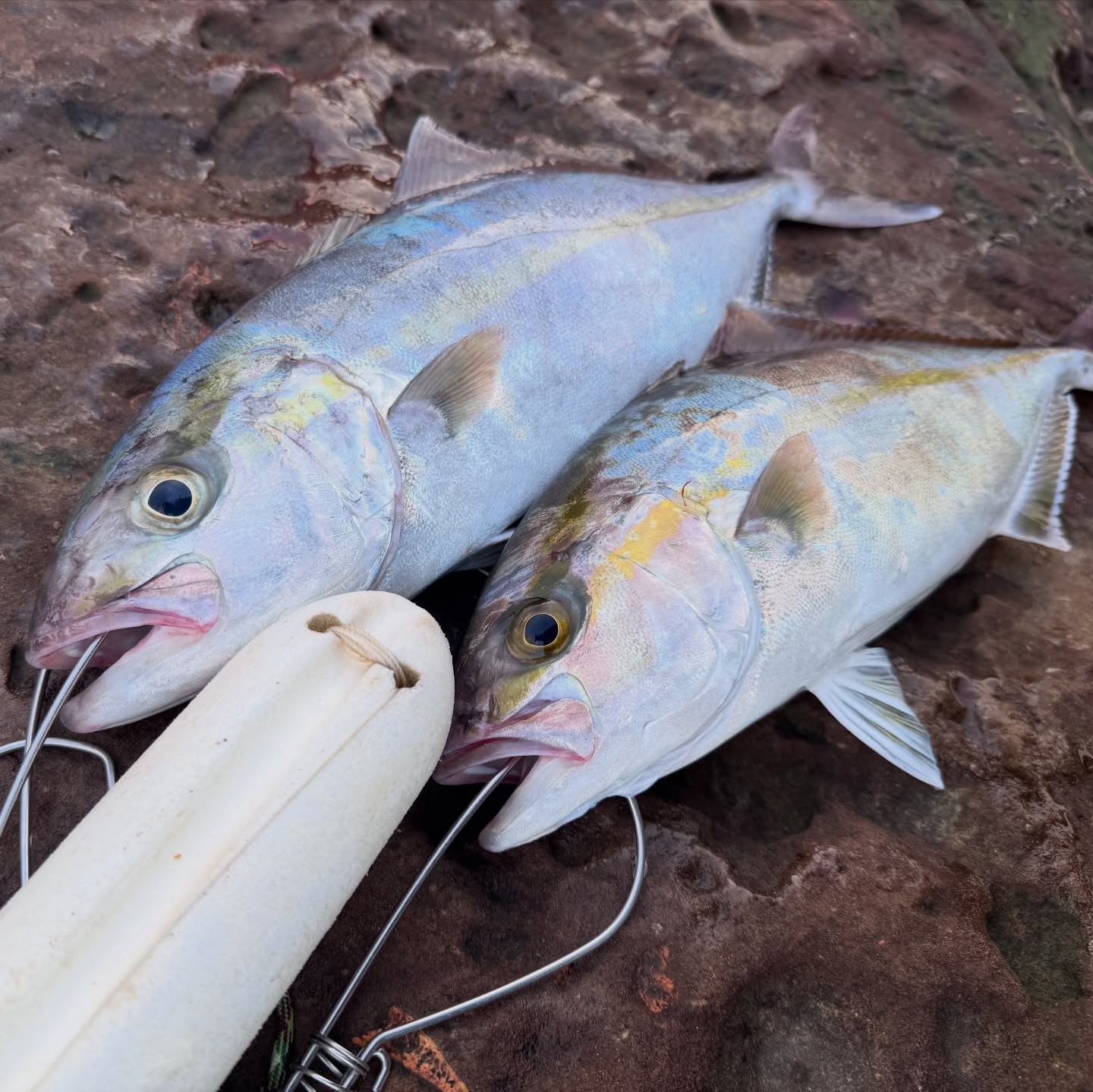
Two 紅甘 on the stringer, clips through mouth and gills — silvery-blue flanks, that yellow lateral line running clean from gill to tail. The bite was already fading when I hooked them. These were the tail end. Still, two fish is two fish.
Depth, Distance, Structure
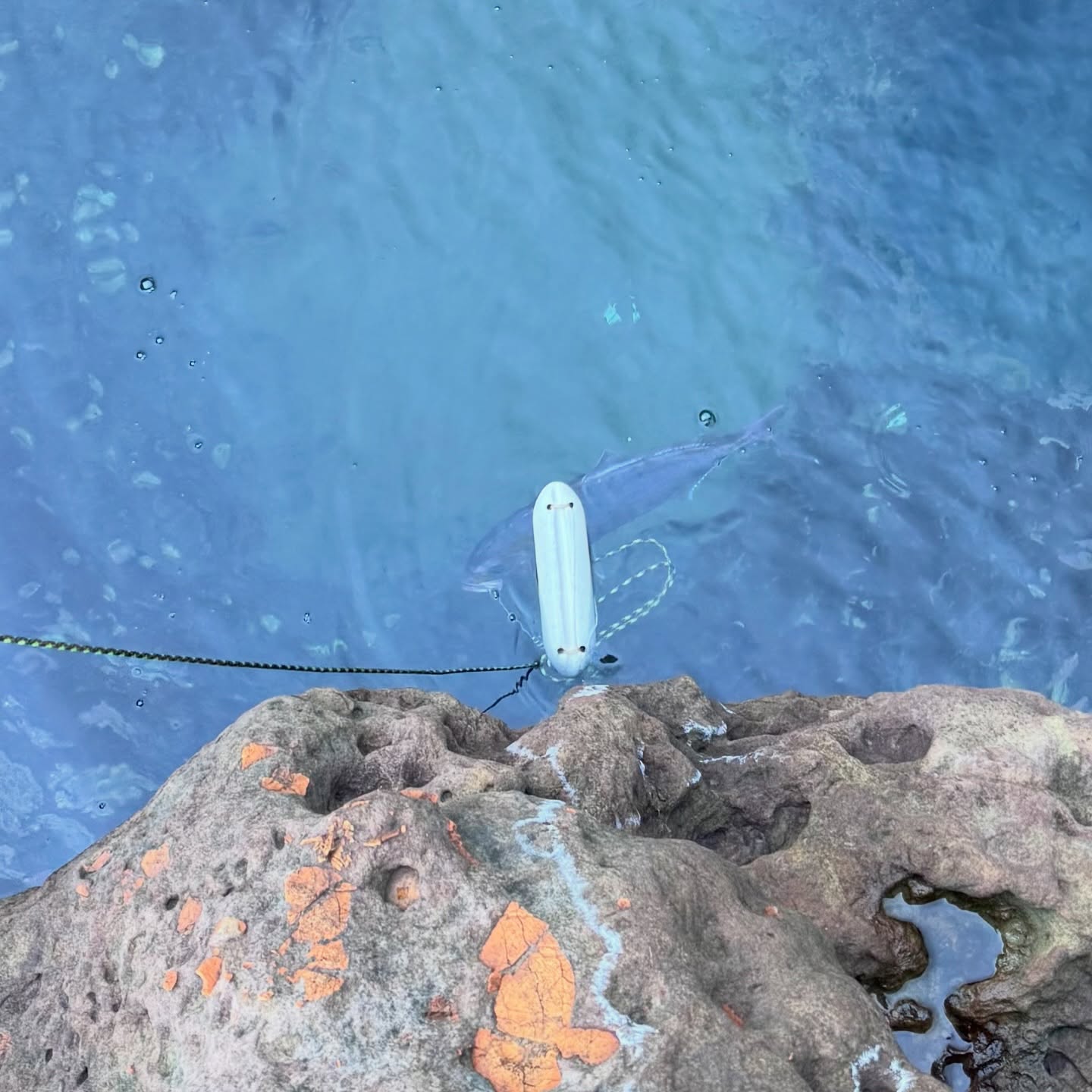
Shore jigging on rock is a game of casting distance and water column. Launch a metal jig as far as the rod will throw, count it down to the depth the fish are holding, then work it back with rod sweeps and reel turns. The strike on 青物 is not subtle — they commit in one hit, and then they run straight for the rocks. You either turn the head or you lose the line. Both of these made it up — two fights won where plenty come unbuttoned.
The Longer Wait
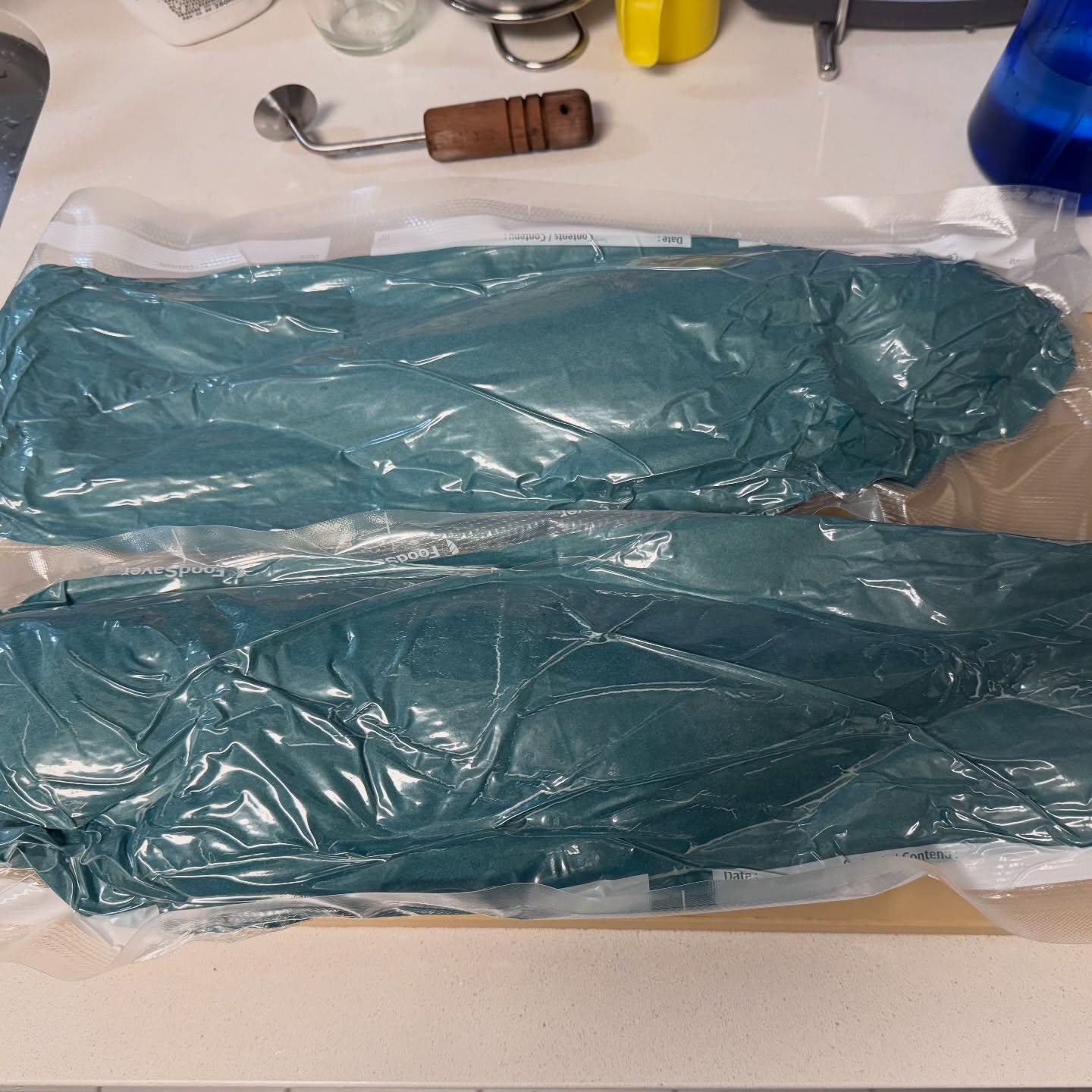
干式熟成 — dry aging. The fight on the rocks is over in minutes; the aging runs days. Bleed clean, control temperature, let the enzymes break down muscle slowly, concentrate the flavour, shift the texture from firm-fresh to something deeper. Winter 紅甘 carry serious fat through the flanks, and aging pulls that richness forward. This is what I was thinking about on the walk back.
Two fish is the right number — enough to age properly without waste, enough to eat across several meals. Cold air in December makes home aging far easier than summer would allow.
The fishing is done. Keeping a jig in the strike zone one more cast and leaving a fish untouched for three more days — it turns out to be the same bet, placed at different scales.