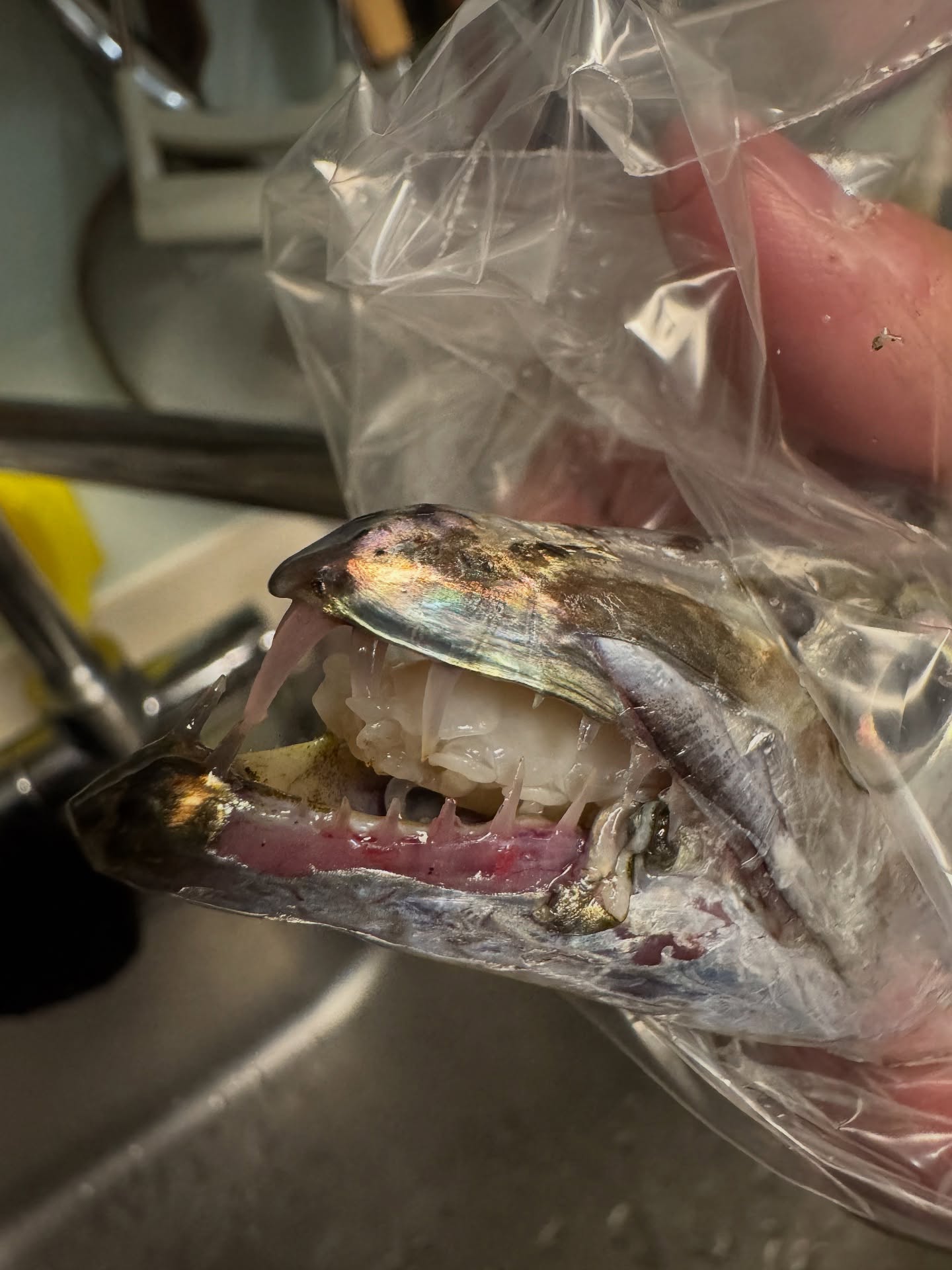
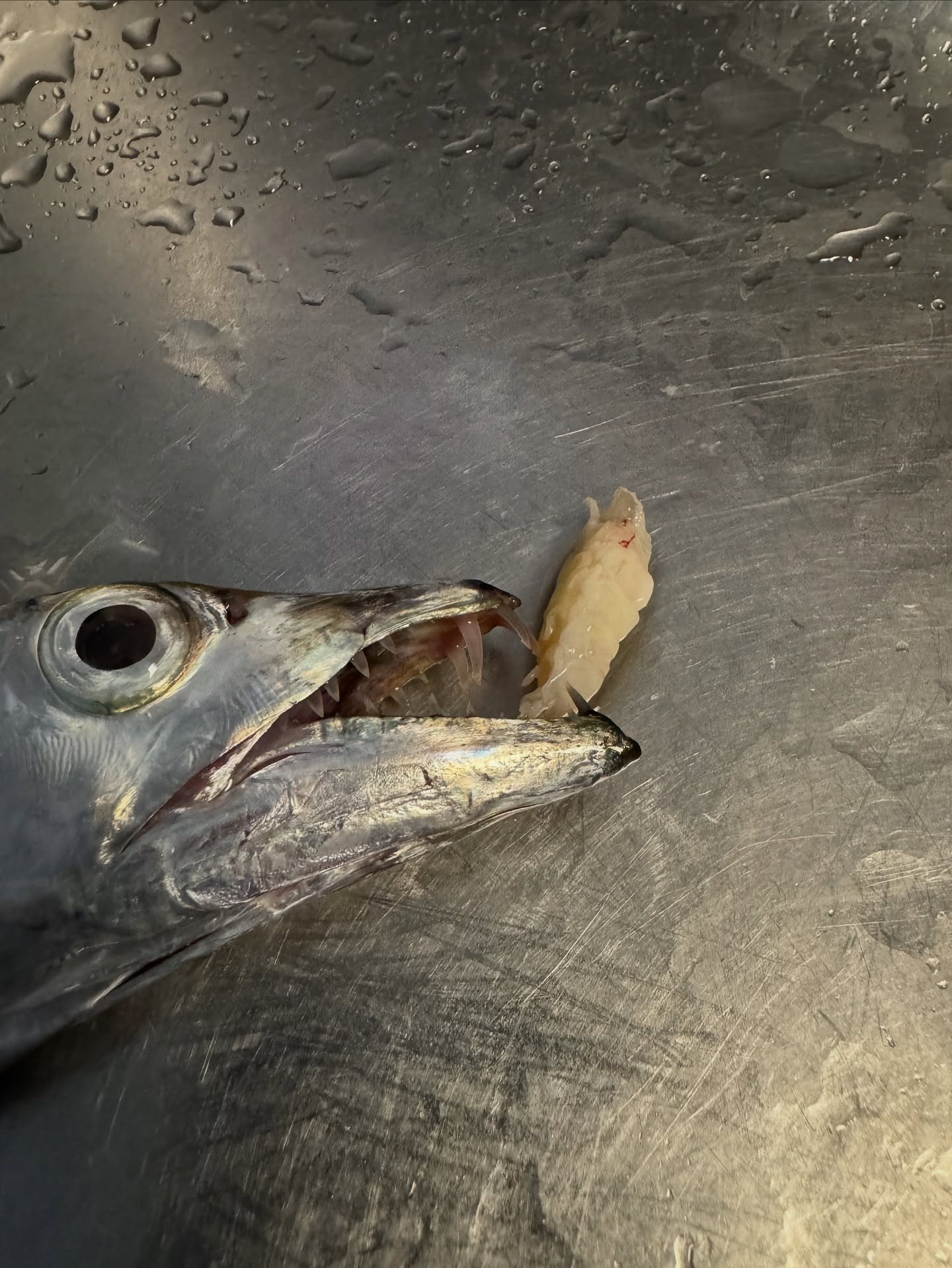
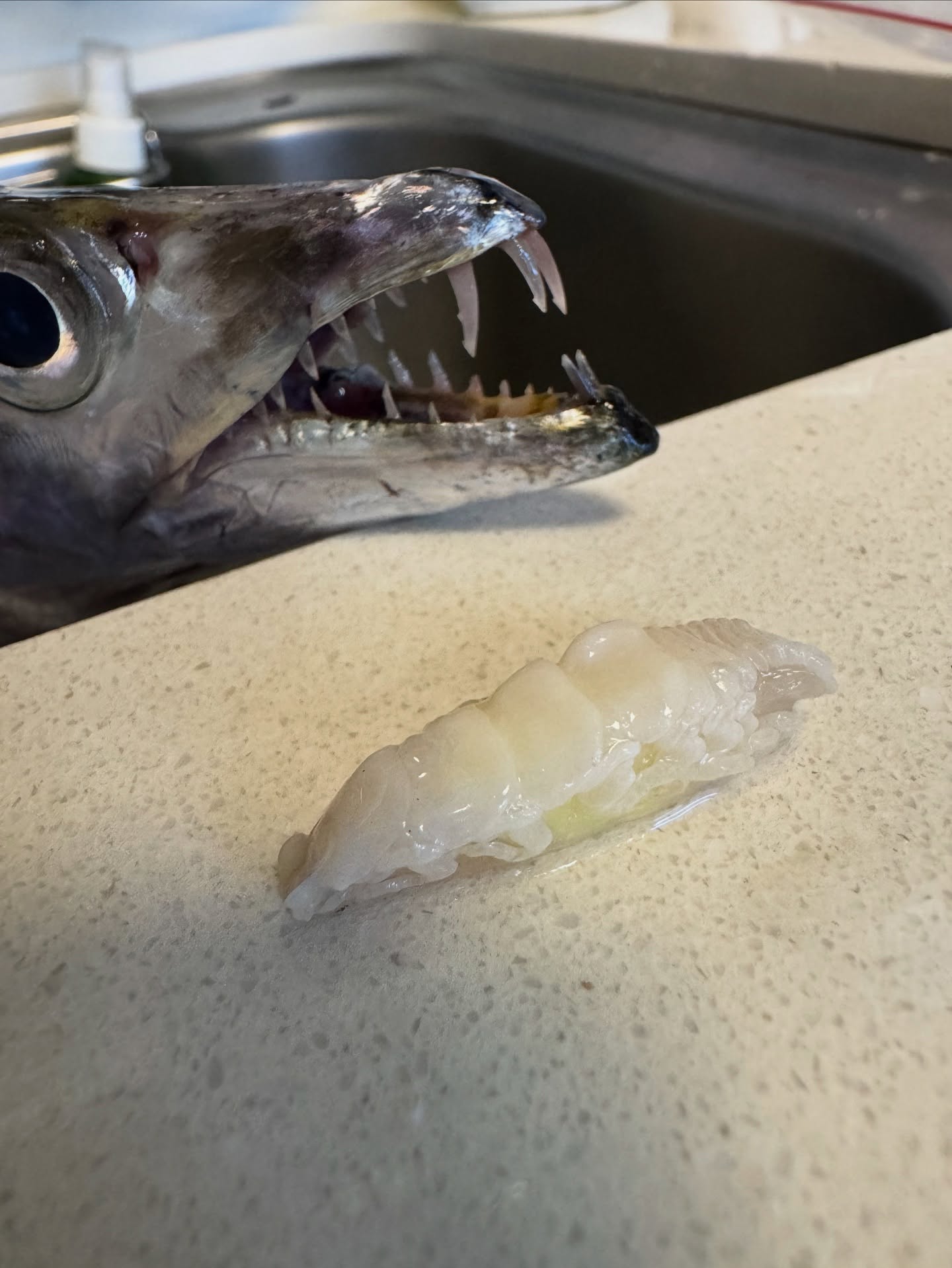
The tongue in this cutlassfish’s mouth isn’t its own. It’s a parasite.
Found it going through old photos on a storm day — nothing moving outside, so I sat down with the backlog. A cutlassfish head over the kitchen sink, mirror-bright skin, mouthful of teeth, and lodged where the tongue should be: a pale, segmented creature.
The Tongue-Eating Louse — the parasite that actually replaces the organ
Cymothoa exigua, or a close relative. It’s an isopod. As a juvenile it enters through the gills, attaches to the base of the tongue, and slowly cuts off the blood supply until the tongue atrophies. Then it does something no other parasite is known to do: it moves into the vacancy. It clamps onto the stub and functions as a replacement tongue — feeding on the fish’s blood and food scraps while the host goes on living, hunting, and feeding as normal. The only difference is what’s sitting in its mouth.
Cutlassfish as a target
タチウオ are a staple for dusk and night sessions. They hold in the water column vertically, slashing upward at baitfish — those teeth are built for exactly that. On the lure side, metal jigs and minnows worked through the column are standard, with fish size commonly measured in finger-widths across the body. They’re already a striking fish without help — that metallic skin and the teeth say everything.
Safe to eat
The louse lives in the oral cavity, not the muscle, and poses no risk to people eating the fish. But finding one while cleaning a catch is a reliable reminder that the biology only reveals itself when you’re actually handling the fish — stomach contents, gill condition, and the occasional passenger like this one.
When the weather breaks, the cutlassfish will be back out there, holding in the dark and slashing at anything that flashes. I’ll be paying a little more attention when I open the next one up.